|
Sign up to participate in the
FOSC Pilot Natives-for-Invasive Plant Swap Sunday, October 18th *exclusively for FOSC members* (you can join FOSC once you sign up)
Here's how it works:
- You identify a significant invasive plant (ie. not a tiny seedling) on your property.
- You indicate on the Plant Selection Form you will receive which native plants you would like. They could be, but do not have to be, sited where the invasive plant(s) are.
- Blue flag iris (Iris versicolor)
- Buttonbush (Cephalanthus occidentalis)
- Common milkweed (Asclepias syriaca)
- Coral honeysuckle (Lonicera sempervirens)
- Eastern Bluestar (Amsonia tabernaemontana)
- False Blue Indigo (Baptisia australis)
- Hairy beardtongue (Penstemon digitalis)
- Lance-leaved coreopsis (Coreopsis lanceolata)
- New England aster (Symphyotrichum novae-angliae)
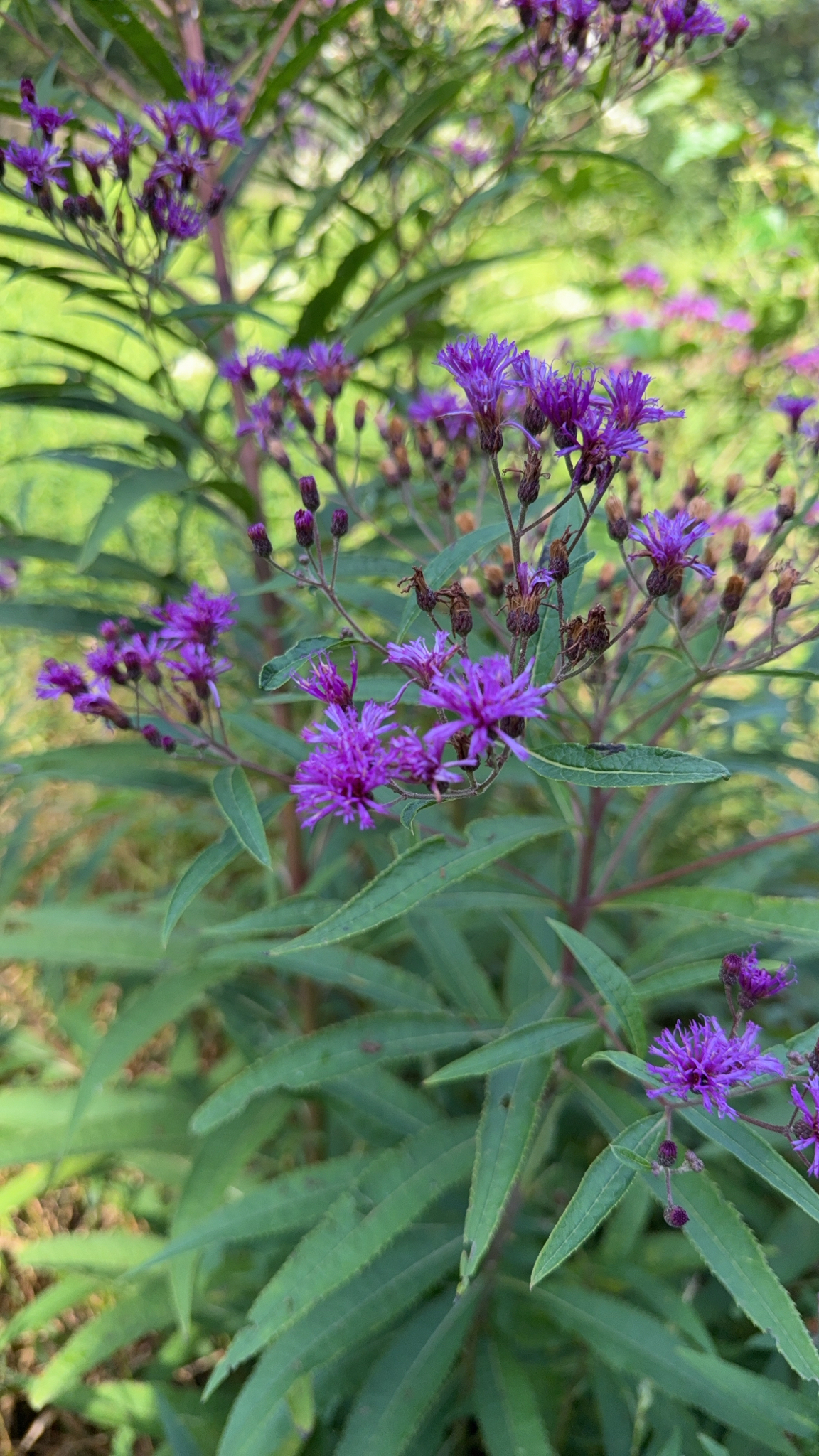
- New York Ironweed (Vernonia noveboracensis)
- Orange coneflower (Rudbeckia fulgida)
- Purple Love Grass (Eragrostis spectabilis)
- Spotted Joe Pye weed (Eutrochium fistulosum) — possibly Sweet Joe Pye weed (E. purpureum)
- White goldenrod (Solidago bicolor)
- White meadowsweet (Spiraea alba)
- Wingstem (Verbesina alternifolia)
- Elderberry (Sambucus canadensis)
- Coralberry (Symphoricarpos orbiculatus)
- American Beautyberry (Callicarpa americana)
- Shrubby St. John's Wort (Hypericum prolificum)
- Native Honeysuckle (Lonicera sempervirens)
- You dig up at least one non-native invasive (NNI) plant (shrub, vine, plant of significant size, ie. not a tiny seedling) from your property, two if you can. You take before-and-after photos.
- You bring your invasive plant to the swap in Takoma Park on Sunday, Oct.18 from 1:00pm - 3:00pm. Details will be sent to you.
- We swap it for the two native plants you selected that have been provided to FOSC by local nursery Cardinal Flower Community Plantings and others.
- You plant your native plants anywhere in your yard (do not have to be sited where the invasive plant/s were.)
- You feel good for removing an invasive plant/s and planting two natives that offer food to, and host, pollinators and other beneficial insects. We feel good for the same reasons.
- Optional: Send us a photo(s) of your native plants once they are established. We'll include them in a future newsletter.
|