|
For parents of kids 8 to 25
Your teenager has stopped telling you things. You noticed months ago.
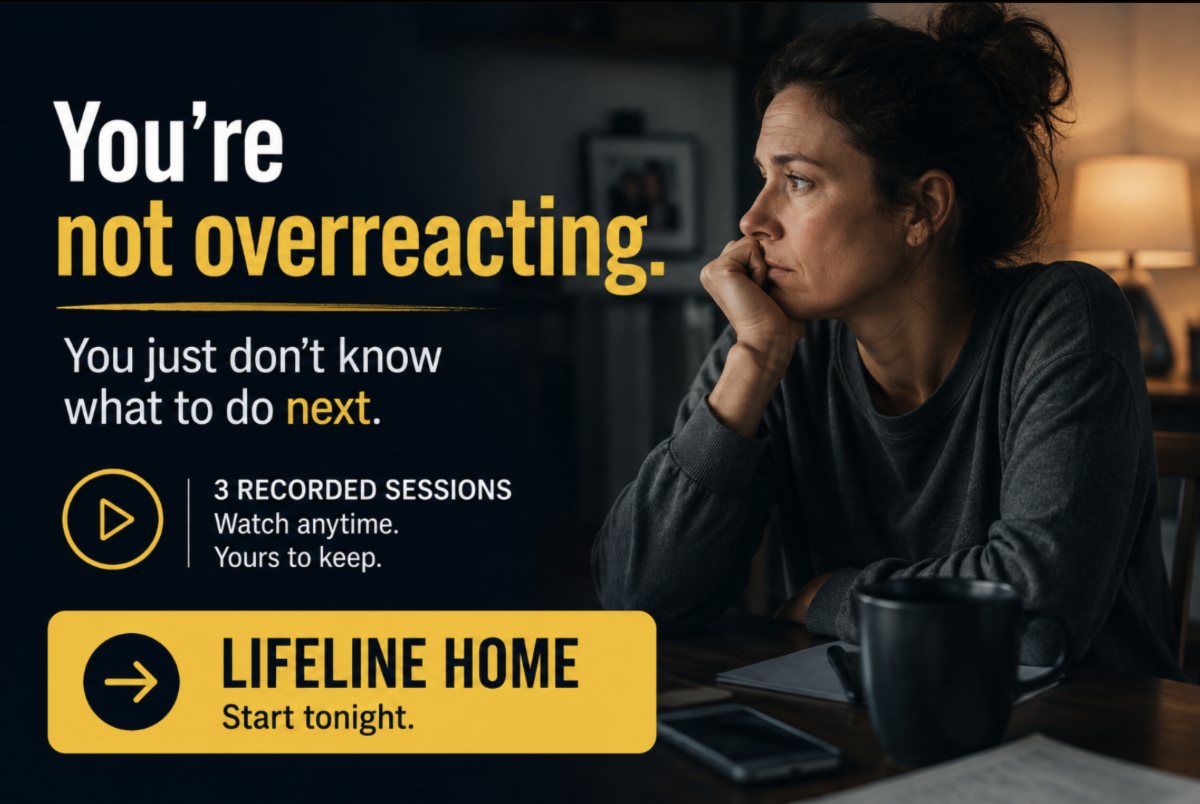
Three sessions on what to watch for, what it means, and how to open a conversation that doesn't end in four seconds. Recorded, so you can start tonight instead of waiting for a Tuesday that works.
THE HOOK
"How was your day" gets you fine. "Is everything okay" gets you a yes you can't verify. "I'll bring it up when the timing's better" gets you another month gone. And the distance between what you're noticing and what you're checking keeps widening, quietly, while everyone at the table behaves normally.
WHAT THIS IS
Nobody trains you for this part.
You get taught how to keep a toddler alive. Car seats, choking, the right temperature for a bath. Then they turn thirteen and the whole thing becomes a guessing game, and the only advice anyone offers is to keep the lines of communication open.
That advice assumes the lines are open. If they were, you probably wouldn't be reading this.
LifeLine Home is three sessions built around the questions parents actually bring me. Not what to do in a crisis. What to do in the year before anyone would call it one.
Session one. What you're already seeing.
The difference between a bad week and a pattern. Which changes matter and which are ordinary adolescence. Why the warning-signs list you've read describes a stage most kids reach late, and what comes before it.
Session two. The conversation.
Why face to face fails and sideways works. How to open something without making it a Big Talk. What to do when you get "fine," and what to do the next day.
Session three. When it's more than a conversation.
How to tell when you're out of your depth. What the options actually are in Canada, including the waits nobody warns you about. What to do while you wait?
WHY RECORDED Because the moment you need this is rarely a Tuesday at seven.
It's a Sunday night after something happened at dinner. It's eleven o'clock when the house has gone quiet and you're still awake. It's the drive back from a school meeting.
You can start then. You can stop halfway through and come back. You can watch session two again in April when it suddenly matters more than it did in September.
You keep it. It doesn't expire.
WHO IT'S FOR
You've noticed something and you can't name it. You've asked, been told it's nothing, accepted that, and it hasn't settled. You're not in a crisis. You're in the part before, which is quieter and harder to describe and where almost nobody gets help.
Who it isn't for: if your child is in immediate danger, this isn't the thing. Call or text 9-8-8, any hour, anywhere in Canada. Come back to this after.
WHAT THIS ISN'T
I'm not a clinician and this isn't therapy. It doesn't diagnose anything and it won't tell you what's wrong with your kid.
What it does is change what you notice and what you do about it. If your child needs clinical care, you'll still need clinical care. You'll just get there sooner, with better language, and you won't spend the wait doing nothing.
THE CLOSE
Start tonight. Session one is about forty minutes.
Because the thing you've been noticing has probably been going on longer than you've admitted to yourself, and there is no version of this where waiting makes it easier.
Get LifeLine Home · $79.95
First name Email
If the price is the reason you're not doing this, email me at chris@thementorwell.com and I'll send it to you. No explanation needed.
FAQ
How long does it take? About two hours in total across three sessions. Most parents watch them across a week rather than in one sitting. Do I watch this with my teenager? No. This is for you. It's about what you notice and how you approach things, not something to work through together.
What if my kid is 22, not 15?
It works. The mechanics of a young adult managing what you see are the same, and the conversations get harder rather than easier when they don't live at home.
Is this the same as the LifeLine workshops companies run? Same foundation, different format.
The corporate version is live and built for a room of working parents. This is the one you do on your own.
What if it isn't useful? Email me within 30 days and I'll refund it. No form and no questions.
Can my employer pay for this? Yes, and many will. It sits under most professional development and wellbeing budgets. If you'd rather not explain why you're asking, we offer it to organizations directly and you can point HR here.
|