|
| AIAA LA 6/27 Section (mini-) Conference (A hybrid event: In-person and online attendance) Saturday, June 27, 2026, 8 AM PDT (GMT -0700) |
| If you would like to participate in the Contest (in-person attendance) in the afternoon, please contact (events@aiaa-lalv.org) at your earliest conveniences. And you will be assigned to the groups / teams. You are welcome to invite people you know.
And each group or team will need 2 volunteers as the Coordinators (not participating as the team members in the Contest), to help gather the results from each group or team for the results of each scenario, and report to the scoring board there on site. Please also respond to use as well. (For in-person attendance).
There will be the pre-event orientation / demo for Contest participants and the volunteering Coordinators. |
|
(6/27) AIAA LA Planetary Defense and Asteroid Exploration mini-Conference 2026 |
Dear All,
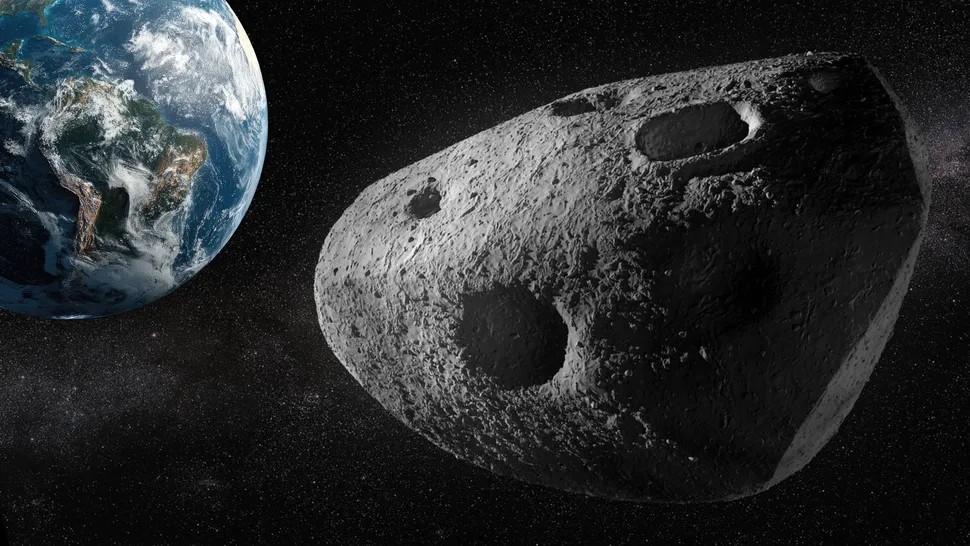
Please join us for the AIAA LA Planetary Defense and Asteroid Exploration (mini-)Conference 2026 on Saturday, June 27, 2026 at the Lynwood Unified School District, Lynwood, CA, or online. This event is open to the public.
All are invited to join online or in person and to meet and interact with the leaders and practitioners of Planetary Defense an Asteroid Exploration. Tentatively the morning sessions will be presentations, and the afternoon sessions will be mostly workshop / contests. |
|
Lynwood Unified School District (Meeting Room)
11321 Bullis Rd, Lynwood, CA 90262
View on map
Virtual location You will receive a confirmation email with a URL. |
|
Saturday, June 27, 2026
08:00am - 05:30pm PT |
|
|
|
Disclaimer: The views of the speakers do not represent the views of AIAA or the AIAA Los Angeles Section. |
|
|
Tentative Agenda: (All Times PDT (U.S. and Canada)) (GMT -0700) 07:30 AM PDT: Check-in; Networking 08:00 AM PDT: Welcome (Dr. Nahum Melamed and AIAA LA Section) 08:05 AM PDT: Dr. Andrew Rivkin: Planetary Defense After DART: What Have We Learned, and What Comes Next? 09:05 AM PDT: Prof. Philip Lubin: Pi: Toward an Operational Planetary Defense Program - Hypervelocity Penetrators to Pulverize Threats 10:05 AM PDT: Brent W. Barbee and Adrienne Rudolph: Asteroid Disruption for Planetary Defense and the TERP RAPTOR Mission to Apophis 11:05 AM PDT: Dr. Jason Pearl: High-Fidelity Simulation of Asteroid Airbursts with Spheral++ 12:05 AM PDT: Joe Carroll: Cheaper by the Dozen: Solar-Sailing Nanosats for Small-Body Missions 12:35 PM PDT: Dr. Russell Henry TerBeek: Radar Detection of Asteroid 2024-YR4 in a Planetary Defense Mission 01:05 PM PDT: Sasha Cohen and Brin Bailey: Investigating Hypothetical Mitigation of Asteroid 2024 YR4 via Intentional Robust Disruption 02:05 PM PDT: Madhu Thangavelu: OPERA II : Fast Flyby Concept for Reconnaissance of NEOs 02:20 PM PDT: Hands-on Workshop Demo on the NASA JPL NEO Deflection App 02:50 PM PDT: Planetary Defense Scenario Group Contest (Mixed professionals and students) 03:50 PM PDT: Award ceremony for the Planetary Defense Scenario Group Contest 03:55 PM PDT: Panel Discussion (Dr. Paul Chodas, Prof. Philip Lubin, Dr. Nahum Melamed (Moderator), Madhu Thangavelu, Dr. Russell Henry TerBeek) 04:55 PM PDT: Mark Henley: Did the Bruno moon impact cause the current Quaternary Ice Age (or 5:25pm) 05:25 PM PDT: Dr. Nahum Melamed: Summary / Conclusion, and Opportunities and Future of Planetary Defense and Asteroid Exploration (or 4:55pm) 06:00 PM PDT: Adjourn |
|
|
|
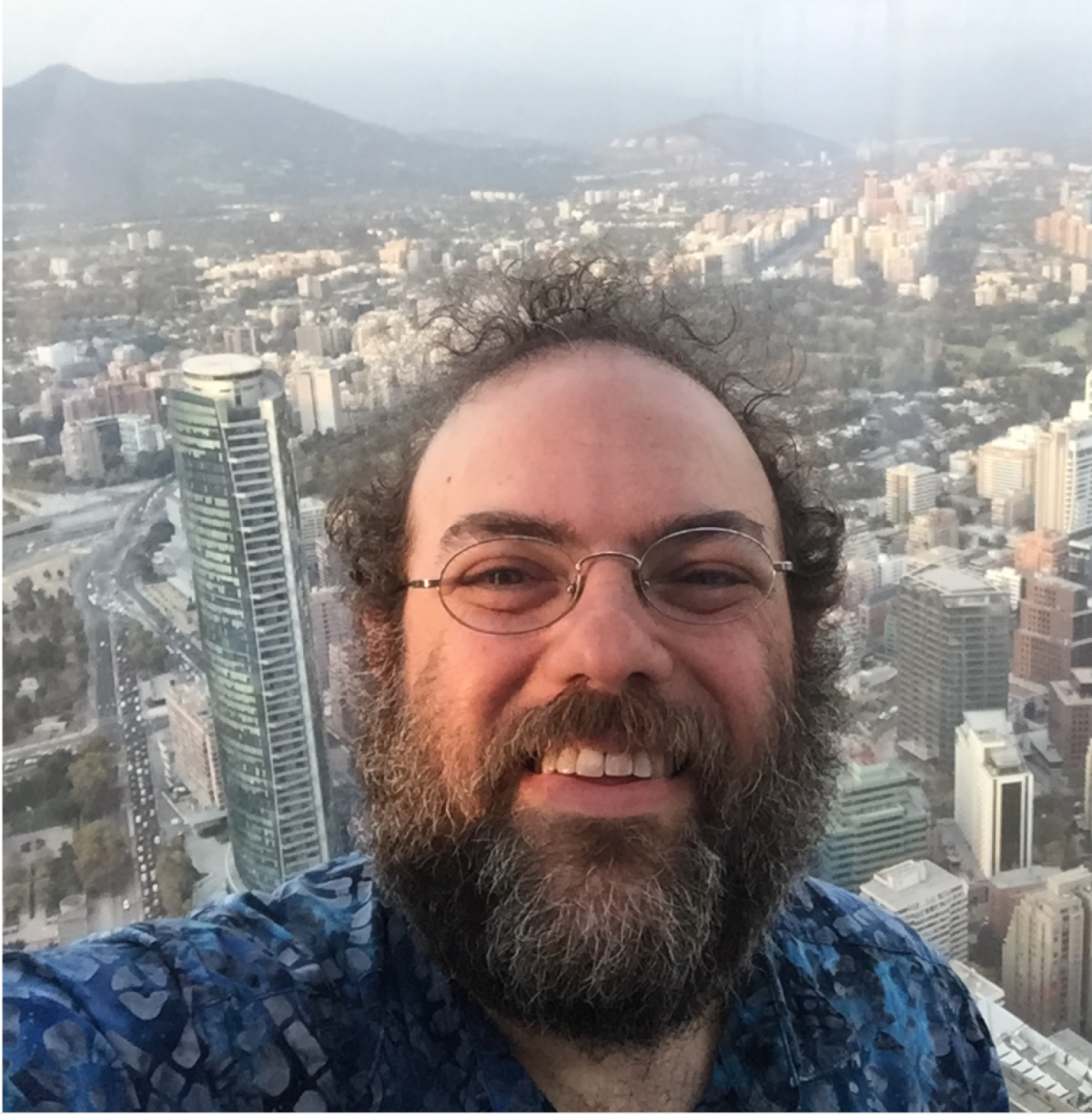
| Dr. Nahum Melamed (Moderator / Event Lead, and Speaker) AIAA Distinguished Lecturer/Speaker Project Leader, Guidance and Control Subdivision, The Aerospace Corporation (In-Person Presentation)
Nahum Melamed is a project leader in the Embedded Control Systems Department in the Guidance and Control Subdivision at The Aerospace Corporation. He joined Aerospace in 2003. As a technical lead in Launch Vehicle Software, Dr. Melamed coordinates and guides a team of interdepartmental technical experts, and supports validation and mission readiness certification of the flight software and mission parameters for NASA’s Artemis missions. He conducts planetary defense technical and policy studies, co-chairs planetary defense conferences, serves on exercises exercise organizing committees, and speaks at these venues. He earned a Ph.D. in Aerospace Engineering from Georgia Tech. |
|
|
|
|
|
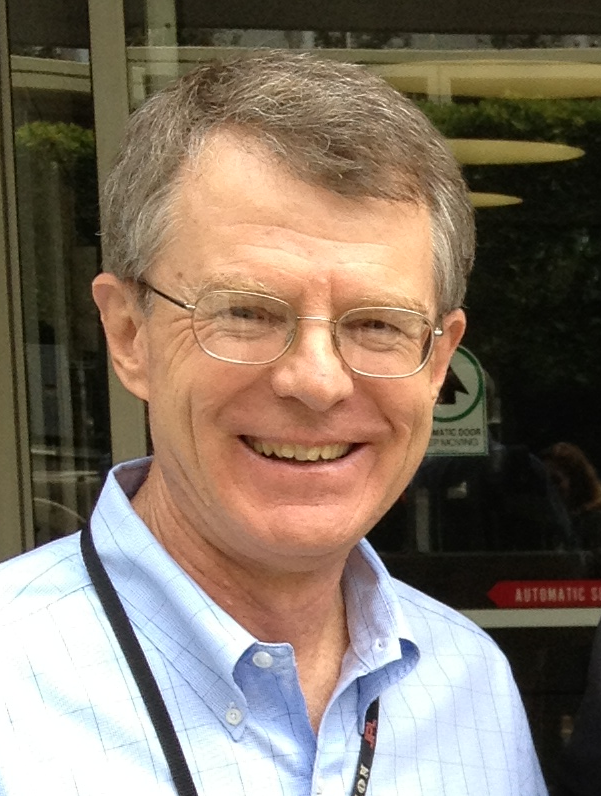
| Dr. Paul W. Chodas (Panelist) Former Director, Center for Near-Earth Studies (CNEOS)
NASA JPL (In-person) |
|
|
|
|
|
| Dr. Andrew Rivkin (Speaker) Planetary Astronomer Johns Hopkins Applied Physics Laboratory.
"Planetary Defense After DART: What Have We Learned, and What Comes Next?" (On-line, Remote Presentation)
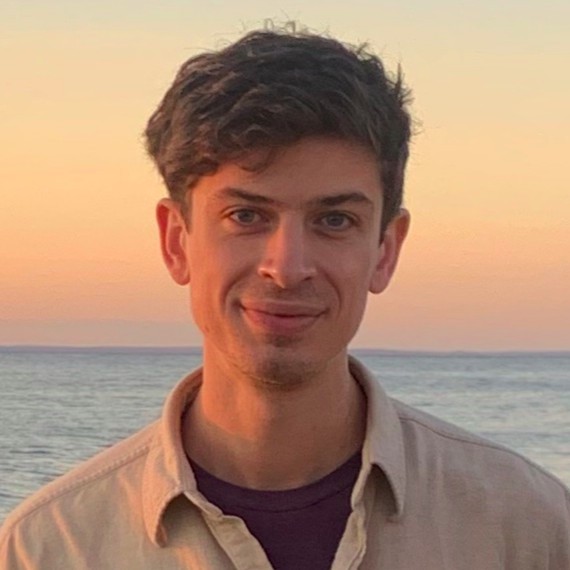
Dr. Andrew Rivkin is a planetary astronomer at the Johns Hopkins Applied Physics Laboratory. He was born in New York City, and obtained his undergraduate degree from MIT in 1991 followed by a PhD in Planetary Sciences from the University of Arizona in 1997. Rivkin was Investigation Lead for the recent Double Asteroid Redirection Test, NASA’s first planetary defense test mission and has remained active in planetary defense work as a member of the Hera mission team and lead for the JWST observations of potentially hazardous asteroid 2024 YR4. His research focus outside of planetary defense is infrared measurements of small bodies and related objects. When not working, Rivkin enjoys noodling on his guitar, watching baseball games, and spending time with loved ones and friends. |
|
|
|
|
|
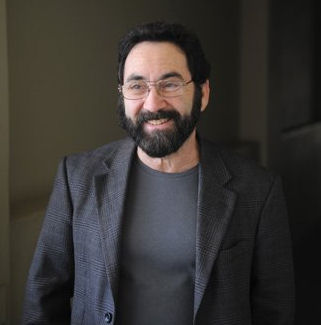
| Prof. Philip M. Lubin (Speaker, Panelist) Professor of Physics at UC Santa Barbara
"Pi: Toward an Operational Planetary Defense Program - Hypervelocity Penetrators to Pulverize Threats" (On-line or In-Person) https://www.deepspace.ucsb.edu/projects/pi-terminal-planetary-defense We are in year four of a NASA advanced concepts (NIAC) program in planetary defense, called PI (Pulverize It), that is radically different than traditional methods such as deflection. In a number of recent papers (see our website) we discuss a new approach to planetary defense that uses energy not momentum transfer, allowing for extremely short mitigation time scales if required as well as long warning time scenarios. The method involves an array of hypervelocity kinetic penetrators that pulverize and disassemble an asteroid or small comet. These penetrators can be purely passive for smaller threats as well as explosive, including nuclear for extreme threats. This program can operate in any mode from terminal (days or less of warning) to long warning times. In the short warning terminal mode, we mitigate the threat using the Earth’s atmosphere to dissipate the energy in the fragment cloud. In the long warning time mode, the disassembled asteroid fragments cloud spreads and the fragments largely miss the Earth. In short intercept terminal scenarios, the asteroid fragments of maximum ~10-meter diameter, the Earth's atmosphere acts as a "beam dump" where the fragments air burst, with the primary channel of energy going into spatially and temporally de-correlated shock waves. This approach allows for an extremely rapid response, much lower launch mass, as well as a testable, and deployable approach with a logical roadmap to an operational planetary defense program using a single launcher solution such as a Falcon 9. This allows for effective defense against asteroids up to 1km diameter and could virtually eliminate the threat of mass destruction caused by these threats. For threats larger than about 200m diameter, the use of passive combined with nuclear penetrators allows the same single launcher solution but with a different penetrator array. Larger launchers such as SLS or Starship are also useful for large threats. While long warning times are always preferable, we give some examples of extremely short term warning and the effectiveness of our program in a terminal mode. As an example, with only a 1m/s internal disruption, a 12 hour prior to impact intercept of a 50m diameter asteroid (~10Mt yield, similar to Tunguska), a few days prior to impact intercept of 100m diameter asteroid (~100Mt yield), or a 10-30 day prior to impact intercept of Apophis (~350m diameter, ~ 1-4 Gt yield depending on orbital phase) would mitigate these threats. Mitigation of a 1km diameter threat with a 60-day intercept is also viable. As another example, a 20m diameter asteroid (~0.5Mt, similar to Chelyabinsk) could be mitigated with a 100 second prior to impact intercept with a 10m/s disruption and 1000 second prior to impact with a 1m/s disruption. Zero-time intercept of 20m class objects are possible due to atmospheric dispersion effects. We also show that extension to a heavier lift launcher with an array of both passive (for “hole drilling”) and nuclear penetrators allow for relatively short term (months) mitigation of 10km class existential (planet killer) threats, though such large impact events are extremely rare. Having such a capability would allow humanity for the first time to take control over its destiny relative to asteroid and comet impacts. https://www.researchgate.net/profile/Philip_Lubin
Website: www.deepspace.ucsb.edu Philip Lubin is a professor of Physics at UC Santa Barbara whose primary research has been focused on studies of the early universe in the millimeter wavelengths bands, applications of directed energy for planetary defense and propulsion and multi-modal planetary defense using hypervelocity penetrators. His group has designed, developed and fielded more than two dozen ground based and balloon borne missions and helped develop two major cosmology satellites. Among other accomplishments his group first detected the horizon scale fluctuations in the Cosmic Microwave Background from both their South Pole and balloon borne systems in 1990 and their latest results, along with an international team of ESA and NASA researchers, are from the Planck cosmology mission which has mapped in exquisite detail the structures of the early universe and measured its fundamental parameters. His group has also worked on applications of directed energy systems for a wide variety of applications including fast solar systems missions, lunar applications and future large scale systems for planetary defense and systems to allow small interstellar probes to achieve relativistic speeds. His group has worked on a variety of planetary defense applications including both laser ablation and a recent hypervelocity penetrator mitigation method (PI) using both passive and active (explosive) penetrators. He is co-recipient of the 2006 Gruber Prize in Cosmology along with the COBE science team for their groundbreaking work in cosmology as well as the 2018 Gruber Prize in Cosmology along with the Planck science team for their determination of fundamental cosmological parameter. He has published more than 500 papers. |
|
|
|
|
|
| Dr. Jason Pearl (Speaker) Physicist, Planetary Defense Group Lawrence Livermore National Laboratory "High-Fidelity Simulation of Asteroid Airbursts with Spheral++" (On-line, Remote Presentation)
|
|
|
|
|
|
| Brent W. Barbee (Speaker) Lead Planetary Defense Applications Scientist & Community Liaison NASA/Goddard Space Flight Center
"Asteroid Disruption for Planetary Defense and the TERP RAPTOR Mission to Apophis" (On-line, Remote Presentation)
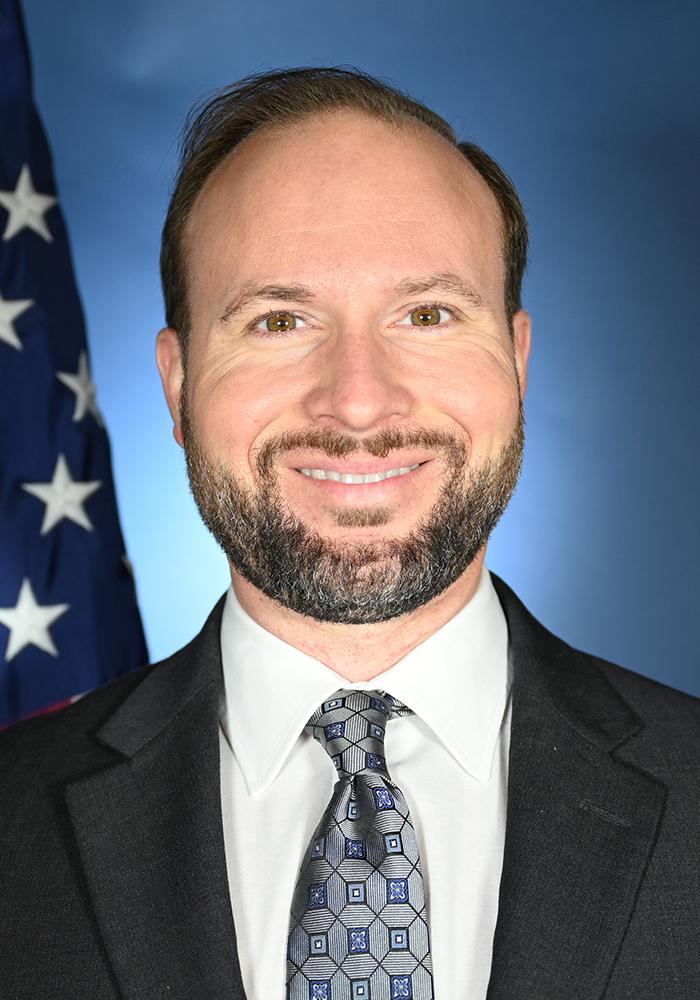
Brent Barbee is the NASA Goddard Space Flight Center's Lead Planetary Defense Applications Scientist & Community Liaison, and an adjunct faculty member of The University of Maryland's Aerospace Engineering department, teaching both undergraduate and graduate courses. At NASA Goddard, he leads research in spacecraft mission design for Planetary Defense (reconnaissance missions, and missions to deflect or disrupt hazardous near-Earth objects). He is also the technical lead for NASA's Near-Earth Object Human Space Flight Accessible Targets Study (NHATS), and is a chair of the International Academy of Astronautics Planetary Defense Conference series. Previously, Brent was the Dynamics Verification & Validation Lead on the Investigation Team for NASA's Double Asteroid Redirection Test (DART) spacecraft mission, a member of the Flight Dynamics Team for NASA's OSIRIS-REx asteroid sample return mission, a member of the 2017 NASA Near-Earth Object Science Definition Team, and an author of the U.S. National Near-Earth Object Preparedness Strategy and Action Plan. Main-belt asteroid 120208 was renamed "Brentbarbee" in honor of his contributions to asteroid missions and planetary defense. He has received multiple awards, including the 2012-2013 AIAA National Capital Section Hal Andrews Young Engineer/Scientist of the Year Award and the NASA Early Career Achievement Medal.
Presentation Summary: Large, potentially hazardous asteroids (PHAs), especially those that slip in from the sunward direction or give us weeks to react, demand mitigation options capable of partially or totally disrupting them. Ongoing research is honing two leading techniques: high-velocity kinetic impactors and nuclear explosive devices, each suited to different warning times and asteroid properties. In this presentation, we will cover the importance of disruption, when it is required, and the use of each technique. Additionally, we will spotlight the University of Maryland's CubeSat mission, TERP RAPTOR, bound for Apophis, the 350 meter near-Earth asteroid set to make a historic close approach in April 2029. |
|
|
|
|
|
| Adrienne Rudolph (Speaker) Ph.D. student Department of Aerospace Engineering The University of Maryland at College Park CRESST-II researcher supported by NASA's Planetary Defense Coordination Office
"Asteroid Disruption for Planetary Defense and the TERP RAPTOR Mission to Apophis" (On-line, Remote Presentation)
Adrienne Rudolph is an Aerospace Engineering PhD student at the University of Maryland and a CRESST-II researcher supported by NASA's Planetary Defense Coordination Office, developing faster propagation methods for modeling disrupted asteroid fragment trajectories. She received her Master's degree in Aerospace Engineering from UMD, and Bachelor's degree from Purdue University. She is also a 2025 Women in Defense Scholar and Rocket City Fellow. Last summer, Ms. Rudolph interned at The Aerospace Corporation as a remote sensing architecture performance engineer and worked at ExoAnalytic Solutions prior to. Outside of academia, Adrienne has participated in various Space Mission Design Schools, is a scientific diver in training at UMD's Neutral Buoyancy Research Facility, Principal Investigator of the TERP RAPTOR mission to Apophis, and skates in the University of Maryland Figure Skating Club.
Presentation Summary: Large, potentially hazardous asteroids (PHAs), especially those that slip in from the sunward direction or give us weeks to react, demand mitigation options capable of partially or totally disrupting them. Ongoing research is honing two leading techniques: high-velocity kinetic impactors and nuclear explosive devices, each suited to different warning times and asteroid properties. In this presentation, we will cover the importance of disruption, when it is required, and the use of each technique. Additionally, we will spotlight the University of Maryland's CubeSat mission, TERP RAPTOR, bound for Apophis, the 350 meter near-Earth asteroid set to make a historic close approach in April 2029. |
|
|
|
|
|
| Mr. Joe Carroll (Speaker) (mostly retired)
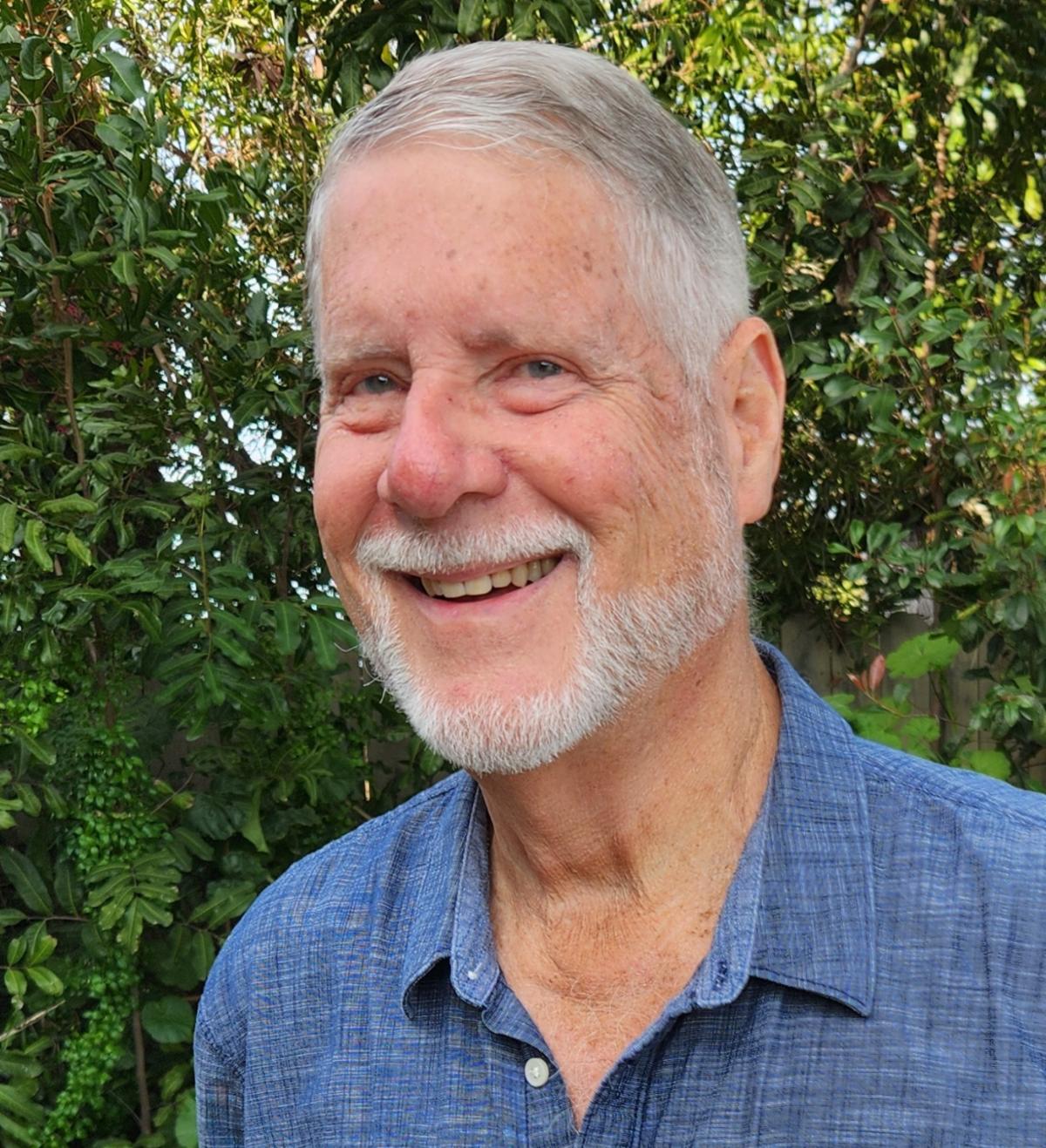
"Cheaper by the 100: Solar-Sailing Nanosats for Small-Body Missions" (In-person Presentation) |
|
|
|
|
|
| Dr. Russell TerBeek (Panelist or Presenter) Physicist and Electrical Engineer Sandia National Laboratories
(On-line)
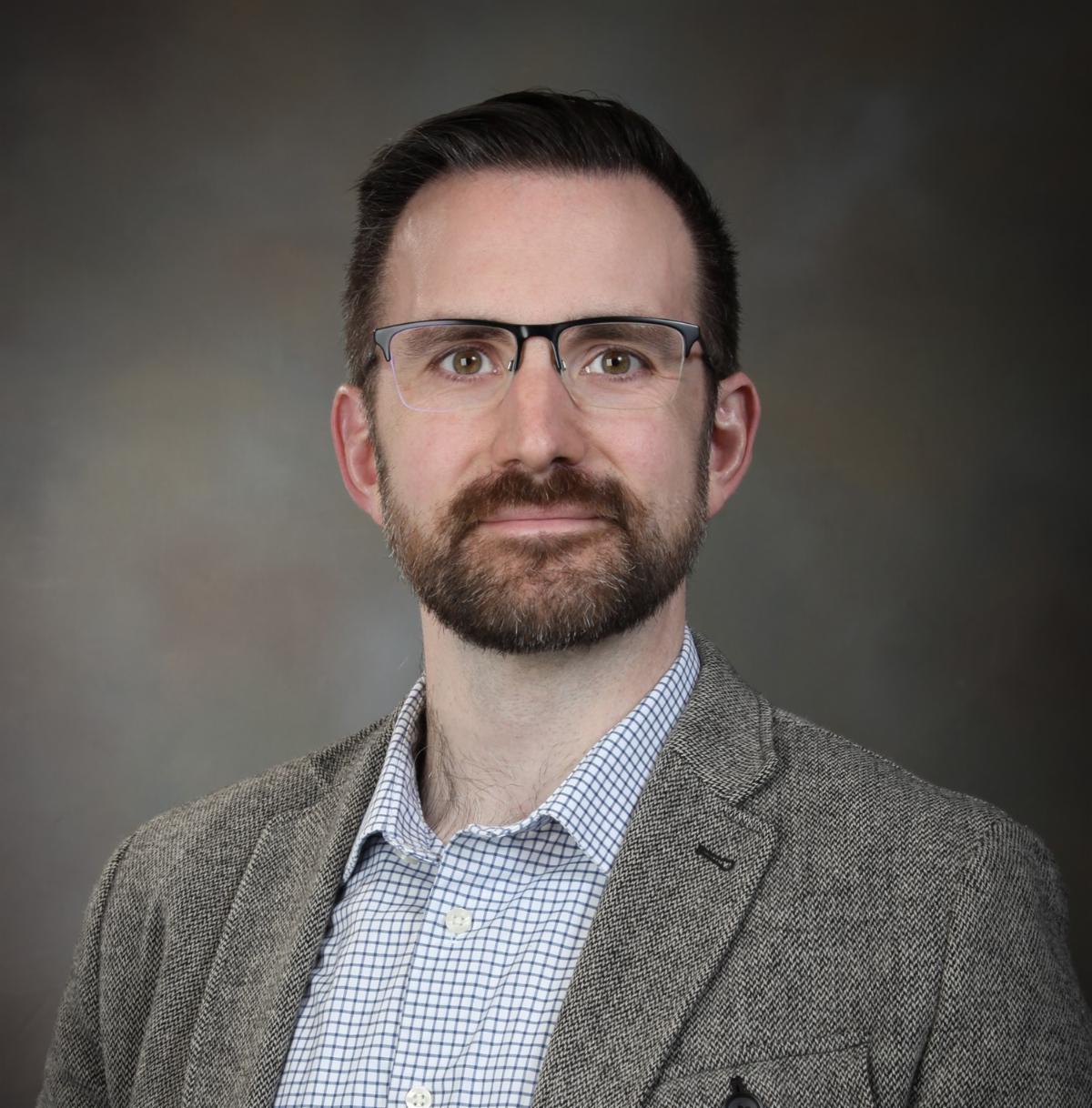
Dr. Russell TerBeek is a physicist and electrical engineer at Sandia National Laboratories in Albuquerque, New Mexico. He was born in San Francisco, obtained a B.S. in physics and mathematics from Hillsdale College in 2010, and obtained a Ph.D. in physics from Arizona State University in 2015. He leads Sandia’s efforts at radar development for the purposes of planetary defense. Aside from that, he works on such diverse topics as pulsed power system design, high voltage breakdown mitigation, and numerical techniques for the electromagnetic characterization of asteroids. |
|
|
|
|
|
| Prof. Madhu Thangavelu (Speaker) Conductor, ASTE527 Graduate Space Concepts Studio, USC Viterbi School of Engineering and USC School of Architecture "OPERA II : Fast Flyby Concept for Reconnaissance of NEOs" (In-Person Presentation) |
|
|
|
|
|
| Brin Bailey (Speaker) Research Specialist Deepspace Group Department of Physics University of California, Santa Barbara NASA Ames Science Collaborator "Investigating Hypothetical Mitigation of Asteroid 2024 YR4 via Intentional Robust Disruption" (On-line Presentation)
Brin Bailey is an astrophysics researcher within the Deepspace Group at the University of California, Santa Barbara, where they specialize in the group's NASA-funded planetary defense project, Pulverize It (PI). They earned a B.S. in Geophysics from UCSB in 2022 and have been working with the Group since November 2021. Their work focuses on the post-impact effects of asteroid mitigation via intentional robust disruption (IRD), including the analysis of atmospheric effects from asteroid fragment airbursts and an investigation of potential radiological effects of nuclear mitigation efforts. They also manage a variety of outreach efforts, working with local museums and schools to educate youth and adults alike on space science and planetary defense. |
|
|
|
|
|
| Alexander (Sasha) N. Cohen (Speaker) Research Specialist Deepspace Group Department of Physics University of California, Santa Barbara NASA Ames Science Collaborator "Investigating Hypothetical Mitigation of Asteroid 2024 YR4 via Intentional Robust Disruption" (On-line Presentation)
Alexander Cohen is a researcher within the Deepspace Group at the University of California, Santa Barbara. He specializes in hydrocode simulations of hypervelocity impact events for planetary defense from asteroids. His other specializations include computer aided design (CAD) and finite element analysis (FEA). He earned a B.S. in Physics from UCSB in 2019. |
|
|
|
|
|
|