You don't want to miss this.
[[trackingImage]]

Feb 10

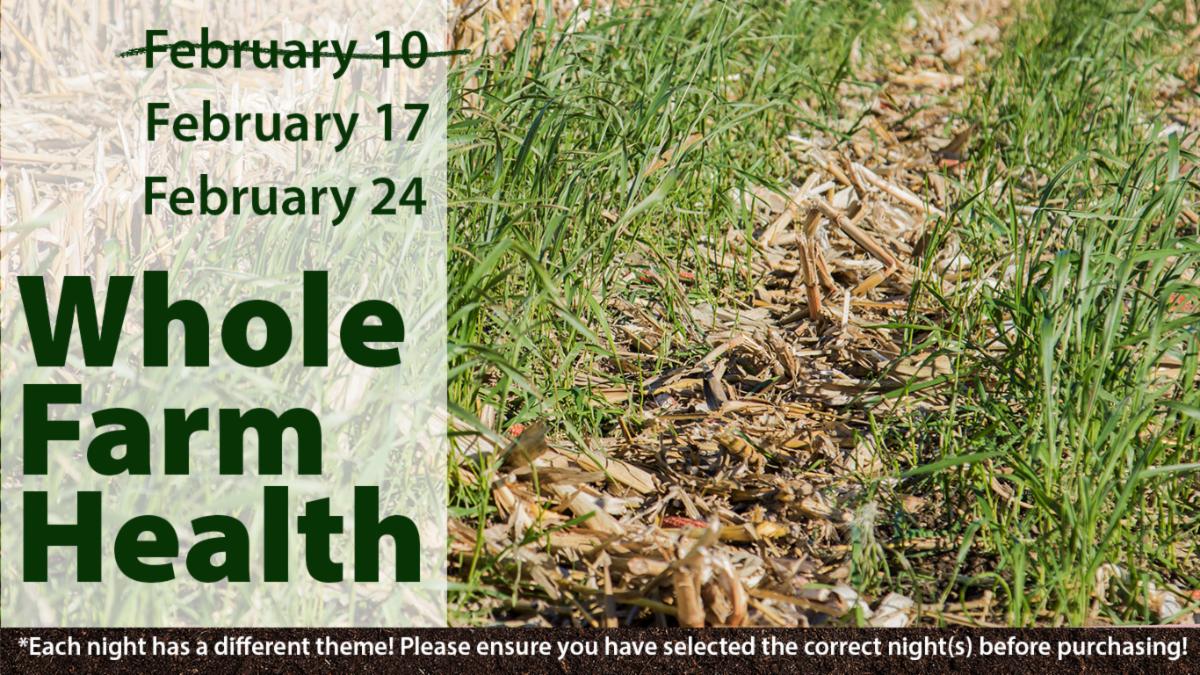
Whole Farm Health 2026

Whole Farm Health is for farmers and families - seeking to: Learn strategies to successfully transition to soil health practices; Establish Succession plans for intergenerational transfer; Discover profitable cost saving measures using Cover Crops; and Support family and neighbors by embracing holistic practices to increase human health and wellness.

Each of our workshops will be from 6-8 PM. Please ensure you are selecting the right ticket for the event you plan to attend when registering!

Event Dates
Tuesday, February 10
Tuesday, February 17
Tuesday, February 24

Flory Hall
Douglas County Fairgrounds, 2120 Harper St, Lawrence, KS 66046
View on map

Feb 10, 2026 06:00pm - Feb 24, 2026 08:00pm

Free

Featured Speakers Information

Updated: 1-16-26

February 10, 2026 -

All About Soil Tests

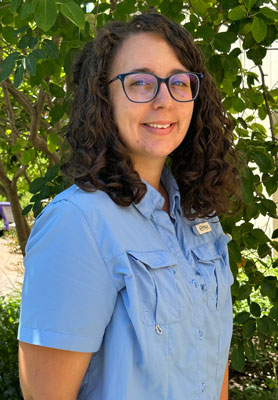
Speaker: Tina Sullivan, NE Area Agronomist

"Right Rate, Right Time: Using Soil Tests to Guide Fertilizer Decisions"

The KSU soil testing and fertilizer guidelines have been recently updated for most crops and forages. This presentation will go over the importance of soil sampling and some interpretation of those results for smarter use of fertility applications. 


Bio:

Tina Sullivan joined the Northeast Research and Extension Center in June 2024 as the Northeast Area Agronomist based in Manhattan, KS. Originally from southeast Tennessee, Sullivan was raised on a goat farm started by her late father and her mother in Bledsoe County. Surrounded by vegetable farms and smaller-scale row cropping and forage, agronomy had always been part of her life, even if it was not an initial interest of her youth. FFA during high school allowed her to branch out into topic areas and initial research endeavors through the Agriscience Fair and other career development events.  

Sullivan graduated with her bachelor’s degree in agriculture – agricultural engineering technology and precision agriculture from the University of Tennessee at Martin in 2018. Working as a manager trainee for the Tennessee Farmers Cooperative stationed at the local branch of her home county led her down a path of wanting to go to graduate school for the intersections of agronomy and irrigation. This desire led her to Utah State University, where she did her master's and PhD with Dr. Matt Yost. Her graduate work focused on irrigation and cropping system management interactions in common and alternative forage systems. Additionally, Sullivan led some of Utah's first outdoor industrial hemp trials since the 1940s.

Responsibilities of this position include extension and outreach as well as applied research for the northeastern region of Kansas. This area comprises 31 counties, including the River Valley, Meadowlark, Flint Hills, and Central districts. Additional counties include Atchison, Brown, Dickinson, Doniphan, Douglas, Geary, Harvey, Johnson, Leavenworth, Lyon, Marion, Marshall, McPherson, Pottawatomie, Reno, Rice, Riley, Shawnee, Wabaunsee, and Wyandotte.

Outside of work, Sullivan enjoys hiking with her dog, Dottie, and baking bread and cookies. She can be reached by email at tsullivan@ksu.edu.

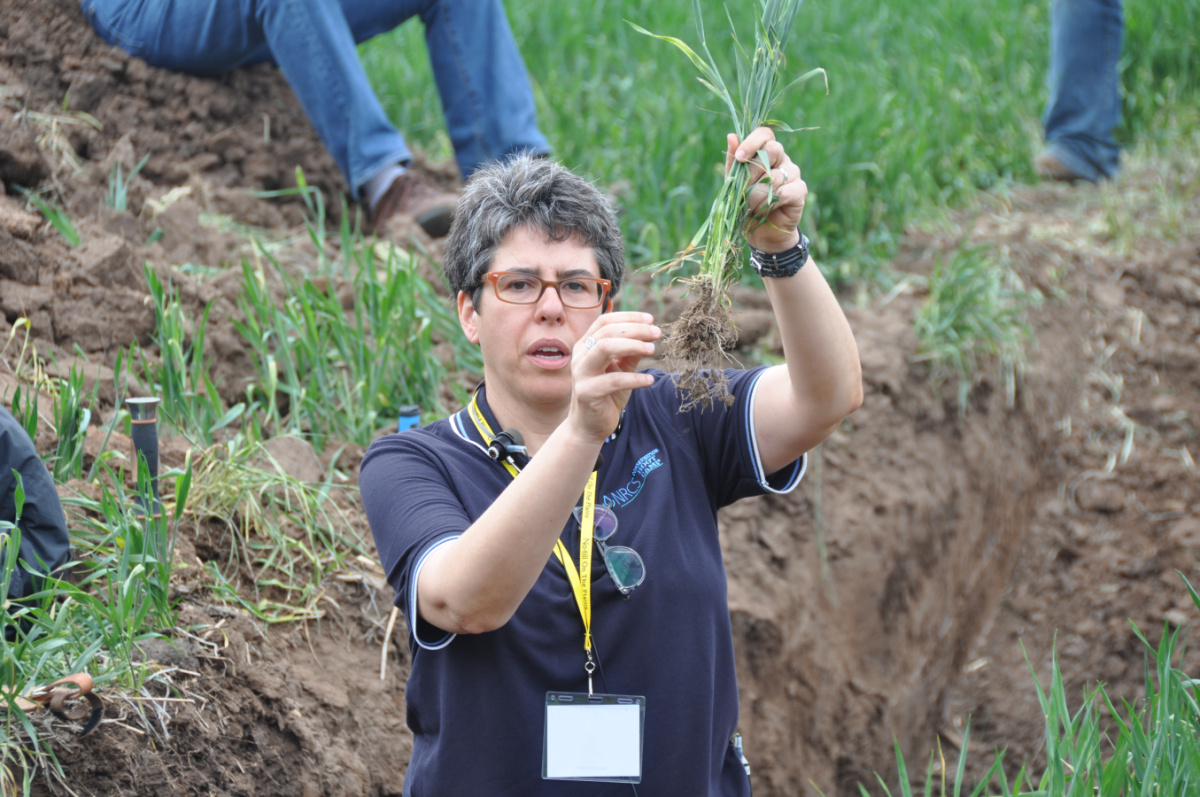
Speaker: Candy Thomas, NRCS Soil Health Specialist

"'New Frontier' of Soil Testing & Practical Use In Field Soil Health Assessments"

Digging deep into what some of the new soil health tests offer vs. conventional and how to do your own assessment on your farm


Bio:

Candy Thomas, Salina, Kansas, is a regional soil health specialist in the Kansas state office of USDA-NRCS. Serving in an advisory role on the board of directors since 2013, Candy believes NRCS goals align closely with those of No-till on the Plains in helping people help the land. NRCS has developed many tools and standards to help farmers improve soil health and soil conservation. She holds a master's degree in agronomy from Iowa State University. Candy and her husband also operate a diversified farm on the Iowa Missouri border. 

February 17, 2026 - Optimizing Grass Productivity through Managed Grazing

Speaker: Ethan Walker, NRCS Area Grassland Specialist

Topics: "Grazing Arithmetic" & "Using a Grazing Stick"

Learn to calculate carrying capacity and use a grazing stick.

Bio:

Ethan graduated from Kansas State University with a degree in Rangeland Management and a minor in Animal Science in 2012. Following his studies he gained valuable experience as a Soil Technician at the Wilson County Conservation District for three years. He later joined the Natural Resources Conservation Service (NRCS) as a Rangeland Specialist, serving Montgomery, Elk, and Chautauqua Counties. Nine years ago, I transitioned to the role of Area Grassland Specialist, responsible for overseeing 16 counties in Southeast Kansas, including Miami County. His passion lies in promoting soil health through regenerative agriculture practices. With his wife Kate they manage, E & K Heritage Farm located outside of Chanute. They focus on diverse animal grazing including fowl, cattle, sheep, pigs, and goats through adaptive management strategies. Outside of work, he cherishes time with his two boys, aged 6 and 4.

February 24, 2026 - Regenerative Cropping Systems

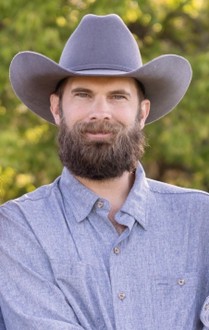
Speaker: Michael Thompson, Kansas Soil Health Alliance, President

"Nutrient Management in Regenerative Systems: Keep it Simple"

A large part of nutrient management Thompson applies is fostered through natural soil biology and careful conservation stewardship: (Cover crops and dead mulch, along with a diverse rotation with livestock). But he also knows there are benefits to careful use of biological compost extracts – that can augment a regenerative fertility program. Learn how he incorporates homemade Vermicompost Extract and other Biologicals in his fertility program

Bio:

Michael farms in partnership as Thompson Farm and Ranch LLC with his brother Brian and father Richard. The operation is located in Northeast Norton County near Almena, KS. They grow corn, soybeans, and wheat. They also manage a cow/calf beef herd that rotationally grazes on native range and diverse cover crops grown on farmland when there is not a cash grain crop growing. The operation is 100 percent no-till with a focus on increasing biology, soil cover, water holding capacity, and carbon levels of the soils they manage