|
|
FASD Changemakers: Lay of the Land Survey #1 Health Issues in 500+ Older Teens & Adults with Dx FASD |
It was long suspected that adults with FASD face more health issues than the general population, but research was lacking—mainly because adults were hard to find. In 2016, the ALC launched a 260-question health survey for adults with diagnosed FASD, with only technical software support. Nearly 700 responses came in from people aged late teens to early sixties; 561 were usable. Preliminary results were shared in 2017, final data in 2019, and the survey published in 2020. This workshop shares key findings and how the survey led to several funded multi-site health studies. |
|
|
| Tuesday, October 21, 2025 1:00 pm - 2:30 pm EST 12-1:30pm CT, 11-12:30 MT, 10-11:30 PST Cost: FREE |
|
|
FASD Changemakers: Lay of the Land Survey #1 Health Issues in 500+ Older Teens & Adults with Dx FASD
It has long been suspected that adults with FASD have more health problems than the general population, but no research on it had been done. This was in large part because no one seemed to be able to find the adults. The ALC knew that they could. To begin to remedy this, and to provide some basic data for researchers to begin to format health research, in 2016 the ALC undertook to develop and design a 260 questions survey on the health of adults with diagnosed FASD. They were provided with behind-the-scenes technical software support only. The survey was widely distributed and close to 700 completed surveys were returned. Respondents ranged in age from late teens to early sixties. After excluding surveys with problems, a total of 561 were included in the results. Preliminary data was reported in 2017, and final data in 2019. The survey was published in 2020. This workshop, the results of which have been widely presented including to governments, will provide the results of the survey for those who have an interest or questions on the health of adults with FASD. This survey has led to the funding of several multi-site studies on the health of adults.
Learning Objectives:
- Identify common physical and mental health challenges experienced by adults with Fetal Alcohol Spectrum Disorders (FASD), as reported in the ALC survey.
- Explain how early identification and documentation of FASD in adulthood can inform treatment planning, service coordination, and client advocacy.
- Analyze the implications of the ALC survey findings for clinical practice, including the need for multidisciplinary approaches and improved access to care for adults with FASD.
|
|
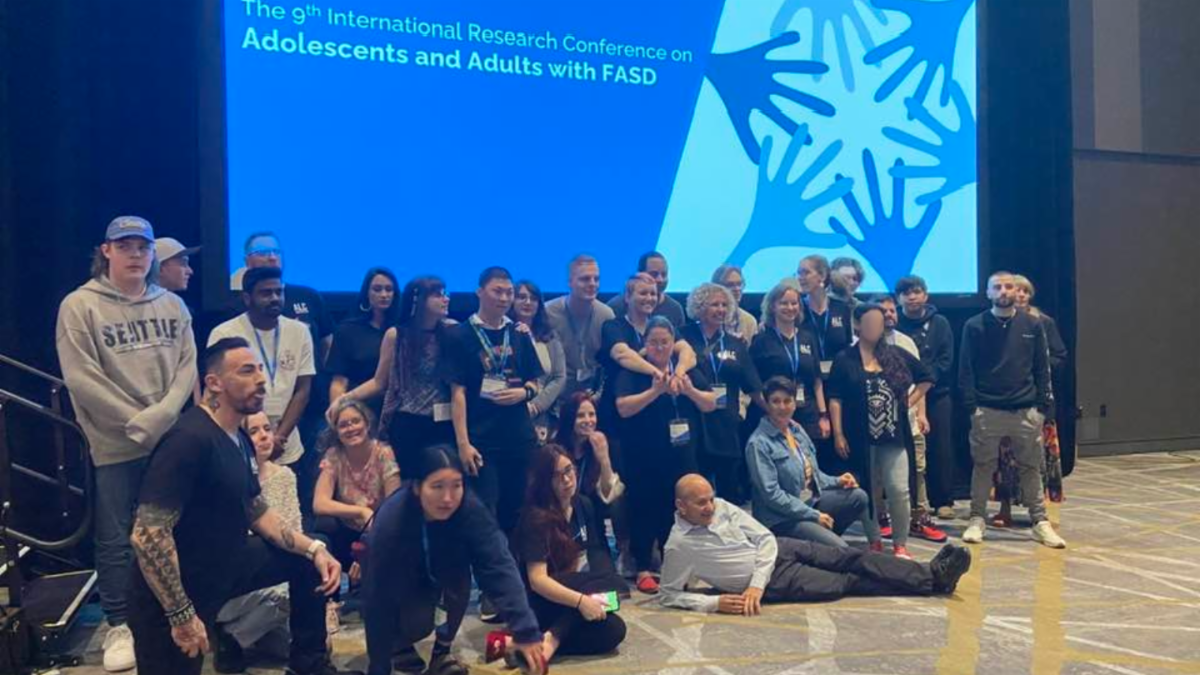
| Adult Leadership Collaborative (ALC) of FASD Changemakers (ALC – FASD Changemakers) The International Adult Leadership Collaborative (ALC) of FASD Changemakers is a well known group of citizen researchers and experts who each have diagnosed FASD. It is made up of 16 members. As a group, they have experienced all the events commonly associated with FASD but have learned how to overcome obstacles, maximize potential and re-define success. They use their combined living experience to work together as consultants, advisors, trainers, presenters, mentors, group moderators, bloggers, and as research project team members for universities and national organizations, centres and associations in several countries. They have organized, initiated, designed, developed and led full 3-day program conferences for teens and adults with FASD in both Vancouver and Seattle since 2014. As well, they develop and lead their own survey research, which has received wide interest by researchers, institutions, organizations, systems, and government and is currently being used to help focus research directions and questions. Their first survey on the health of 500 adults with diagnosed FASD was published in 2020, and their second survey on the quality of life of 450 adults with diagnosed FASD was published in 2024. A third Lay of the Land survey is currently in the initial stages of discussion. |
|
|
|
CJ Lutke ALC FASD Changemakers, Vancouver, BC
CJ Lutke, who is 41, was diagnosed with full FAS at birth and adopted by her foster family at age five, who had already adopted her older brother and sister who also have FASD. She is a well-known speaker on FASD, having presented at and participated in many conferences, seminars, training sessions and other events for over 20 years. CJ is a systems changer and advocate, provides advice and consultation and participates as an advisor and team member for different research projects. She currently sits on various committees, including one to make changes to the family court system in British Columbia (BC), chaired by the Chief Justice of the Supreme Court of BC, and has just been asked to be on a research project on suicidality in those with FASD by the Centre for Addiction and Mental Health, the national centre in Canada. She provides mentoring to younger adults with FASD and is the author of an on-line blog that is hosted by NOFASD Australia which is followed globally. As well, CJ has been a member of the Adult Leadership Committee (ALC) of FASD Changemakers for 15 year and was one of its founders. She was the co-lead on their first ground-breaking Lay of the Land Survey on the health and physical issues of adults with diagnosed FASD that has received wide international attention and was published in 2020. CJ was the lead author on their second Lay of the Land Survey on the Quality of Life of Adults with diagnosed FASD, results of which have been presented widely including to NIAAA and were published in 2024. As well, CJ became an adoptive parent when she adopted her now 12-year-old son (with FASD) from foster care when he was seven. CJ believes that those with FASD must challenge perceptions about possibilities and outcomes, find their purpose and change the future. Her goal is to help others with FASD find their voice and to understand that we are greater when we work together.
|
|
|
|
|
Maggie May ALC FASD Changemakers, Ireland
Maggie May, who is 28 years old, was diagnosed at the age of five with FAS in foster care, where she grew up. She was born in and has lived her entire life in Ireland. She is a well-known speaker on FASD, having presented widely, moderates several on-line groups including the largest global online support group for teens and adults with FASD and provides online mentoring to teens with FASD in several countries. Maggie is a systems changed and advocate and has been a member of the ALC for 5 years. She works for FASD UK. She is currently an expert advisory committee member for the development of a health app for adults with FASD by the University of Rochester, USA. Maggie’s goal is to help audiences change the way they view FASD, educate society to build environments for success, and empower those with FASD to find their own voices, purpose and the courage to be who they are and achieve what they want to do.
|
|
|
|
|
|