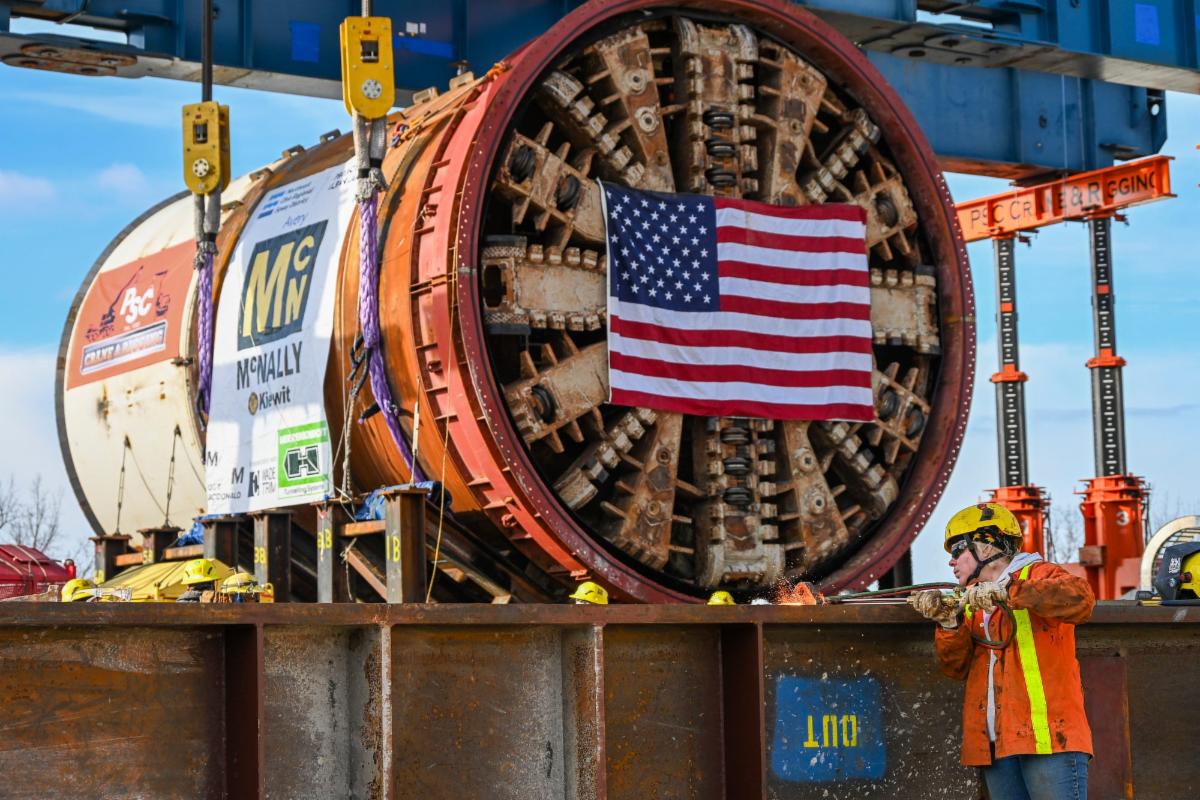
| Abstract: Project Clean Lake is a 25‑year program being implemented by the Northeast Ohio Regional Sewer District (NEORSD) in Cleveland, OH. The program’s goal is to reduce annual raw sewage discharges into Lake Erie by more than 4 billion gallons annually. When completed in 2036, it will enable the capture and treatment of more than 98% of wet‑weather flows within the District’s combined sewer system. A central component of the $3B Project Clean Lake is the construction of large‑scale CSO storage tunnels, new pump stations, and enhancements to treatment facilities. The program includes seven deep‑tunnel systems ranging from 2 to 5 miles in length, extending up to 300 feet below ground, and reaching finished diameters of up to 24 feet. To date, NEORSD has completed five of the seven tunnels and has advanced more than 1,000 feet into construction of the sixth. This presentation will highlight the design and construction challenges associated with two of these tunnels: the Westerly Storage Tunnel and the Southerly Storage Tunnel, representing contrasting geological conditions – one excavated in deep rock and the other in soft ground. |