You don't want to miss this.
[[trackingImage]]

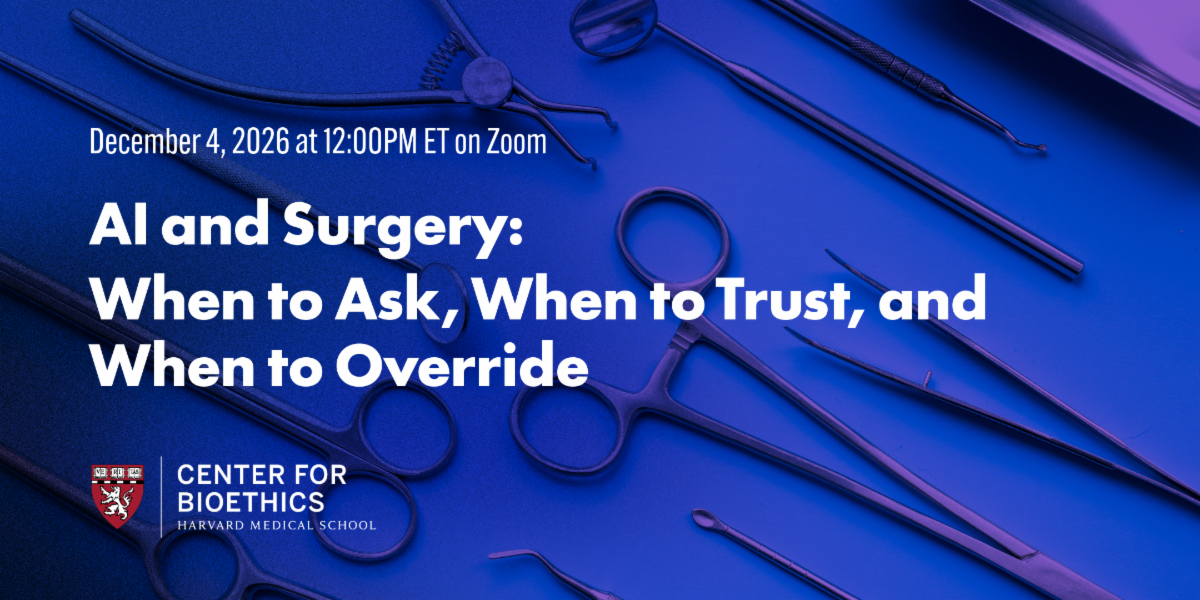
AI and Surgery: When to Ask, When to Trust, and When to Override

As AI becomes increasingly integrated into surgical practice, when should surgeons turn to AI for guidance, and how much should its recommendations influence clinical decisions? Through clinical vignettes, audience polling, and an interactive discussion, we hope to bring together perspectives from different sides of the conversation to explore how AI should inform surgical judgment, what happens when AI and surgeon opinions conflict, and who should have the final say in deciding whether to operate. Support provided by the Oswald DeN. Cammann Fund at Harvard University.

Friday, December 4, 2026
12:00pm - 01:30pm ET

Add to Google · Outlook Web · Outlook Mobile · Yahoo · iCal

Virtual location

You will receive a confirmation email with a URL.

MODERATOR:

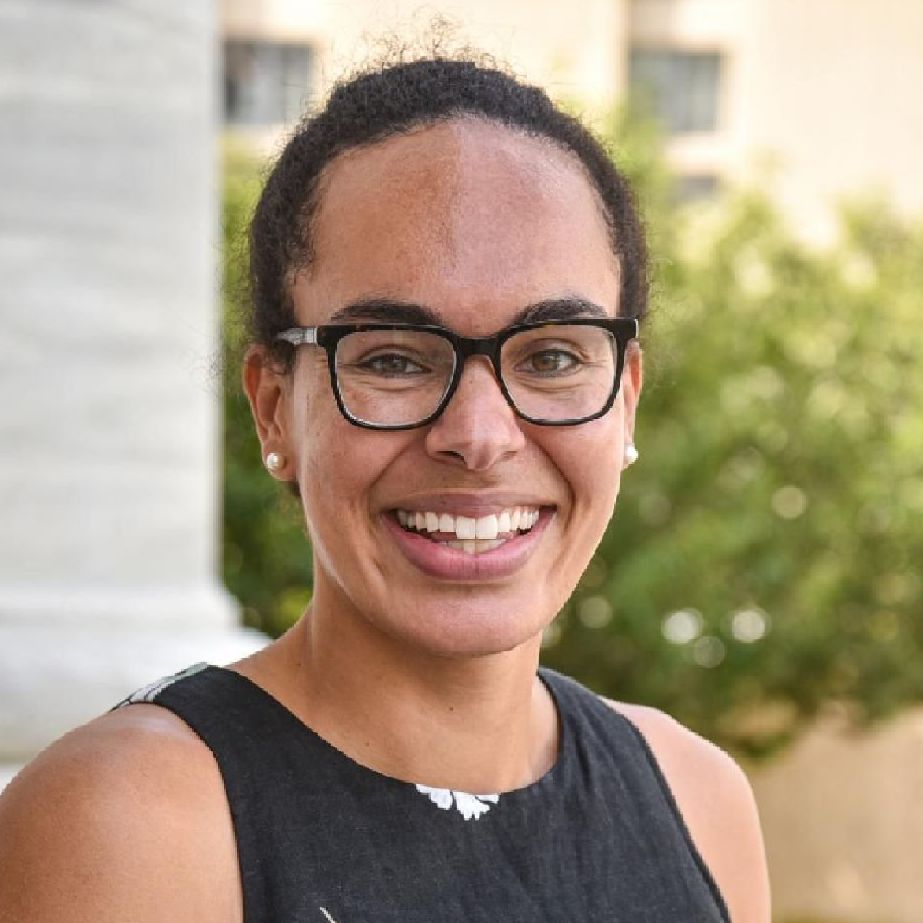
Theresa Williamson, MD

Chair, Surgical Ethics Working Group, Harvard Medical School Center for Bioethics; Faculty Neurosurgeon, Massachusetts General Hospital & Harvard Medical School


Dr. Williamson, a neurosurgeon and bioethicist, specializes in spine disorders and brain and spinal trauma. Throughout her professional career, Dr. Williamson has prioritized clinical excellence, ethical leadership, and a commitment to advancing patient care. As Director of the CINNR, Dr. Williamson leads a collaborative initiative between Brown University Health, Brown University, and both commercial and government partners. Prior to joining Brown University Health, Dr. Williamson held several leadership roles. She served as Chair of the Surgical Ethics Working Group at the Harvard Medical School Center for Bioethics and was Director of the Minimally Invasive Spine Service at Massachusetts General Hospital. At Mass General Brigham, she led the Neurotech Justice Accelerator, a Dana Center initiative. She continues to direct this program as part of a joint effort between Brown Health and Massachusetts General Hospital. Dr. Williamson is an active member of several professional organizations including the American Association of Neurological Surgeons, Women in Neurosurgery (WINs), and the Society for Minimally Invasive Spine Surgery.


PRESENTER:

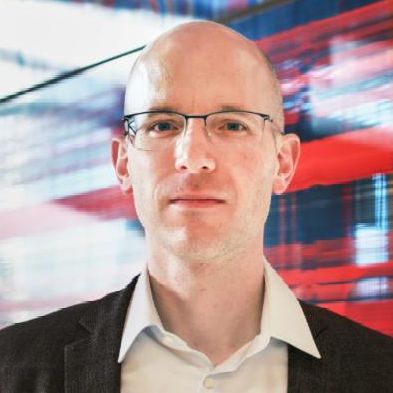
Eric Karl Oermann, MD

Associate Professor of Neurosurgery, Radiology, and Data Science, NYU; Director of the Health AI Research Lab, NYU Langone Health System


Eric Karl Oermann (EKO) (@ekoermann) is an Associate Professor of Neurosurgery, Radiology, and Data Science at NYU and the Director of the Health AI Research Lab of the NYU Langone Health System. He studied mathematics at Georgetown University with a focus on group theory. Dr. Oermann spent six months with the President’s Council on Bioethics studying human dignity under the mentorship of renowned physician-philosopher Edmund Pellegrino prior to leaving graduate studies in mathematics at UNC to pursue medicine. Dr. Oermann has won numerous awards for his scholarship including fellowships from the American Brain Tumor Association and Doris Duke Charitable Research Foundation. Dr. Oermann was selected as one of Forbes Magazine’s 30 Under 30 for his work on using machine learning to develop prognostic models for cancer patients. He was recruited as an early researcher at Verily (Google Life Sciences), and spent time at Google-X on Project Amber (the Moonshot for Mental Health). He has published over one-hundred manuscripts spanning basic research on machine learning, neurosurgery, and the philosophy of medicine, and has founded or co-founded multiple startups (Cadyne, Artisight, Delvi, MarchAI) in the medical AI space and consumer electronics. He is a practicing neurosurgeon and computer scientist, and is dedicated to studying human and artificial intelligence to improve human health and AI technologies themselves using insights from human neuroscience.