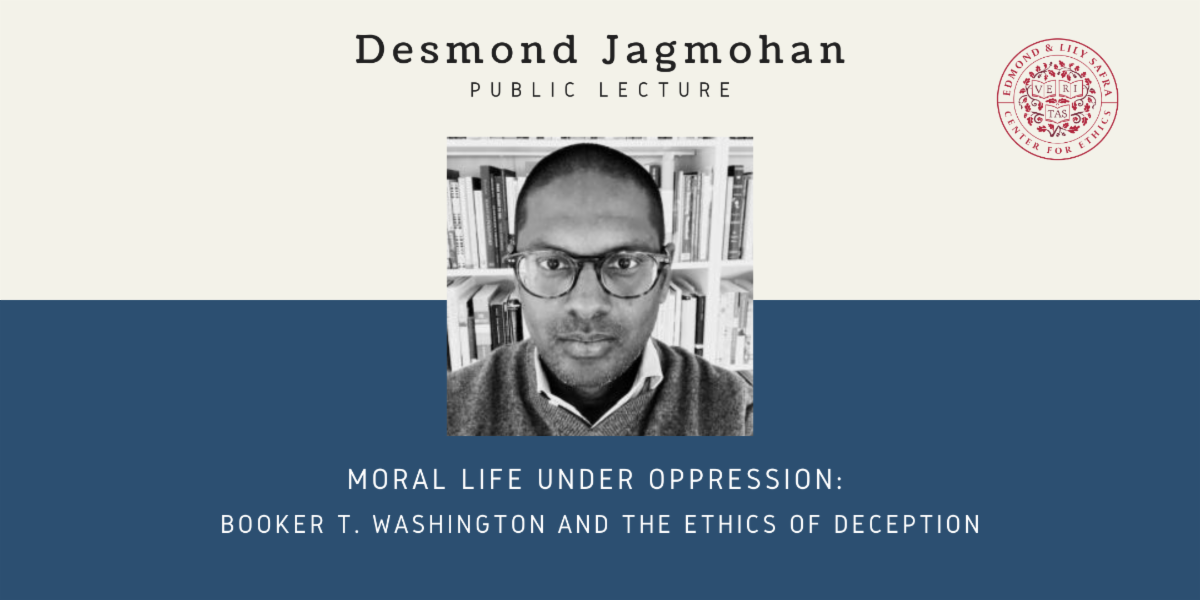
This lecture argues that when it comes to the moral life of the subjugated, we should accept that the truth often lies beneath the surface of appearance. For the subaltern, concealment and deception frequently prove the sounder and steadier means of resistance, and this was certainly true for Booker T. Washington, whose political thought was formed in one of the most extreme contexts in American history. Contesting what has become conventional wisdom—that he was an accommodationist who believed only in half measures—Jagmohan argues that Washington authored a subaltern politics that called for striking at white supremacy, but doing so through a mask. His central proposition here is that Washington used compromising means to pursue radical ends. In making this claim he neither celebrates nor condemns his politics of deception. Essentially, Jagmohan asks how we should handle the falseness and fraud we have inherited from Washington—his public perception as an accommodating leader. In pursuing this question, he recovers a more subversive Washington. |