You don't want to miss this.
[[trackingImage]]

Oct 09

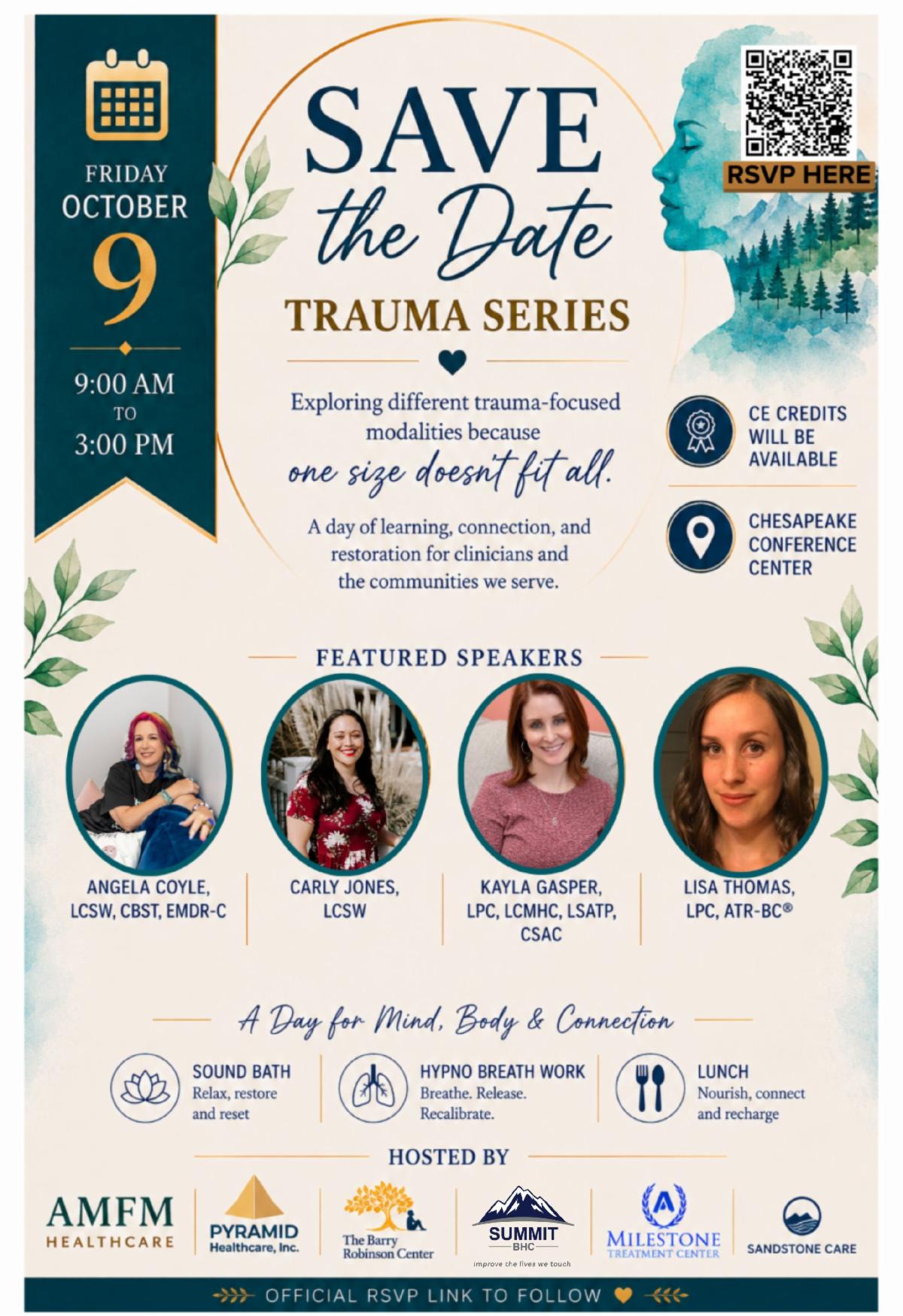
Trauma Series - Chesapeake Conference Center

Exploring different trauma focused modalities because one size doesn't fit all. This will be a day of learning, connection, and restoration for clinicians and the communities we serve.

Chesapeake Conference Center
700 Conference Center Drive, Chesapeake, VA 23320
View on map

Friday, October 9, 2026
09:00am - 03:00pm ET

Add to Google · Outlook Web · Outlook Mobile · Yahoo · iCal

Presenters & Presenations

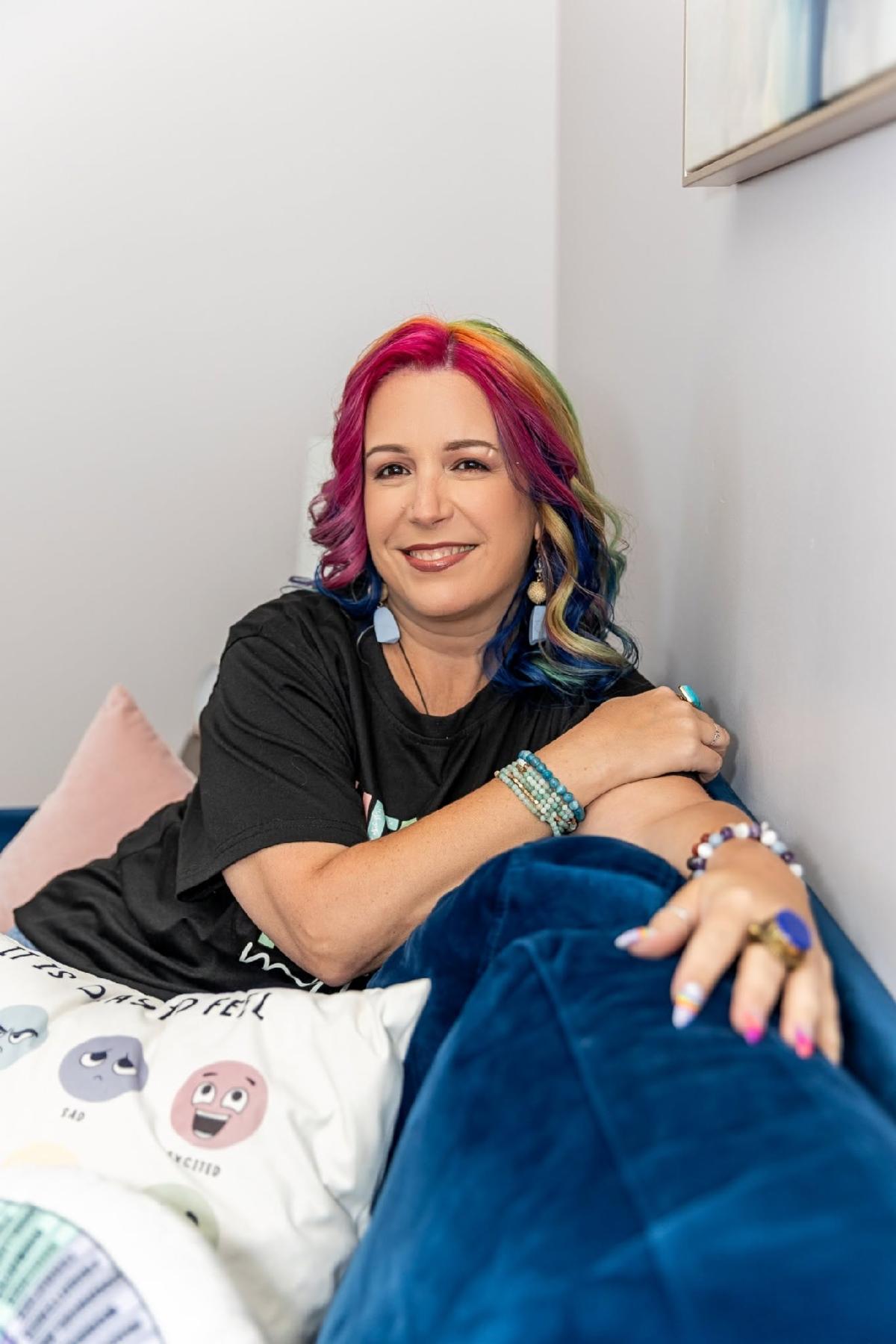
Angela Coyle, LCSW

EMDRIA Certified EMDR Therapist

Brainspotting Certified Therapist


Angela Coyle is a Licensed Clinical Social Worker who provides therapy, clinical supervision, mentorship, consultation, and professional training. She works with adults and couples navigating trauma, anxiety, relationship challenges, life transitions, and emotional overwhelm using a compassionate, collaborative, and nervous-system-informed approach. Angela integrates Brainspotting, Somatic Experiencing-informed interventions, Polyvagal Theory, and Parts Work, along with training in the Gottman Method and Imago Relationship Therapy. She is also passionate about supporting mental health professionals in strengthening their clinical identity, expanding their therapeutic skills, reducing burnout, and developing confidence in ethical and effective practice. Through her clinical and educational work, Angela creates spaces that foster self-awareness, connection, resilience, and meaningful growth.


Spot On: Where You Look Matters

An Experiential Introduction to Brainspotting

Angela Coyle, LCSW


Summary: This introductory training provides mental health professionals with a foundation in Brainspotting and its application within trauma-informed practice. Participants will explore core principles including focused mindfulness, dual attunement, the connection between visual focus and internal experience, and maintaining safety and the client’s window of tolerance. The training highlights Brainspotting as a client-led, attuned approach that may complement work with trauma, anxiety, emotional dysregulation, attachment concerns, and other forms of emotional or physiological activation. Participants will leave with a foundational understanding of Brainspotting and considerations for its thoughtful integration into clinical practice. This introductory training does not constitute Brainspotting certification or authorize participants to represent themselves as certified Brainspotting practitioners.

Learning Objectives:

  • Describe the theoretical foundation of Brainspotting
  • Explain how Brainspotting differs from other therapeutic approaches
  • Identify appropriate client populations and contraindications
  • Describe the role of attunement and neurobiology of Brainspotting
  • Discuss ethical considerations and scope of practice


This presentation is approved for 1 NBCC & ASWB CE credit Hour


Carly Jones, LCSW


Carly Jones, LCSW, is a licensed clinical social worker, integrative psychotherapist, and founder of Waves of Change Coalition, a Virginia Beach-based organization focused on wellness, mental health, and community healing. Licensed in Virginia and California, Carly has spent the past 13 years working across residential, inpatient, and medical settings, supporting people through trauma, grief, major life transitions, illness, and the complicated process of figuring out who they are on the other side of change. Her clinical work draws from psychodynamic, existential-humanistic, and relational approaches, with training in Polyvagal Theory, somatic approaches, and energy psychology. She is also a Level 2 certified sound healing practitioner through Sound Healing Academy and a Level 2 Usui Reiki practitioner. Rather than treating these practices as separate from clinical care, Carly is interested in where they intersect—and in finding practical, accessible ways to help people reconnect with their bodies, emotions, and sense of self. Outside of the therapy room, Carly brings this same work into the community. She develops and facilitates grant-funded programming, including Third Wave Thursdays, a surf and somatic healing program for women veterans funded through the Virginia Department of Veterans Services. She has presented on military and veteran caregiver well-being at professional conferences and regularly leads sound baths, restorative movement experiences, grief programming, and other community-based offerings throughout Hampton Roads. Whether she’s teaching a room full of clinicians, sitting with someone in therapy, or standing barefoot in the sand with a group of women, Carly’s approach is pretty simple: make complicated things easier to understand, create spaces where people can be honest about what they’re carrying, and help people reconnect with the parts of themselves they may have lost touch with along the way.


Treating the Whole Person: Integrating Sound Healing and Somatic Modalities into Clinical Practice

Carly Jones, LCSW


Summary: Clients do not experience distress in cognitive terms alone; they experience it in their bodies, their nervous systems, and their sense of meaning. Yet much of clinical training still treats the talking cure as the whole cure. This presentation makes the clinical case for integrating adjunctive modalities, with sound healing as the central example, into a whole-person treatment framework. Rather than presenting sound healing as a standalone wellness trend, this session grounds it in converging theoretical and empirical frameworks: Polyvagal Theory's account of how auditory cues and autonomic state shape a client's felt sense of safety; somatic theory's emphasis on bottom-up processing and interoception; energy psychology's evidence base for combining somatic stimulation with psychological exposure; and humanistic psychology's insistence that treatment address the whole person, not a symptom cluster. Participants will review recent peer-reviewed research on singing bowl and sound-based interventions, including randomized controlled findings on anxiety, physiological arousal, and mood, and will leave with a practical framework for ethical, scope-appropriate integration of adjunctive modalities alongside licensed clinical practice, including informed consent, contraindications, and documentation considerations.

Learning Objectives:

  • Explain key Polyvagal Theory concepts and their relevance to sound-based interventions.
  • Summarize current research on sound healing and singing bowls for anxiety, mood, and physiological arousal.
  • Identify how somatic, energy psychology, and humanistic approaches support whole-person treatment.
  • Apply ethical and scope-of-practice considerations when integrating adjunctive modalities into clinical practice.


This presentation is approved for 1 NBCC & ASWB CE credit Hour


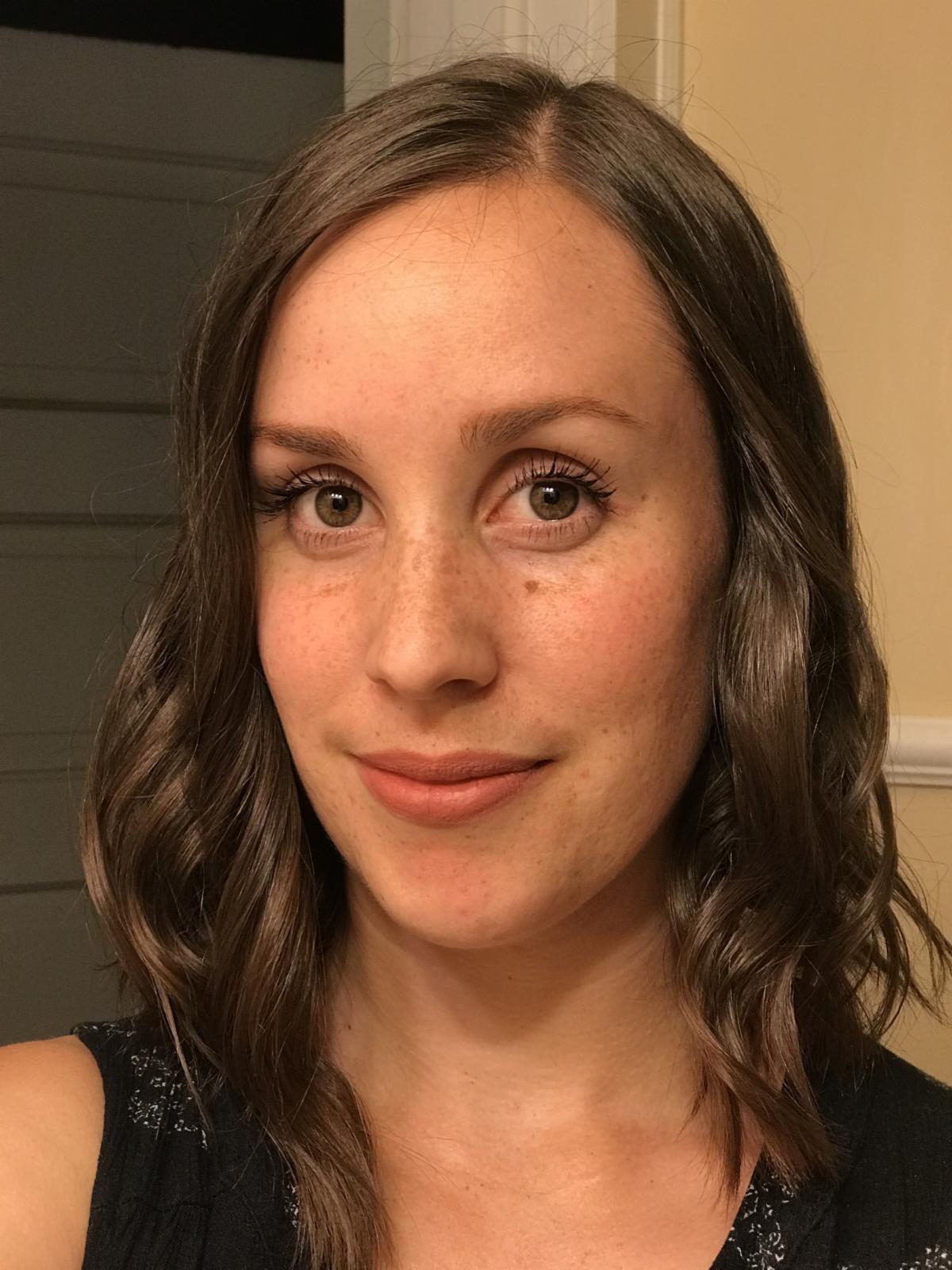
Lisa C. Thomas, LPC, ATR-BC®


Lisa C. Thomas, LPC, ATR-BC® is a trauma- and neuroscience-informed licensed professional counselor, board-certified art therapist, and board approved supervisor. She founded Coastal Art Therapy Services in January 2024 with the goal of increasing accessibility to creativity in mental health and combining creativity with evidence-based care in Hampton Roads. She is foundationally trained in DBT, DBT for parents, couples, and families, intensively trained in CPT for PTSD, and is level-II trained in RO DBT. Lisa enjoys being active in her profession and currently volunteers for the Art Therapy Credentials Board and the Virginia Art Therapy Association. She recently joined ODU’s Counseling & Art Therapy program as Adjunct Faculty. She takes pride in her work and hopes to inspire future art therapists and other creative mental health professionals.

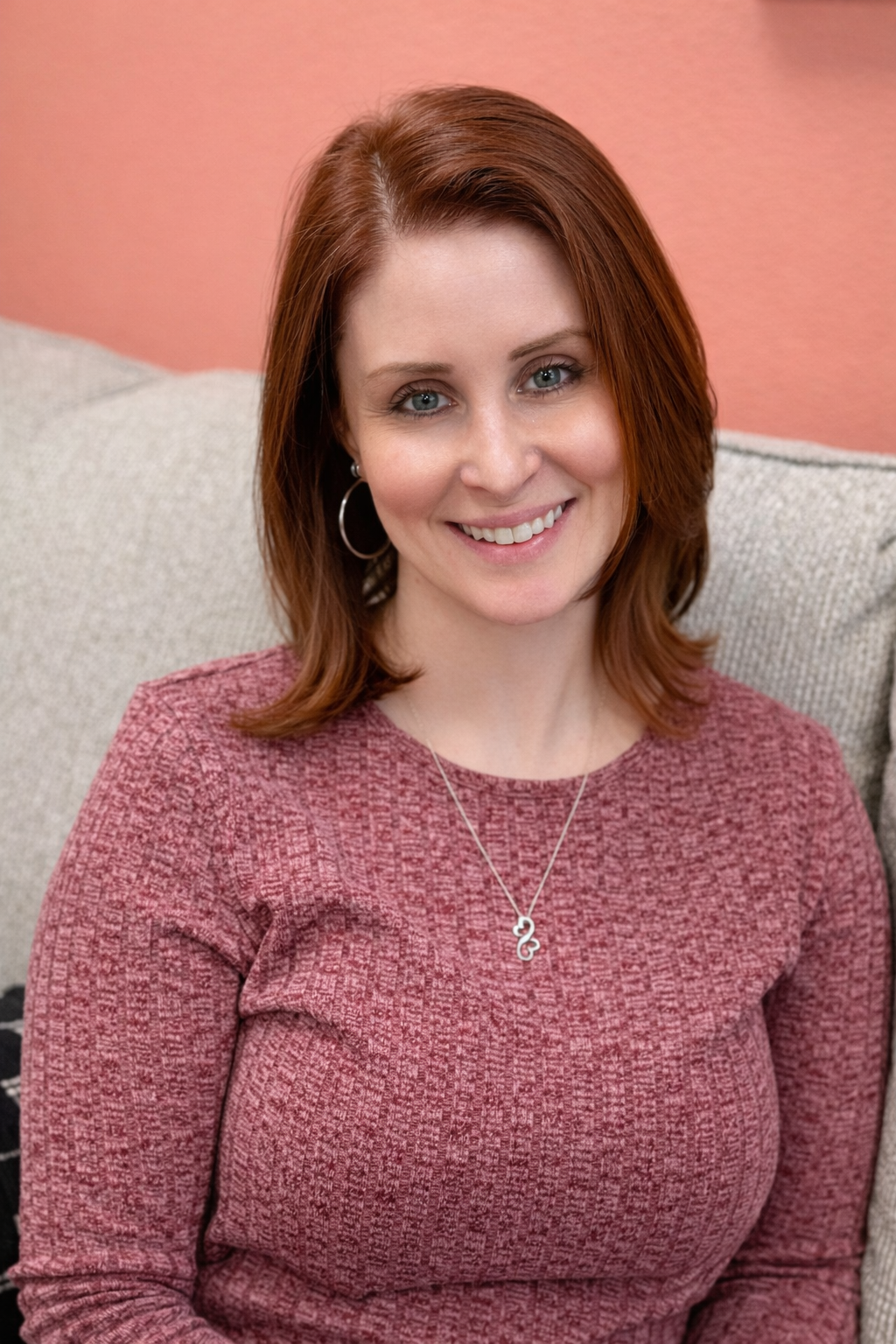
Kayla Gasper, LPC, LCMHC, LASTP, CSAC


Kayla Gasper, LPC, LCMHC, LASTP, CSAC, is a licensed professional counselor with experience providing mental health services to children, adolescents, and adults. She joined Coastal Art Therapy Services in March 2026 and specializes in integrating creative and evidence-based approaches into clinical practice. Her professional areas of interest include trauma, anxiety, BPD, DBT for Adults, Adolescents, and children, Trauma-Focused CBT, and Cognitive Processing Therapy (CPT). Kayla has experience providing individual therapy, group therapy, and clinical training for mental health professionals. She is passionate about helping clinicians translate evidence-based interventions into practical, engaging strategies that can be incorporated into everyday clinical practice.


Unstuck: Using Cognitive Processing Therapy to Change Traumatic Beliefs


There are many different evidence-based treatments for PTSD. Learn more about the highly effective treatment of Cognitive Processing Therapy, proven to significantly reduce PTSD symptoms. Benefits may include loss of diagnosis and last long after treatment ends.


Learning Objectives:

  • Highlight CPT’s effectiveness by reviewing the research
  • Explain PTSD through the CPT model
  • Define assimilation, accommodation, and overaccommodation
  • Recognize stuck points 
  • Understand a basic CPT intervention (ABC worksheet) 
  •  Know when to refer for CPT


This presentation is approved for 1 NBCC & ASWB CE credit Hour

CE Workshop Information and Disclaimers


Agenda (Eastern Time Zone):

9:00–9:30 AM - Opening Marketing, Networking, and Vendor Promotion

9:30–10:30 AM - Sound Healing — Carly Jones, LCSW - 1 Credit Hour

10:30–11:00 AM - Guided Sound Bath

11:00 AM–12:00 PM - Brainspotting — Angela Coyle, LCSW - 1 Credit Hour

12:00–12:45 PM - Lunch

12:45–1:30 PM - Hypno Breathwork

1:30–2:30 PM - CPT — Lisa Thomas, LPC and Kayla Gasper, LPC - 1 Credit Hour

2:30–3:00 PM - Closing Marketing, Networking, and Vendor Promotion


Target Audience For This Presentation: Social Workers, Professional Counselors, Marriage and Family Therapists, Addiction Counselors, Case Managers, Discharge Planners, Admissions/Utilization Review Professionals


CE Content Area: Beginner to Intermediate


Course Interaction & System Requirements: This live presentation is interactive. Attendees & presenters may ask and answer questions throughout the presentation and participate in instructor-led discussions.


Course Completion and CE Information:

To earn CE credit, participants must be on time, sign in and sign out, attend the entire course and complete a course evaluation for each CE qualified presentation. Certificates of completion will be emailed within 10 business days of course completion.


CE Statements:

Summit BHC, provider #2057, is approved to offer social work continuing education by the Association of Social Work Boards (ASWB) Approved Continuing Education (ACE) program. Regulatory boards are the final authority on courses accepted for continuing education credit. ACE provider approval period: 07/31/2025 - 07/31/2028. Social workers completing this course receive 2 clinical continuing education credits.


Summit BHC has been approved by NBCC as an Approved Continuing Education Provider, ACEP No. 7161. Programs that do not qualify for NBCC credit are clearly identified. Summit BHC is solely responsible for all aspects of the programs.


Registration Deadline: Registration will remain open until 5:00 ET on the day prior to the start of the training. In the event the training reaches capacity prior to that day/time, registration will close automatically.


CANCELATION NOTICE: To help us ensure accurate account for seating and food/beverage provisions, please provide at least 24 hour notice if you will be unable to attend so we can cancel your registration and adjust our headcount accordingly.


For questions, concerns, or to request special accommodations, please call or email: Amber White amber.white@pavilionwp.com