[[trackingImage]]

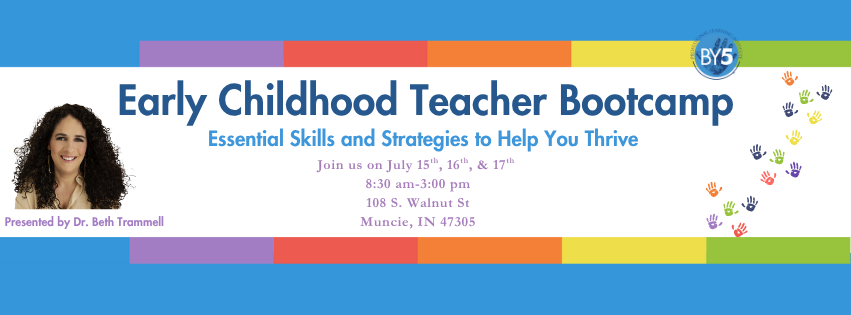
Join us for an engaging Early Childhood Teacher Bootcamp, where educators will explore hands-on strategies to create meaningful connections with young learners. Over three days, participants will engage in activities such as guided pair exercises to strengthen co-teaching relationships, role-playing scenarios to practice effective parent communication, and interactive bias-awareness discussions to identify and address unconscious biases in early childhood settings. The workshop also includes real-world applications of Developmentally Appropriate Practice (DAP) through case studies, ensuring educators can confidently implement these techniques in their own classrooms.


This experience goes beyond a typical “sit-and-get” professional development session. Our goal is to immerse participants in practical learning that enhances both teaching methods and educator well-being. From classroom culture-building exercises that foster teacher-student connection, as well as student-to-student connection. In addition, we will explore stress-relief techniques designed to prevent burnout, a critical component to strengthening their skills. Each session is tailored to support educators in developing strong foundations for themselves and their students. Whether you're a seasoned professional or just beginning your journey in early childhood education, this bootcamp will equip you with essential skills, actionable strategies, and a supportive community to help you thrive. Don't miss this opportunity to learn, connect, and grow! 


Teaching young children requires expertise in appropriate child development. But more than book knowledge of developmental stages, a great teacher needs to know how to apply that knowledge in the classroom to best support every child. This session will feature a candid discussion about all the things they didn’t teach you in your development class. The things you never thought you’d see, and the things you aren’t quite sure what to do about! Together, we will explore the many ways that development shows up in children, and how different it can look from one child to the next.


Instructional control is the scientific term that means kids listen to our words. This powerful term is best utilized in the classroom when combined with the technique of Effective Instruction Delivery (EID), as well as high-probability commands and behavior momentum. This session will give you a challenge to consider how to best pay attention to what kids are doing, and then match your words to their behavior momentum to capture instructional control. This is the magic power that most behavior specialists know – and now you can too!


This session will cover the everyday ebbs and flows of adult relationships in the classroom. Each adult in the early childhood classroom has a role at each point in the day. Some of us are in charge of lunch preparation, while others are doing circle time. Some do breakfast clean-up while the other is doing activities at the table. We use the word “choreography” as a way to describe this ebb and flow of responsibility in the classroom. Without effective choreography, some teachers end up feeling like they are working more than the other teacher, or maybe just disconnected to one another in general. This session will help every member of the teaching team to develop communication strategies to better that choreography in the classroom. There will be plenty of laughs and candid discussion about the best and worst choreography moments with the students!


It can be tricky sometimes to talk with parents in our role. We know parenting is a hard job and we also know that our families are always doing their best. But what happens when it seems like a family just doesn’t want to partner with you as a teacher? What happens when you unintentionally get frustrated with a parent for their reaction to a challenging day in the classroom with their child? Communicating effectively with parents can be more complicated than perhaps you thought it would be. Taken further, our conflicting beliefs about how to help support parents, while also letting them know some challenging feedback. This session will focus on specific ways to build relationships with parents quickly, as well as share ideas with one another about ways to connect with both the easiest and most distant families.

 Getting kids to listen is often one of our most important tasks. Teaching them the routine and what is expected of them each moment of the day can be a challenge. This session will teach participants about how to build connection quickly each day - which is a preventative technique to getting kids to listen well. This simple, but effective tool can be a game-changer in your classroom tomorrow!


Behavior is all about communication. It tells us something may not be okay. However, biting, running, throwing, and hitting are all developmentally appropriate - in some children in some environments. This session will help teachers recognize the difference between developmentally appropriate challenging behavior and that which might be a sign of a deeper issue. We will also discuss specific ways to minimize problem behavior regardless of its origin (either developmentally appropriate or something deeper).