| O’HARA’S IMPACT DAVE: How did your experiences at O’Hara impact you?
DAN: That’s a great question.
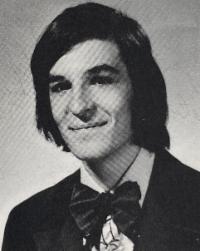
I think I started to figure things out in high school.
Besides the academics, I feel O’Hara provided a refuge where we had the opportunity as teenagers to grow up and begin to figure things out for ourselves -- to make our own mistakes and learn from them in a safe environment. I’m not sure how things would have turned out if I had attended a large high school. And I think that’s where my parents’ wisdom came in to play. O’Hara was like a compass. It allowed me to find my north! I certainly was not the best student in high school. However, with credit to my parents of course, and O’Hara, I walked away from high school with some core values that I still have today. And those things prepared me for college. You can say God had a plan for me.
FINGER LAKES COMMUNITY COLLEGE
DAVE: Where did you go to college?
DAN: My first college experience was at Finger Lakes Community College (FLCC) in Canandaigua. I went to FLCC because I was interested in their wildlife conservation program. I graduated with an AAS degree in Science in Natural Resource Conservation.
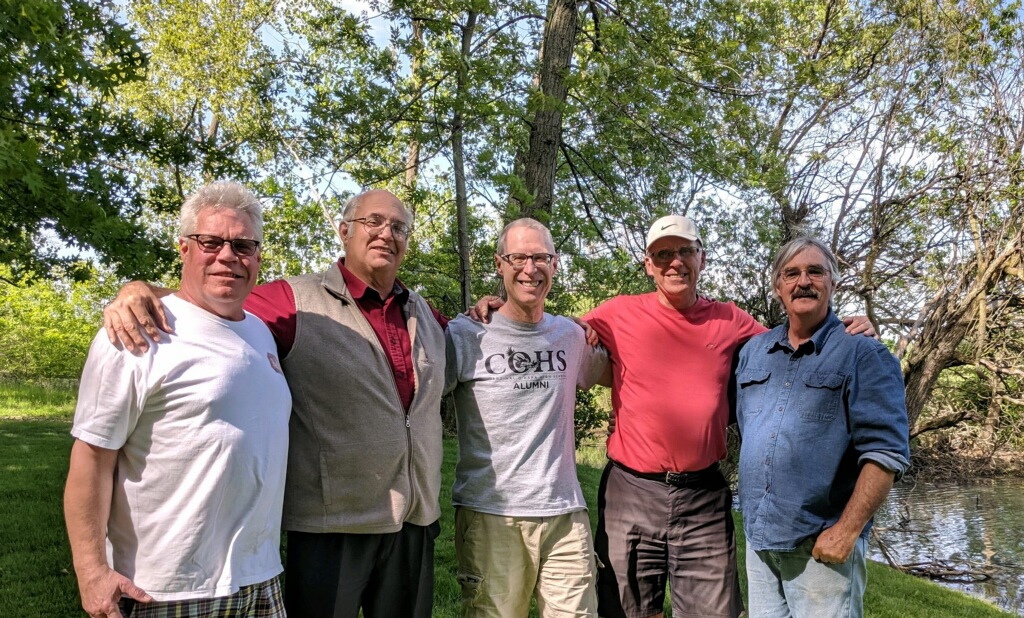
One of my fraternity brothers at FLCC was a fellow ‘74 COHS classmate, John Domres. In our second year at FLCC we lived off-campus together, with three other guys. We rented a house on the grounds of a local hotel. As part of our rent, the hotel provided maid service to clean the house once a week.
I had acquired a python that year and kept it in a large cage in my room. Well, on the first day of the semester, the cleaning service started. One of the maids came in to clean and saw the snake. She was terrified! I wasn’t there but John was! He was able to convince her to stay. (Both laugh)
DAVE: I don’t blame the maid for wanting to quit on the spot! (Both laugh)
When did you graduate from FLCC? DAN: I graduated in January of 1977. I was a few credits short of my AAS degree in Conservation from FLCC, so I went back for the fall semester in 1976 and finished my class requirements. 1977
The Wolf Tour (Winter and Spring 1977)
DAVE: What was the next step?
DAN: That January, 1977, the Conservation Department at FLCC advertised that there was a job opening with a traveling wildlife tour-group based in St Louis. It was a temporary job – one that would last six months. Shortly after I applied, I was offered a job.
DAVE: I’m almost afraid to ask. (Both laugh) What was your job? DAN: I was assigned to work with two adult gray wolves. They were big animals. Basically, the responsibilities of that job were to handle, feed and care for two wolves, a male and female. The wolves and I toured the country as part of a wildlife conservation program. They rode in a custom modified van with a large kennel area in the back.
That was a very cool experience. I enjoyed working with the wolves and "showing them off."
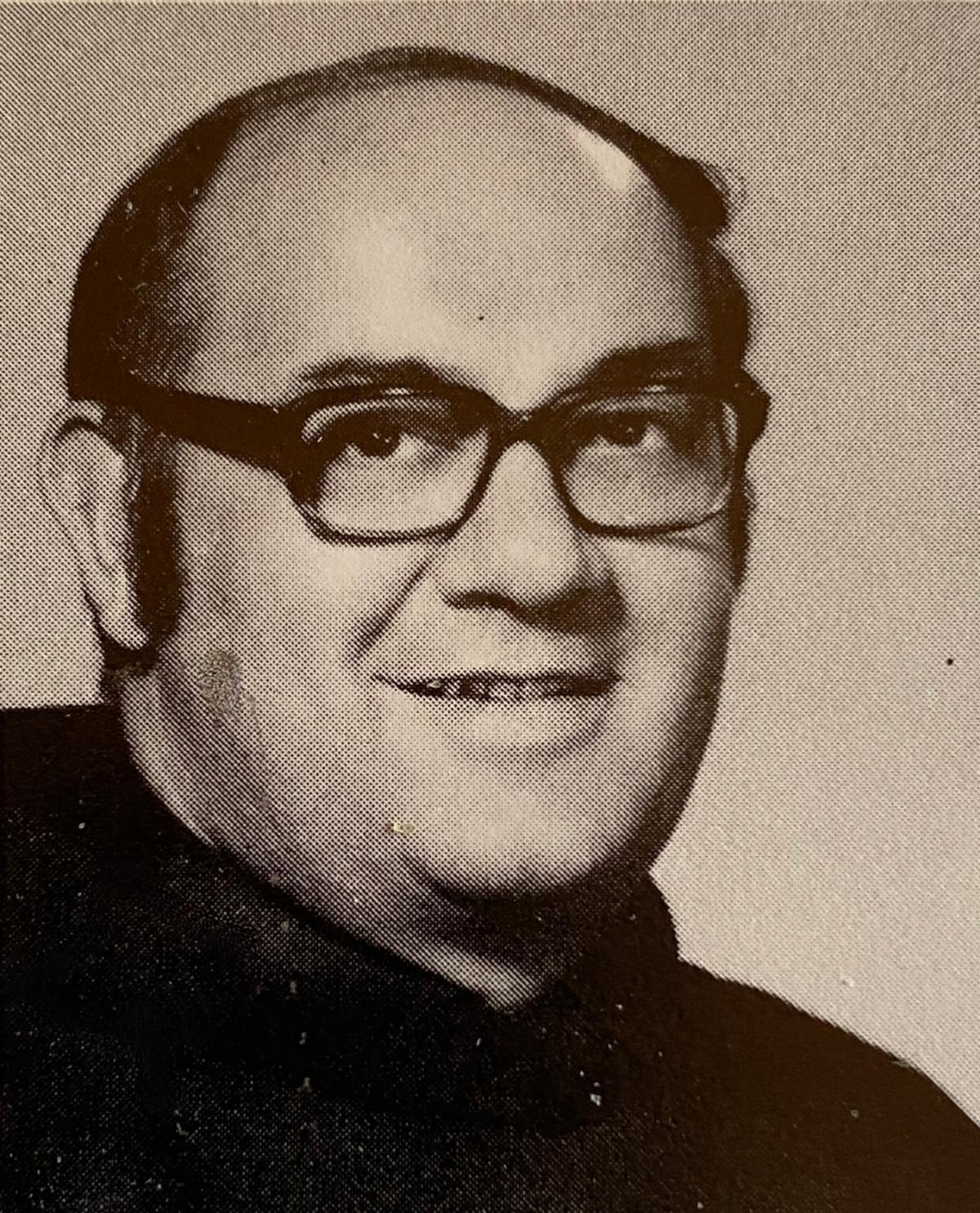
One week, our tour-group participated in a national wildlife symposium held at the St. Louis Zoo hosted by Marlin Perkins. Do you remember him? He hosted a television show about animals called Mutual of Omaha’s Wild Kingdom. (See photo: Marlin Perkins)
During the symposium, Marlin conducted press conferences and I brought the wolves on stage, holding their leashes. Audience members could come up and take a closer look at the wolves.
There I was, a kid, a wildlife enthusiast from Tonawanda, handling two gray wolves and working with the great Marlin Perkins at the St. Louis Zoo! Life was good!
DAVE: That’s very cool!
DAN: Yes, it was great! I was blessed to have had the experience.
DAVE: Where did you go next?
The Buffalo Zoo (Summer of 1977)
DAN: In the summer of 1977, I was hired as a laborer at the Buffalo Zoo. I basically went around the zoo helping to clean the enclosures and perform other odd jobs where I was needed, which was cool because I got to float around the whole zoo daily! As a result, I had some great experiences, such as helping to bathe the elephants (which involved hosing them down with a fire hose) and helping to feed the bears!
DAVE: You know what’s funny, Dan? I would not consider giving an elephant a bath as a “great experience”. But that‘s just me! (Both laugh)
DAN: I understand, Dave! (Both laugh)
The job at the zoo was a great experience but it was also temporary. The position was funded through a federal BOCES grant to the City of Buffalo. I was one of several people hired that summer being paid through the grant. I wasn’t planning on staying much longer at the zoo anyway because I was thinking about going back to school.
THE UNIVERSITY OF WYOMING (1978 – 1983) DAVE: Was that always the plan – to go back to college?
DAN: Yes, I had planned to go back to school and pursue a wildlife career at the state or federal level.
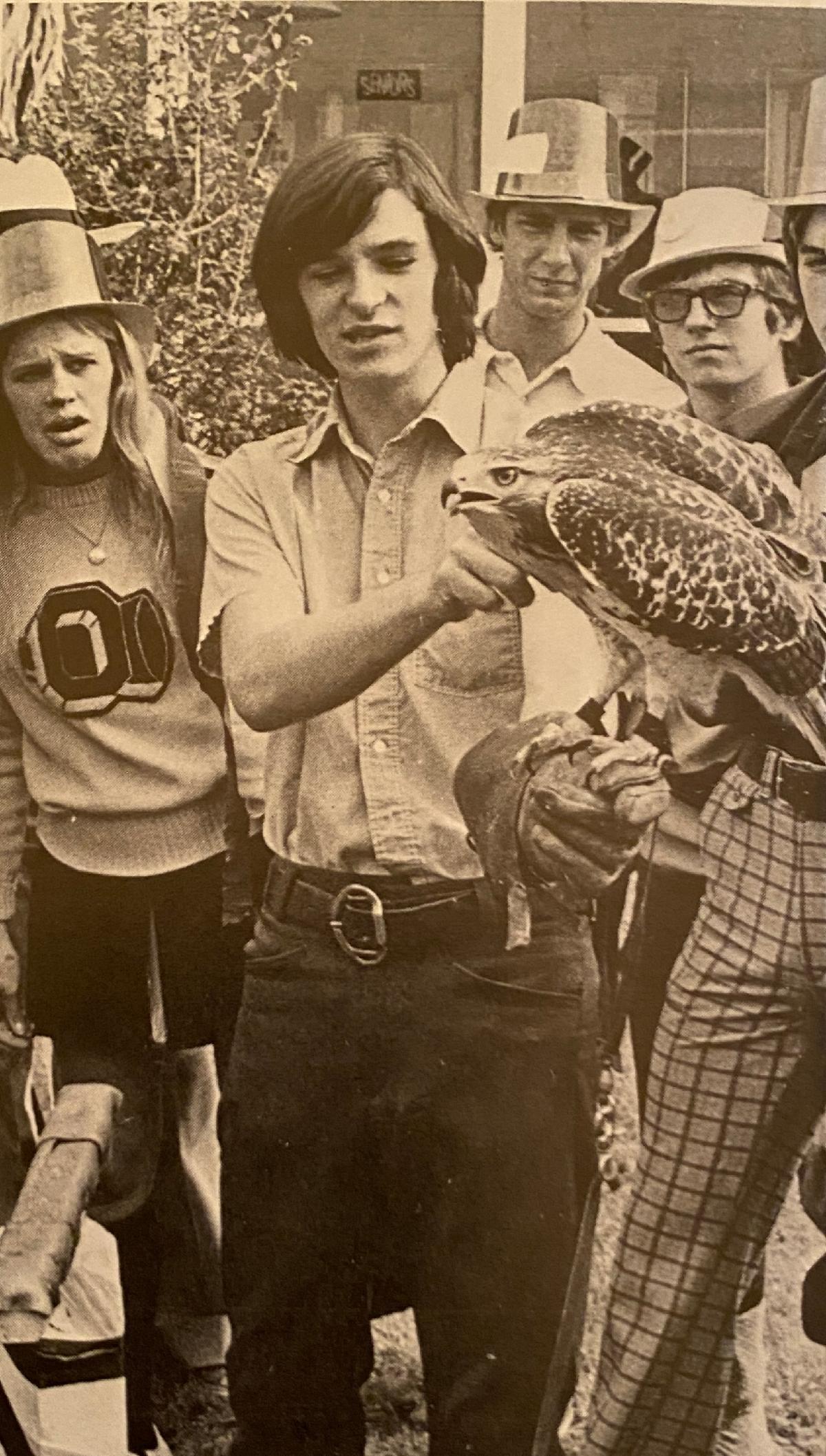
I considered a few colleges but ultimately decided to go to the University of Wyoming (UW) in Laramie. A friend, who worked at the Buffalo Zoo, had gone there and spoke highly of it. In addition, the wide-open spaces of Wyoming were very appealing to me. I was a federally licensed falconer at the time and Wyoming, I thought, would be a great place to fly birds. Falconry is the sport of training and hunting wild quarry with hawks, falcons and eagles. It’s a very heavily regulated activity requiring licensing at both the federal and state level.
DAVE: You had a memorable adventure just getting to Wyoming!
DAN: I did! I enrolled at UW to begin the 1978 Spring Semester. I’ll never forget flying out of Buffalo that January. Two of my closest friends and fellow ’74 classmates, Paul Haggerty and Greg Hall, picked me up at 3:30 a.m. in a blinding snowstorm to take me to the airport. It took us a while to get there, and I wasn’t sure if my plane was going to depart the next morning, but it did. I only brought a single backpack with me!
Eventually, I made it to Laramie via a connecting flight from Denver and spent the next 37 years in Wyoming!
I graduated from UW in 1981 with a BS in Recreation and Park Administration with a minor in biology.
DAVE: Was Josh Allen in any of your classes at the University of Wyoming?
DAN: (Laughs) No. He wasn’t born yet. (Both laugh)
CAREER PLANS
DAVE: What were your career plans upon receiving your undergraduate degree?
DAN: I kind of figured that my career would likely involve field work in biology, zoology or resource conservation. But I didn’t have anything specific in mind.
Anyway, my career plans were put on hold when I decided to pursue a graduate degree at UW. I started working on my master’s degree a few weeks after I earned my BS.
I received a full graduate assistantship. My first year, I worked on a rattlesnake project. I conducted research and studied the foraging, navigation and predatory behavior of prairie rattlesnakes. I also cared for and maintained a large laboratory collection of rattlesnakes on campus. As an undergraduate, I was familiar with the project and participated in some of the early field work.
In my second year, I was a Graduate Teacher Assistant at UW. I taught a class on laboratory techniques and procedures to secondary education undergraduates. However, I was still doing some work on the rattlesnake project.
I was very fortunate to get to work with some great professors at UW. One of them, the chairman of my graduate committee, was Dr. Alan McCormack. Dr. McCormack was one of the most highly respected science educators in the United States. In fact, in 2010, he was named President of the National Science Teachers Association.
It was Alan McCormack who suggested I consider teaching science as a career. If someone like Dr. McCormack makes a suggestion like that – you give it some thought. I decided to look into it.
I took the required education courses and completed an 8-week student teaching assignment at Rock Springs Junior High School (RSJHS) in Rock Springs, Wyoming. On my last day of student teaching, the principal there offered me a position teaching 7th and 8th grade Life Science beginning in September 1983.
I went back to UW and finished my thesis. That summer I was awarded an MS in Natural Science and that fall I started my career as a science teacher at Rock Springs Junior High School. JUNIOR HIGH SCIENCE TEACHER DAVE: As it turned out, you had a long and distinguished career as a junior high school science teacher in the Sweetwater County School District in Wyoming.
DAN: Yes, I was there for 30 years.
I retired in May 2013, after teaching Life Science to thousands of 7th and 8th graders at RSJHS. I was truly blessed to have the career I had.
Dan’s Classroom
DAVE: I can only imagine the type of classroom experience that you provided your students.
DAN: I loved my job as a teacher. My school district was very supportive of my interests and ideas. I was able to apply them to my career in science education.
I was very fortunate in that I was able to establish an “animal lab” at the school in a large common area. The area was surrounded by four science rooms and one of them was mine.
I eventually turned that space into an animal lab. (Photo left: Dan holds Mugs the turtle)
I’d get animals from various sources around the country and keep them in the lab. The lab had lizards, turtles, and even a few caimans. There were also snakes, including various North American species--boas, pythons, and a large female anaconda.
Our largest Burmese python was about 10-12 feet long and it took nine kids to hold and put it back in its cage! (See photo right) That snake was very tame. I even used to let it loose in my classroom from time to time!
My students loved it. However, I introduced the animals to my students gradually over time. I respected my students and the animals and never pushed them.
The other science teachers used the lab with their students too. We were all very careful and made sure the students were too. It was a science lab and was an integral part of our educational program – it wasn’t something that we did just for fun. (Photo left: Students study animal skulls)
We kept records and insisted that hygiene protocols were followed. We never had an incident with kids or animals getting hurt. Many of the animals were kept in naturalistic vivaria that the students researched and designed. Students learned concepts in ecology, reproductive biology, habitats, niches and taxonomy. They also learned how to responsibly care for animals.
The animal lab brought a lot of notoriety to the school. Wyoming PBS Television came to Rock Springs and shot some film of the lab for a series they were doing on science teaching in Wyoming. That was a fun experience.
Kaiti
DAVE: Were any students “reluctant” to be in a classroom where snakes crawled around the floor?
DAN: Most students loved the lab. Many had their favorite animals to work with and take care of.
One year though, I was told that a sixth grader named Kaiti was moving up to seventh grade and had been assigned to my class. Kaiti was petrified about taking junior high science. I don’t know why. It wasn’t the animals. It was probably just moving up to a higher grade level.
I went to her home and met with Kaiti and her parents and talked about my program to reassure them. As it turned out, Kaiti loved my class. She actually thrived. There were several other students over the years with similar beginnings and endings!
Today, Kaiti is a Wildlife Biologist for the United States Fish and Wildlife Service in interior Alaska. Isn’t that crazy? What a Cinderella story! (See photo above of Kaiti in Alaska)
BIG DEAL DAVE: You were a pretty “big deal” in Wyoming and widely respected for your wildlife and land conservation expertise.
As a result, you became involved in a number of local and state projects. Let’s talk about those.
DAN: I’ve had some wonderful opportunities and experiences over the years, that’s for sure!
Education Guidelines
The Wyoming Department of Education asked me to write state guidelines for the use of live animals in classrooms. It included such topics as: proper care of animals, safety measures for teachers and students and hygiene. The finished product was made available to all science teachers in Wyoming.
DAVE: You also served on county and state-wide groups and boards, such as: the Grizzly Bear Working Group, the Sweetwater County Outdoor Recreation Board and the Wyoming Animal Damage Management Board. Did you apply for these positions?
DAN: No. I was recruited to serve in these positions.
DAVE: Briefly, tell us about the committees on which you served and their purpose.
Sweetwater County Outdoor Recreation Board
DAN: In 1997, I was appointed by the Sweetwater County Commission to the Sweetwater County Outdoor Recreation Board, the managing board of the county’s park system.
Our focus was on enhancing, promoting and maintaining recreational opportunities across the county. I was on that board until 2004.
Wyoming Animal Damage Management Board
In 1999, the Wyoming Legislature created the Animal Damage Management Board (ADMB). That year, I was appointed by Governor Jim Geringer to serve on the board. I served for two consecutive terms. My second term ended in 2007.
The Board was tasked to come up with plans to mitigate damage caused to livestock, wildlife and crops by predatory animals, predacious birds and depredating animals. We wrote plans for the protection of human health and safety. We received funding from the Wyoming Legislature to award grants for wildlife research in line with the Board’s mission statement.
Citizen Wyoming Grizzly Bear Working Group
In 2000, I was appointed by the Wyoming Game and Fish Department to serve on the Wyoming Citizen Grizzly Bear Working Group.
Our purpose was to come up with one of several Conservation Management Plans for the grizzly bear in Wyoming in anticipation of federal delisting under the Endangered Species Act (ESA). States are required to write such plans as part of an animal’s federal ESA delisting process.
The politics of grizzly bear management have changed multiple times since I served on the working group 26 years ago! Our original document doesn’t even exist anymore! However, at the time, it was very rewarding serving on the working group and participating in the process.
THE AUTHOR
DAVE: Along with your teaching career and your service to your community, you also found time to share your expertise and knowledge with others.
You’ve written many articles for a variety of magazines and journals such as American Falconry Magazine, the International Journal of Falconry, the Vivarium and the Journal of Herpetology.
You also co-authored a book on desert lizards (see photo) and wrote a weekly nature column named Nature's Window for eight years in in your local newspaper - the Daily Rocket Miner.
DAN: Yes, I enjoy writing! I’ve been involved in several fun projects over the years.
In fact, when I arrived at Finger Lakes Community College, they did not have a college newspaper. So, two friends and I started one during our second year. It was called The Informer. If my O’Hara English teachers only knew! (Both laugh)
DAN AND JANA
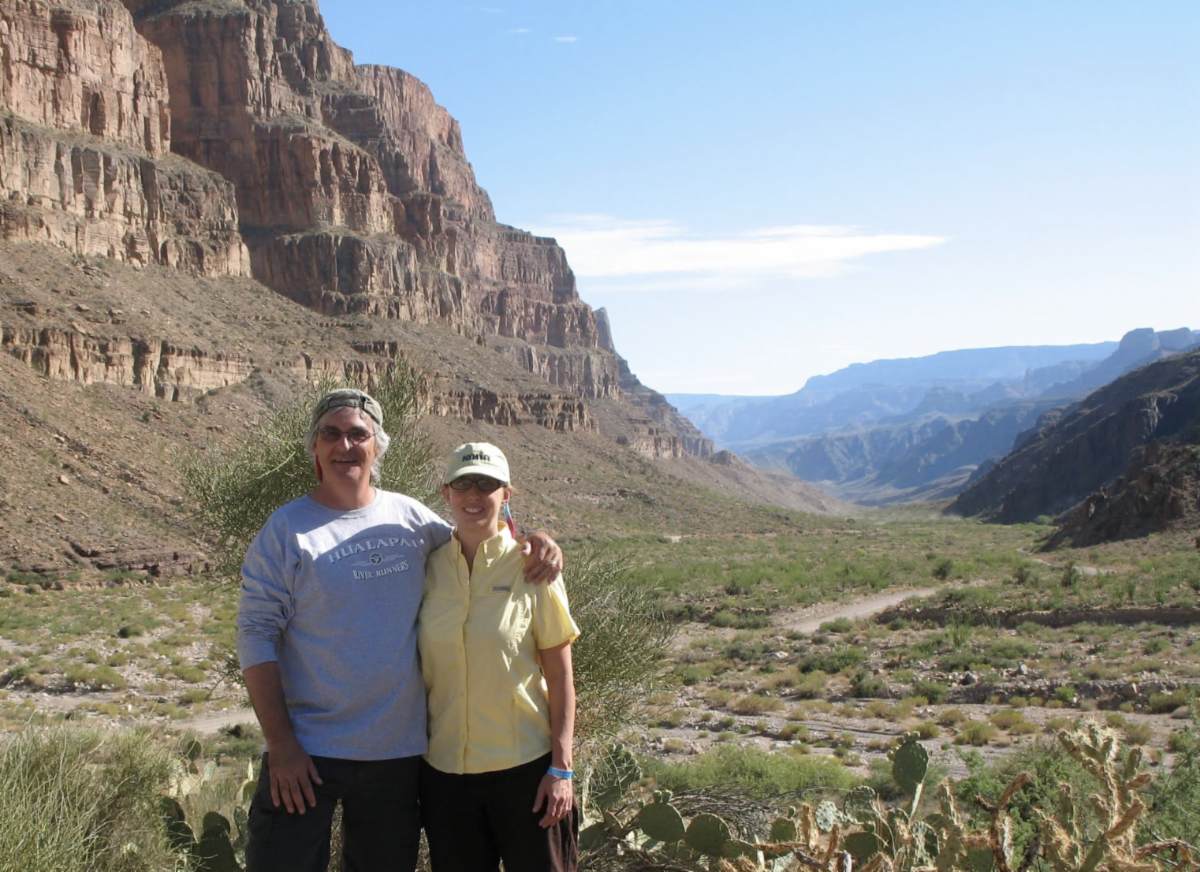
DAVE: I’m glad I was able to meet your wife, Jana, at our 50-year reunion two years ago. (Photo right: Dan and Jana at the Grand Canyon)
DAN: That was a great reunion. It was wonderful to see so many of our classmates. We loved everything about it. Jana felt very comfortable at the reunion and enjoyed meeting my classmates and their spouses.
Jana’s from Kansas City, Missouri, which is where she went to college. She was a cartographer – that’s a map maker – for the federal government for several years. Later, she received her MS in Land Use Planning at the University of Nevada-Reno and worked several years as a city planner. She was the City Planner in Rock Springs when we lived there.
After I retired, we moved to Hutchinson, Kansas and bought a small farm. Jana got a job as a planner there, eventually becoming the city’s Planning Director. Later, she took a job at Hutchinson Community College where she was Coordinator of Grant Development.
I have two stepchildren, Jonathan and Aspen. Jonathan went to college at USC in southern California for his undergrad and has his MS in engineering from the University of Alabama-Huntsville. He and his wife are mechanical engineers and live and work in Huntsville, which is about two hours from us.
Aspen went to college at the University of California-San Diego, where she studied political science. She went on to earn a graduate degree in secondary education. Aspen and her husband live in Chattanooga, Tennessee.
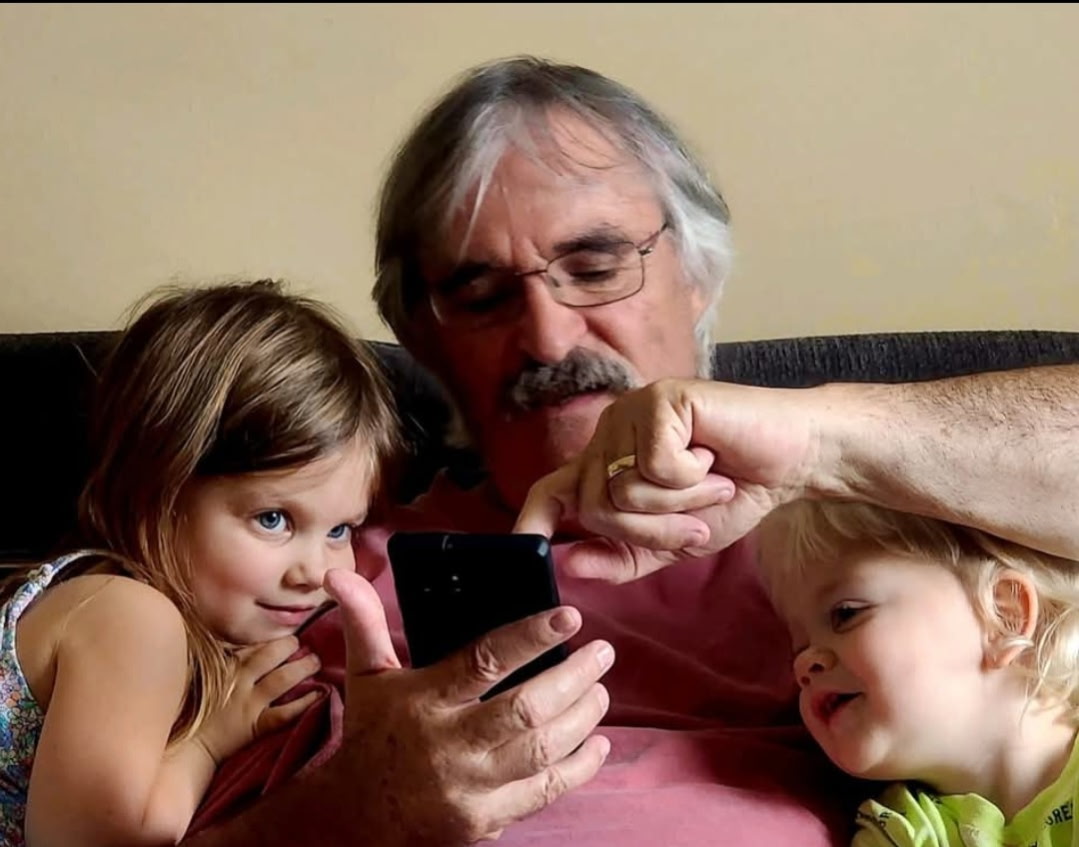
Our family is growing -- we have four grandchildren. (Photo: Dan with two of his four grandkids) TENNESSEE DAVE: You and Jana moved to Tennessee fairly recently.
DAN: We moved to Tennessee during the summer of 2022 to be closer to our kids and grandkids. Jonathan is a couple of hours away, while Aspen and her husband are just 45 minutes away. We like it here.
DAVE: Have you gotten involved with any local conservation projects in the community yet?
DAN: I’ve been involved with the state falconry club here. Because of that, I’ve worked on a few projects with the Tennessee Wildlife Resource Agency (TWRA) and helped rewrite the state falconry regulations.
FALCONER
DAVE: Speaking of falconry, do you still practice it?
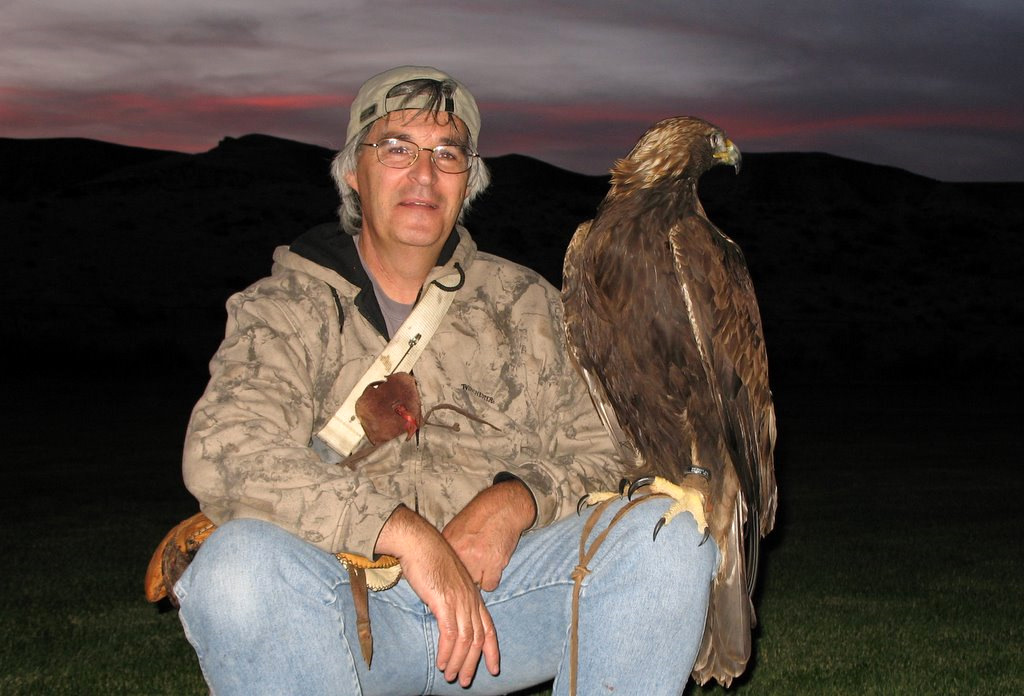
DAN: Not so much anymore. I’ve been flying and working with raptors since high school. But we just don’t have the wide-open spaces here like there are in Wyoming and Kansas. (Photo left: Dan with Eli)
I was fortunate to be able to legally trap, train and hunt with goshawks and golden eagles in Wyoming and prairie falcons in Kansas.
DAVE: In 1999, you were featured on the cover of American Falconry magazine. DAN: It was an honor to have been selected to appear on the cover of American Falconry. The magazine had a wide circulation. It was published in 26 countries worldwide. To me it was like being on the cover of Sports Illustrated! (Both laugh)
DAVE: How was it that you were selected?
DAN: In 1999 there were only a few people in the United States licensed to possess golden eagles for falconry. The publisher of the magazine came out to take photos of me flying my female eagle. For the cover, he chose where the eagle was about to land on my arm.
DAVE: Wow! What a photo!
DAN: Isn't it?
DAVE: Last question...are you still a fly-fisherman?
DAN: I enjoyed fly fishing for many years.
Today, I’ve changed gears a bit. Here in East Tennessee, we have some of the best bass fishing in the country. I’m learning to chase bass with a fly rod from a kayak. I’m enjoying it. LAST WORD DAVE: Thanks, Dan, for taking the time to chat with me today. I’ve really enjoyed it.
For your perseverance in getting through this interview - I’m going to give you the “last word.” (Both laugh) DAN: Thanks, Dave. I’ve enjoyed this. I’ve had a blessed life, and I praise the Lord for it. HawkTalk is written by Dave Lovering
|