|
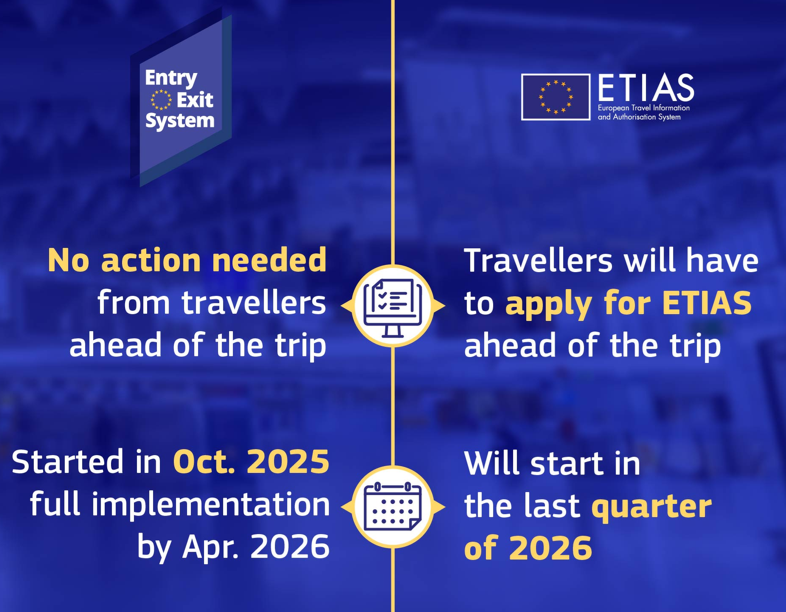
Europe, with its ancient attractions, unique regional eats and vibrant cultures, is a fan-favorite vacation spot for American travelers, enticing millions of them across the pond each year. Interest in these countries continues to surge, especially as industry trends evolve and draw attention to new, underrated places to explore. For these intrepid globetrotters with their sights set on European destinations, two systems from the European Commission are changing the way travelers proceed through the border and the documentation they need to do so. Here’s what you need to know about the EES and ETIAS rollouts.
Understanding the Entry/Exit System (EES)
The EES, or Entry/Exit System, is a process designed to digitally record the short-stay arrivals and departures of non-EU travelers into 29 European countries. This includes all Schengen member states and associated nations like Iceland, Switzerland, Liechtenstein and Norway. According to the EES homepage, the digitized process aims to prevent overstays, the use of fake identities and illegal cross-border movement by requiring visitors to provide biometric data like fingerprints and facial photographs. Additionally, the system will expedite the arrival process as it gradually replaces physical passport stamps. Unlike the first go-round at rolling out the EES — originally announced in 2023 with plans to debut the following year — the six-month phased introduction kicked off on October 12, 2025. Each participating country determines its own implementation timeline and locations, with airports, seaports and land crossings slowly introducing the self-serve kiosks through the anticipated completion date in April 2026.
Who Is Exempt? Most American travelers will need to provide their information to the EES, though there are some exceptions. Children under the age of 12 do not need to provide fingerprints, but a facial photograph is still required upon their first entry. Holders of long-stay visas and non-EU nationals traveling for research, voluntary service or academic projects are also exempt.
Short Stay Parameters The system approves travel for up to 90 days within any 180-day period.
Registration Process To add traveler data to the EES, visitors only need to scan their passports at the border. From there, a profile is created using the provided fingerprint and facial photograph. The initial visit to participating countries may take a few extra minutes to create the profile, but subsequent arrivals should prove to be much more seamless and efficient.
|