|
|
Serving to collectively empower the next generation of environmentally-literate citizens who think globally and act locally. |
|
Drip Drop Assemblies Funded by the Municipal Water District of Orange County and the Family of Orange County Water Providers for eligible schools in Orange County |
|
| 3rd Grade NGSS PE Supported: 3-ESS2-1
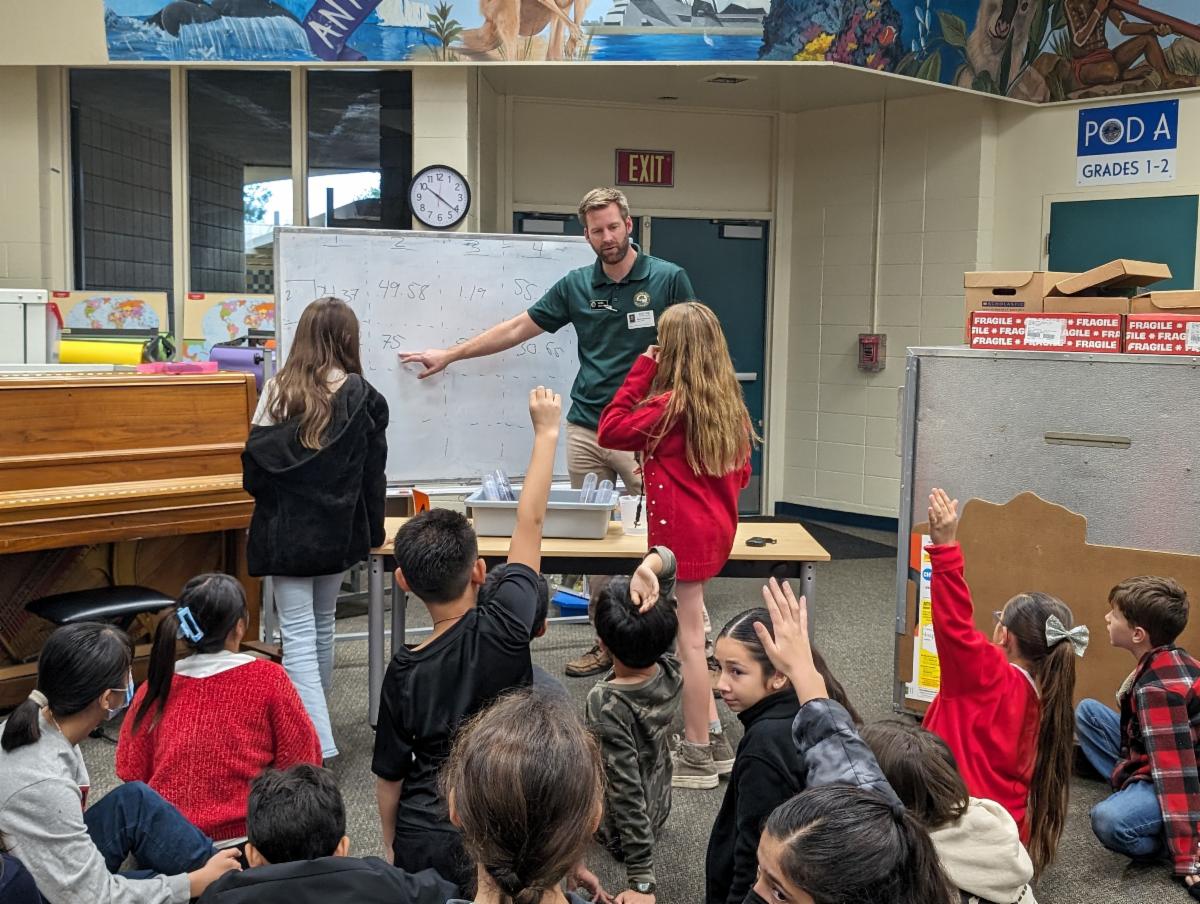
During this one-hour assembly, third grade students collaborate with their peers to find clues and uncover patterns that help them solve the mystery of water challenges in their community.
After hearing from Ricky Raindrop about the mystery, students work in small teams to compare weather and climate data from different regions in California. They also explore personal choices to protect our local water resources. |
|
| 4th Grade Standards Supported: HSS 4.4.4 and HSS 4.4.7
Fourth grade students explore the key role that water has played in California’s history during this one-hour assembly.
During the program, students analyze maps and graphs and take part in historical re-enactments as they travel through the timeline of California's water resources and infrastructure. |
|
| 5th Grade NGSS PE Supported: 5-ESS2-1
During this one-hour assembly, fifth grade students conduct hands-on experiments to explore how urban surfaces can affect their local water resources.
As students investigate how different types of soils and surfaces affect aquifer recharge, run-off collection, and stormwater recycling, they discover solutions to conserve and protect local water resources. |
|
Wonders of H2O Funded by the Municipal Water District of Orange County and the Family of Orange County Water Providers for eligible schools in Orange County |
|
| Middle School NGSS PE Supported: MS-ESS3-3 Health: 7–8.6.2.P, 7–8.1.10.P
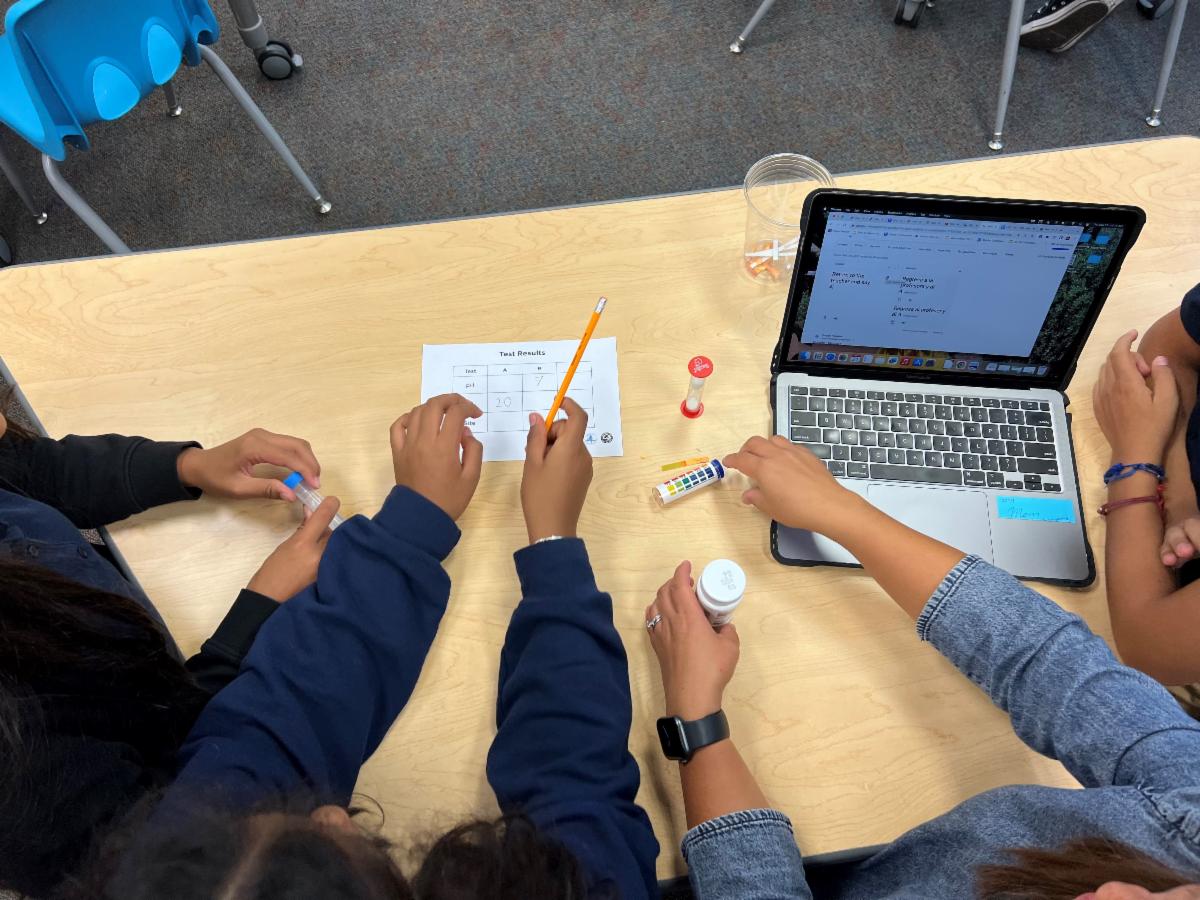
During this hour-long classroom program, middle school students investigate the connections between human land uses and water quality as they explore of a fictional watershed. Throughout the experience, students work in small teams to analyze water samples, identify sources of potential pollution, and brainstorm strategies to monitor or minimize pollution. |
|
| High School NGSS PE Supported: HS-ETS1-3, HS-ESS3-1
During this hour-long classroom program, high school students explore how seismic activity and subsidence alter the relationships of human and natural systems in the Sacramento-San Joaquin Delta. Students work in small teams to analyze maps and gather evidence to determine whether these challenges put our water resources at risk. |
|
| Funded by OC Waste and Recycling for schools in Orange County |
|
| The EcoChallenge curriculum was created to increase countywide consciousness and awareness of landfill processes, organic waste diversion, and resource recovery through academic standards-aligned classroom lessons, student activities, and family engagement materials. By taking part in it, you are helping California achieve its goal of a 75% reduction in waste by 2025!
The curriculum is designed by grade level: Kindergarten, 1st Grade, 2nd Grade, 3rd Grade, 4th Grade, 5th Grade, Middle School, and High School. |
|
|
For Schools in the City of Anaheim ONLY |
|
Renewable Energy Funded by Anaheim Public Utilities for eligible schools in the City of Anaheim
4th Grade, High School NGSS PE supported: 4-PS3-4; HS-PS3-3
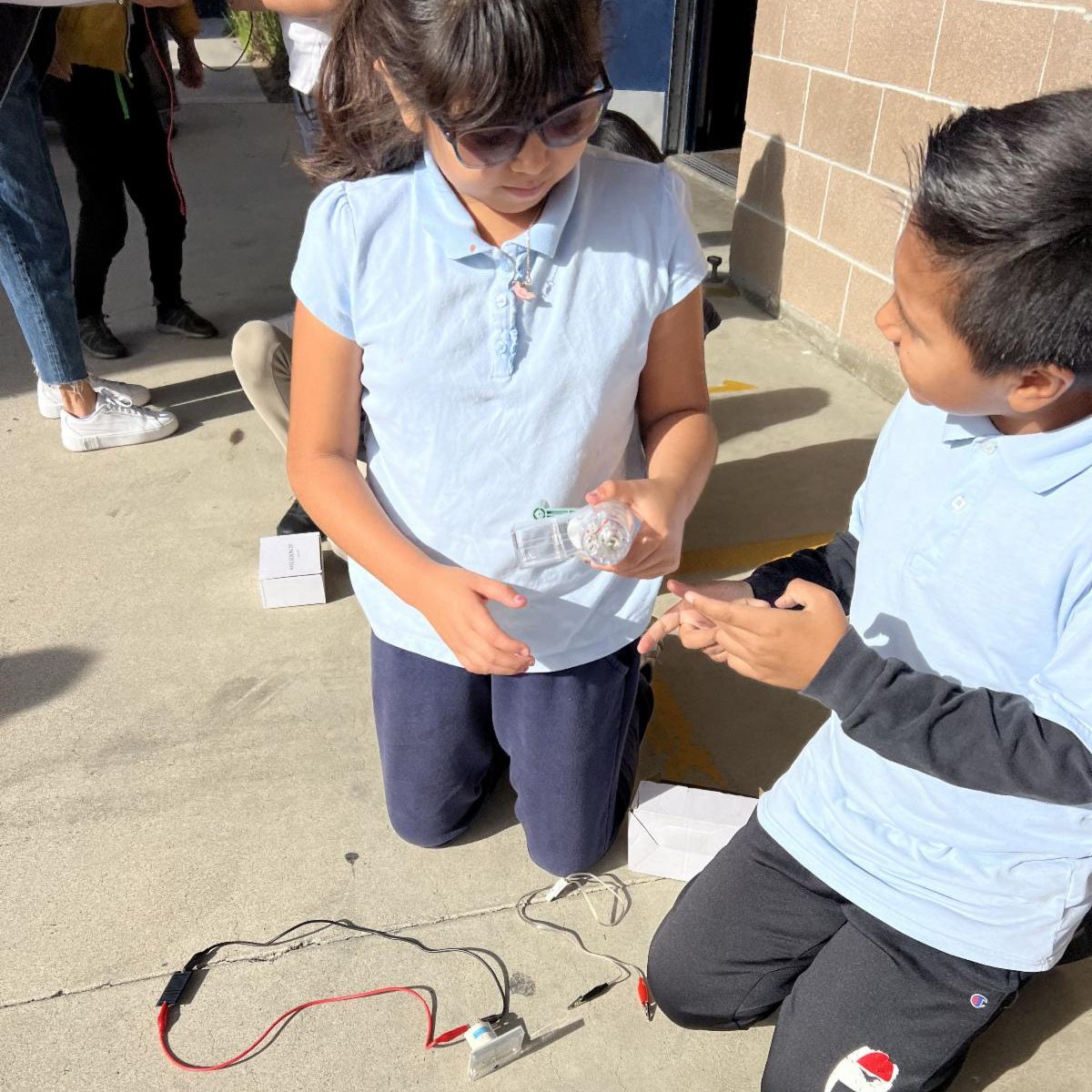
The City of Anaheim is dedicated to increasing the use of renewable energy, including solar! During this one-hour classroom program, students explore the physical science principles in electrical energy generation through turbines to solar cells.
Students learn about the diverse sources of renewable energy being implemented by the City of Anaheim, and then calculate the greenhouse gas emission reduction from these efforts. |
|
Prado Wetlands: Radical Riparian Restoration Funded by Anaheim Public Utilities for eligible schools in the City of Anaheim
3rd Grade NGSS PE supported: 3-LS4-4
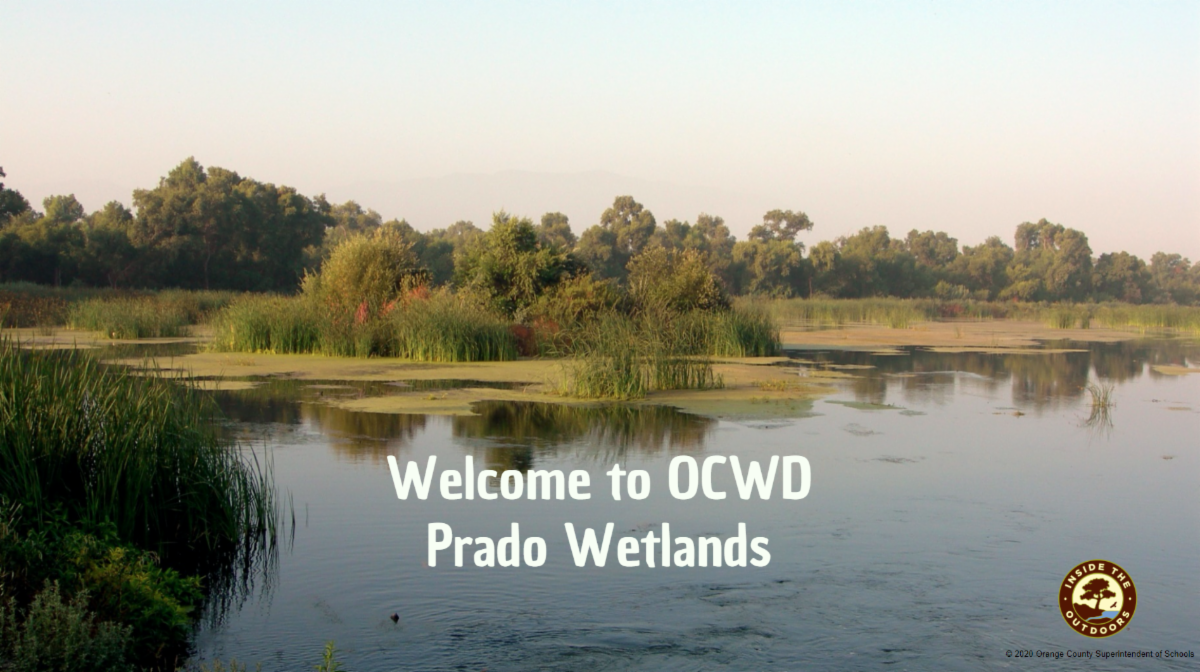
During this teacher-facilitated lesson -- designed to easily integrate into your classroom -- third grade students delve into the fascinating world of riparian restoration at the Orange County Water District's Prado Constructed Wetlands.
Throughout the video-supported lesson, students explore how human activities can impact the environment and discuss the merits of various solutions in providing new habitats for plant and animal species. |
|
| Scientists of the Sewers Funded by OC San for schools in Orange County |
|
| 5th Grade NGSS Standards Supported: 5-ESS3-1 & 3-5-ETS1-1
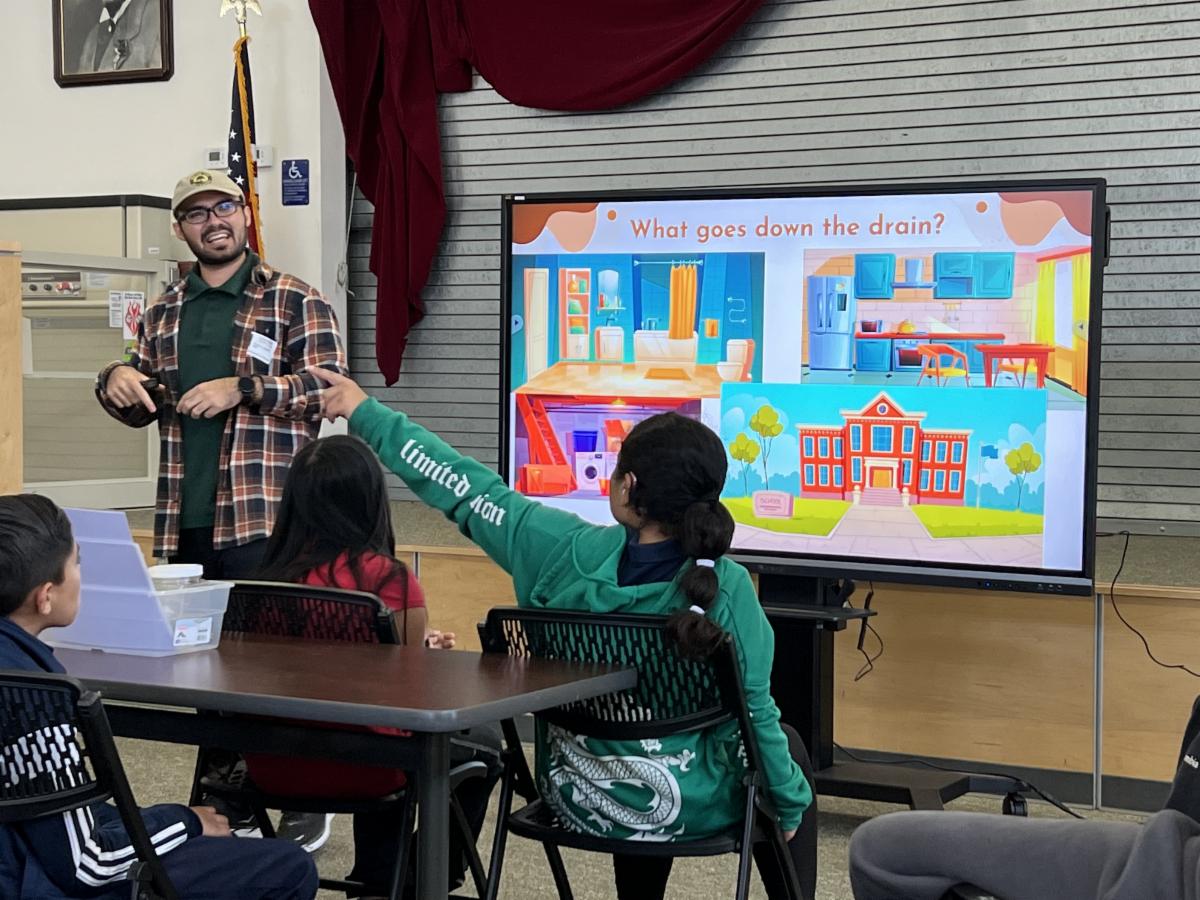
Fatbergs, massive clogs in the sewers, are a menace to public health, the community and the local environment. Students investigate the sources of these colossal clogs, then work together to design a solution to prevent fatbergs from clogging the sewers.
Throughout the program, they develop an understanding of Orange County's sanitation process and how they can help safeguard community and environmental health. |
|
| Middle School NGSS Standards Supported: MS-ESS3-3 or MS-LS2-4
Students learn about the fragile ecosystem of microorganisms which play a critical role in Orange County's sanitation system. Students collaborate and investigate a mock problem which takes them upstream from OC San as they test the sewer line to discover where the contaminant is originating.
Sixth grade students then design a method to safeguard the system, while seventh grade students create an argument explaining how changing factors can affect populations within an ecosystem. |
|
| High School NGSS Standards Supported: HS-LS2-7, HS-ESS3-4
Students review the process that OC San uses to separate domestic wastewater from trash and biosolids. Students test different solutions to reduce the weight and quantity of trucks needed to transport the biosolids.
Finally, students use the test results to evaluate which solutions will decrease human impact on our local environment and its natural systems. |
|
|
|
|
| Inside the Outdoors Programs Align With:
LCAP Bucket: Pupil Outcomes LCAP Priority: Pupil Achievement MTSS Domain: Inclusive Academic Instruction
|
|
Inside the Outdoors, administered by the Orange County Department of Education, is a unique and hands-on environmental education program. Our mission is to nurture a natural curiosity in students, educators, and communities through environmental literacy experiences, including standards-based Field Trips and Traveling Scientist programs, as well as Community Programs. Professional staff, with the support of local and statewide partners, facilitate meaningful experiences with a consistent focus on service and data-driven outcomes. |
|
|
|
|