| Intended Audience This short course training is funded by Southern SARE as a Professional Development Project and designed for farmers, working lands managers, NRCS staff, Soil and Water Conservation District staff, Extension Specialists and Educators, Agronomists and other agricultural professionals, and conservation practitioners in the Southeast SARE region (AL, AR, FL, GA, KY, LA, MS, NC, OK, SC, TN, TX, VA) interested in increasing their ability to interpret and manage land to support diverse aboveground and belowground ecosystems, while also increasing crop resilience and soil health. See course agenda below.
This online course will be recorded and available for viewing on the Xerces Society YouTube channel. Closed captioning through Zoom will be available during the webinar. |
|
| Learning Objectives
- Improve technical knowledge of major soil invertebrate groups in the southern SARE region, including identification, ecology and roles in soil health, scouting methods, and conservation strategies.
- Be able to conduct hands-on scouting and sampling of soil animals to evaluate species diversity in agricultural settings.
- Understand how invertebrate diversity may be used as a rough bioindicator of soil health, and learn to compare the diversity of soil animals across areas with differing management practices.
- Learn practical, science-based conservation strategies to help increase the abundance and diversity of soil animal life, and how USDA Farm Bill conservation programs may be used to support adoption of these strategies.
- Increase adoption of management practices that support soil invertebrates and soil health.
|
|
| Associated Resources Over the past several years the Xerces Society for Invertebrate Conservation has been working to develop science-based resources for farmers, agronomists, land managers, gardeners, and conservation practitioners to learn more about soil invertebrates and management practices to conserve them including the Farming with Soil Life, A Handbook for Supporting Soil Invertebrates and Soil Health on Farms which provides the framework for series of ongoing nationwide training courses, including the content and modules for this short course.
|
| Agenda 9:00 – 9:15: WELCOME, ANNOUCEMENTS, COURSE OVERVIEW Instructor: Kelly Gill, Xerces
9:15 – 9:55: BASICS OF SOIL HEALTH & INTRO TO SOIL FAUNA Instructor: Kelly Gill, Xerces Society
- Importance of soil life
- Introduction to the diversity of soil fauna
- Value of soil fauna and the essential ecological services they provide
- Importance of conserving soil fauna
9:55 – 10:40: SOIL INVERTEBRATE PROFILES Instructor: Jennifer Hopwood, Xerces Society
- Major groups of beneficial soil invertebrates
- Profiles of common groups/species including:
- Descriptions and identification tips
- Ecological role
- Where they are found
- Lifecycle and habitat requirements
10:40 – 10:55: COFFEE BREAK
10:55 – 11:40: OVERVIEW OF MANAGEMENT PRACTICES & NRCS CONSERVATION PROGRAMS Instructor: Jeffrey Woodward, Tennessee NRCS Soil Scientist
- Soil health and land management practices that protect and conserve soil invertebrates including: reducing tillage and soil disturbance, cover cropping, and more.
- NRCS programs for technical assistance and financial assistance to support planning and implementation of conservation practices.
- A closer look at soil life and soil tests
11:40 – 12:15: SCOUTING & MONITORING OVERVIEW Instructor: Kelly Gill, Xerces
- Soil invertebrates as bioindicators of soil health (pocket-id guide)
- Scouting and monitoring methods
- Resources and tools
12:15 – 12:45: Q&A/OPEN DISCUSSION
12:45 – 1:00: CONCLUSION AND EVALUATIONS |
| Instructors Kelly Gill - Pollinator Conservation Specialist, USDA NRCS Partner Biologist, East Region - Xerces Society Kelly is a Senior Pollinator Conservation Specialist with Xerces’ pollinator and agricultural biodiversity program and NRCS partner biologist in the east region. Kelly provides technical assistance to NRCS staff, partners, producers, land managers, and communities for implementing conservation practices for pollinators, beneficial insects, and other wildlife. This technical support includes planning, designing, and installing habitat plantings such as wildflower meadows, flowering hedgerows, riparian buffers, and native plant gardens. Kelly also works with agency staff and research partners on the development of technical guidelines, outreach materials, and training programs to guide pollinator conservation efforts.
Jennifer Hopwood - Senior Pollinator Conservation Specialist, NRCS Partner Staff Support & Roadside Specialist - Xerces Society Jennifer provides resources and training for pollinator and beneficial insect habitat management and restoration in a variety of landscapes. She oversees a team of four USDA Natural Resource Conservation Service partner biologists and works closely with the NRCS. Jennifer has authored a number of publications and articles, and is co-author of several books, including Farming with Soil Life, Farming with Native Beneficial Insects, 100 Plants to Feed the Bees, and a roadside revegetation manual. Jennifer has a master's degree in entomology from the University of Kansas.
Jeff Woodward - TN NRCS Area 1 Soil Scientist - U.S. Department of Agriculture Natural Resources Conservation Service (NRCS) Jeff Woodward serves as the TN NRCS Area 1 Soil Scientist. He has been working as a soil scientist since 1994, with experience in multiple states, including MO, ND, TX, IN, and TN. In his role, he provides assistance and support to NRCS and other organizations concerning soil health, sustainability, and wetland determination.
|
|
| About the Xerces Society The Xerces Society for Invertebrate Conservation is a donor-supported nonprofit organization that protects our world through the conservation of invertebrates and their habitats. Xerces works throughout North America to conserve pollinators and other invertebrates, protect endangered species, and reduce pesticide use and impacts. Our staff use applied research, policy advocacy, public education, and on-the-ground habitat improvement to advance meaningful, long-term conservation. Xerces is the largest invertebrate conservation organization in the world. For over 50 years, we have been champions of Earth’s most biodiverse and overlooked animals, protecting the life that sustains us. Learn more at xerces.org.
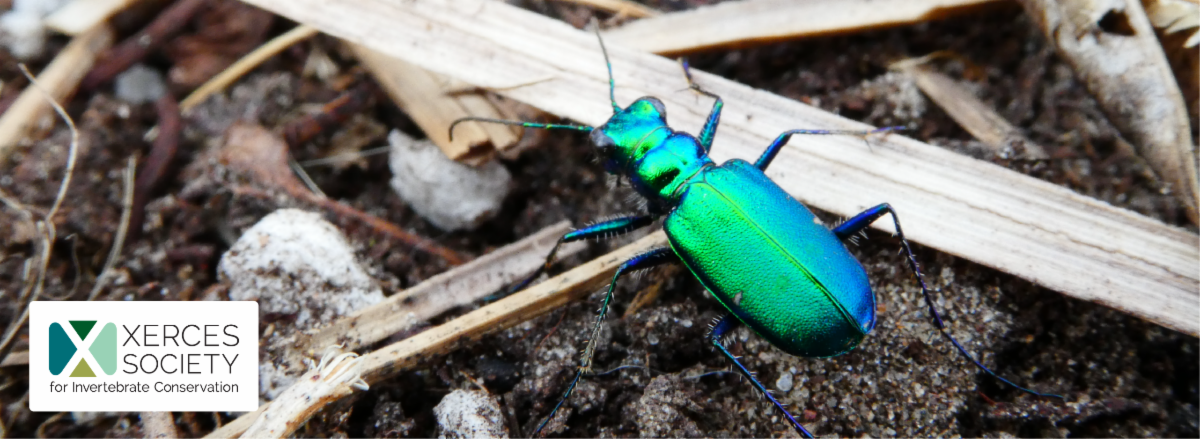
Photo Credit(s): Sarah Foltz Jordan |
|
|
|
|