[[trackingImage]]
DV_Logo_Color.png

Christine & Gary Pappin

Dream Vacations

(630) 837-7295

VISIT TRAVEL WEBSITE

New Requirements To Travel To Europe

Overview

There are two new requirements for travel to Europe. The Entry/Exit System (EES) and the ETIAS. These programs were scheduled to launch in late 2024 or early 2025, but they had been pushed back. Here is the latest update:


ETIAS is currently not in operation and will start in the last quarter of 2026.

No action is required from travellers at this point.

The European Union will inform about the start of ETIAS several months prior to its launch.


Entry/Exit System is currently in operation. 

The new Entry/Exit System (EES) started to be operational on 12 October 2025. European countries using the EES are introducing the system gradually at their external borders. This means that data collection will be gradually introduced at border crossing points with full implementation by 10 April 2026. For more information – see What does progressive start of the EES mean?


The Difference Between The Two Programs

Both systems aim to strengthen European security and security of those who travel.

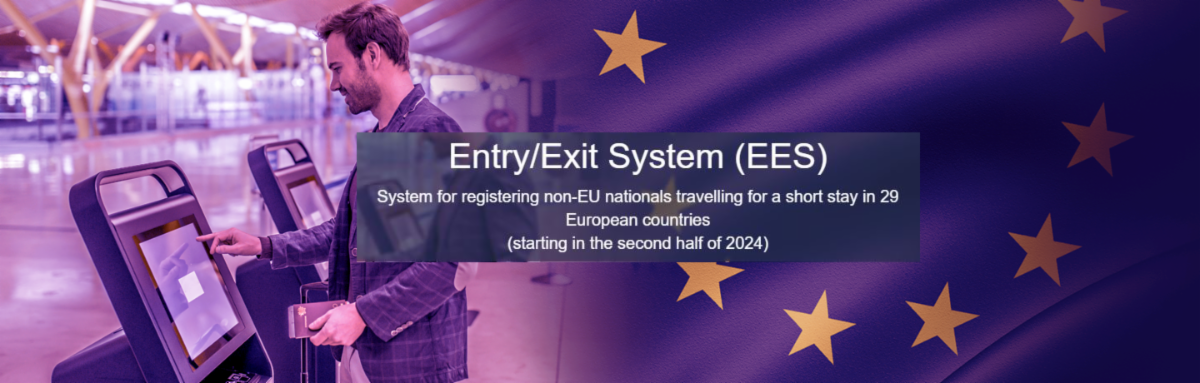
  1. The EES will register visa-free and visa-required travelers entering Europe for a short stay. No action will be required from travelers before they start their trip, as registration will be done at the external border of any of the 29 European countries using the system. Registration on the EES will be done every time travelers cross external borders and will replace the manual stamping of passports.
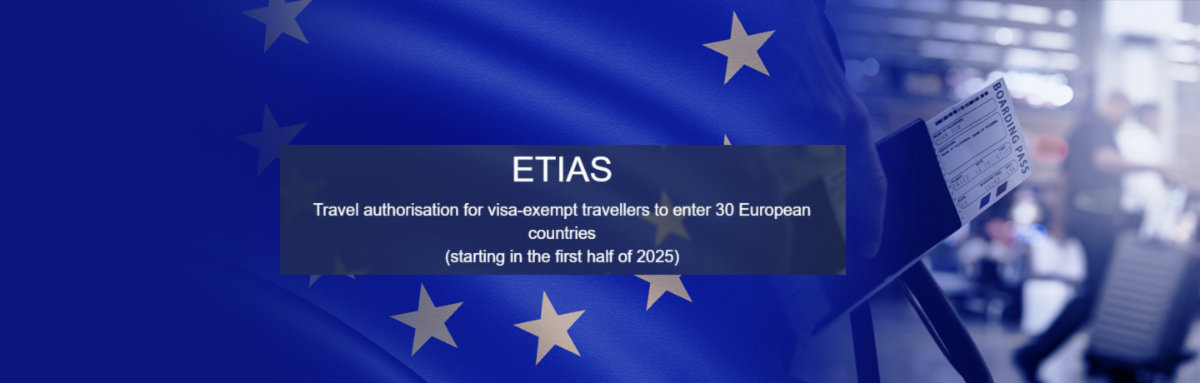
  2. ETIAS is a new entry requirement for travelers who do not need a visa to enter 30 European countries for a short stay. With ETIAS, visa-free travelers will need to apply for a travel authorization before starting their trip. ETIAS is not a visa, and its introduction does not modify the visa-free status of travelers. 


Entry/Exit System (EES)


EES is a biometric system which will use digital photographs and fingerprints for registering travelers from non-EU countries, including the UK, when they cross the EU’s external border. It will apply to both short-stay visa holders and visa-exempt travelers, each time they cross the external borders of any of these European countries using the system.


  • The system applies to those who are a non-EU national (means a traveler not holding the nationality of any European Union country or the nationality of Iceland, Liechtenstein, Norway or Switzerland.) and:
  • need a short-stay visa to travel to the European countries using the EES (‘Short stay’ means up to 90 days within any 180-day period. This period is calculated as a single period for all the European countries using the EES)
  • or
  • do not need a visa to travel for a short stay in the European countries using the EES
  • Entries and exits, or entry refusals will be electronically registered in the EES.
  • In Cyprus and Ireland, despite being countries of the European Union, passports will still be stamped manually.
  • The EES does not apply to: https://travel-europe.europa.eu/ees/whom-does-ees-not-apply_en


How will it work?


If you arrive at a border crossing point for the first time since the EES started

  • You will have to provide your personal data. Passport control officers will scan your fingerprints or take a photo of your face. This information will be recorded in a digital file.
  • Your passport (biometric or non-biometric) will not be stamped.
  • This process can be quicker if you register some of your data in advance. You can do this by using:
  • the dedicated equipment (“self-service system”), if available at your border crossing point; and/or
  • a mobile application - if made available by the country of arrival or departure.
  • In any of the instances above, you will meet a passport control officer.


If you have crossed the borders of the European countries using the EES more than once since the EES started

  • Your fingerprints or the photo of your face will already be recorded in the EES.
  • The passport control officers will only verify your fingerprints and photo, which will take less time. In rare cases, it may be necessary to collect and record your data again.
  • If you hold a biometric passport, you will be able to enter more quickly using the self-service system (if available at that border crossing point). If your digital file is clear of any impediments to travel, you will usually not need to go via a passport control officer.


ETIAS (European Travel Information and Authorization System)


The rules of travel to most European countries have changed. Starting in the first half of 2025, some 1.4 billion people from over 60 visa-exempt countries are required to have a travel authorization to enter 30 European countries for a short stay. ETIAS travel authorization is an entry requirement for visa-exempt nationals travelling to any of these 30 European countries. It is linked to a traveler’s passport. It is valid for up to three years or until the passport expires, whichever comes first. If you get a new passport, you need to get a new ETIAS travel authorization. With a valid ETIAS travel authorization, you can enter the territory of these European countries as often as you want for short-term stays - normally for up to 90 days in any 180-day period. However, it does not guarantee entry. When you arrive, a border guard will ask to see your passport and other documents and verify that you meet the entry conditions.


How will it work?


Applying for an ETIAS travel authorization

  • You can fill out the application form using either this official ETIAS website or the ETIAS mobile application. Applying for the ETIAS travel authorization costs EUR 7, though some travelers are exempt from paying this fee. Read more about what you need to apply and payment exemptions.


Processing your ETIAS application

  • Most applications are processed within minutes.
  • It is possible however that your application may take longer to process. If so, you will receive a decision within four days. Please note that this period could be extended by up to 14 days if you are requested to provide additional information or documentation, or up to 30 days if you are invited to an interview. This is why you should apply for an ETIAS travel authorization well in advance of your planned journey.


Once you have applied

  • You will receive an email confirming the submission of your application which will include your unique ETIAS application number: make sure you keep this number for future reference.
  • Once your application has been processed, you will receive another email informing you about its outcome.
  • When you get your ETIAS travel authorization please make sure your name, passport number and other information is correct: if there is any mistake, you will not be allowed to cross the border. More information about what to do if you made a mistake in your application can be found here.
  • If your application is refused, the email will provide the reasons for this decision. It will also include information about how how to appeal, details of the competent authority, as well as the relevant time limit to appeal.


Validity period of your ETIAS

  • Your ETIAS travel authorization is valid for three years or until the travel document you used in your application expires - whichever comes first.
  • It is for short-term stays: a valid ETIAS travel authorization entitles you to stay in the European countries requiring ETIAS for up to 90 days within any 180-day period.
  • You must be in possession of a valid ETIAS travel authorization during your entire stay. You can leave and come back at any time, as long as you respect this time limit.


On arrival at the border

  • As your ETIAS travel authorization is linked to your travel document, make sure to carry the same document which you used in your ETIAS application. Otherwise, you will not be allowed to board your flight, bus or ship, or to enter any of the European countries requiring ETIAS.
  • Having a valid ETIAS travel authorization does not guarantee an automatic right of entry. When you arrive at the border, border guards will verify that you meet the entry conditions. Those travelers who do not meet the entry conditions will be refused entry.


ETIAS check-list

  • Apply for an ETIAS travel authorization well in advance – before you buy your ticket or book your accommodation
  • Make sure your passport details correspond to those in your ETIAS authorization – you will be refused boarding and entry at the border if they do not match
  • Make sure your ETIAS travel authorization is still valid
  • Check how long you can stay in the European countries requiring ETIAS
  • Make sure your passport is valid for three months after your intended departure from the European countries requiring ETIAS - you will be refused entry at the border if it is not (exceptions apply).


Resources


For more information, contact:


chris_gary_pappin_profile.jpg

Christine Pappin, MCC

Christine & Gary Pappin Dream Vacations

(630) 837-7295

VISIT TRAVEL WEBSITE

cpappin@dreamvacations.com


X Share This Page
LinkedIn Share This Page