Meet ODDC Community Ambassador Alicia Hopkins
The Ohio Developmental Disabilities Council (ODDC) Ambassador Program is a storytelling initiative that centers on the voices of people with developmental disabilities (DD). Known as Community Ambassadors, self-advocates lead conversations and raise awareness around barriers and successes within their local communities.
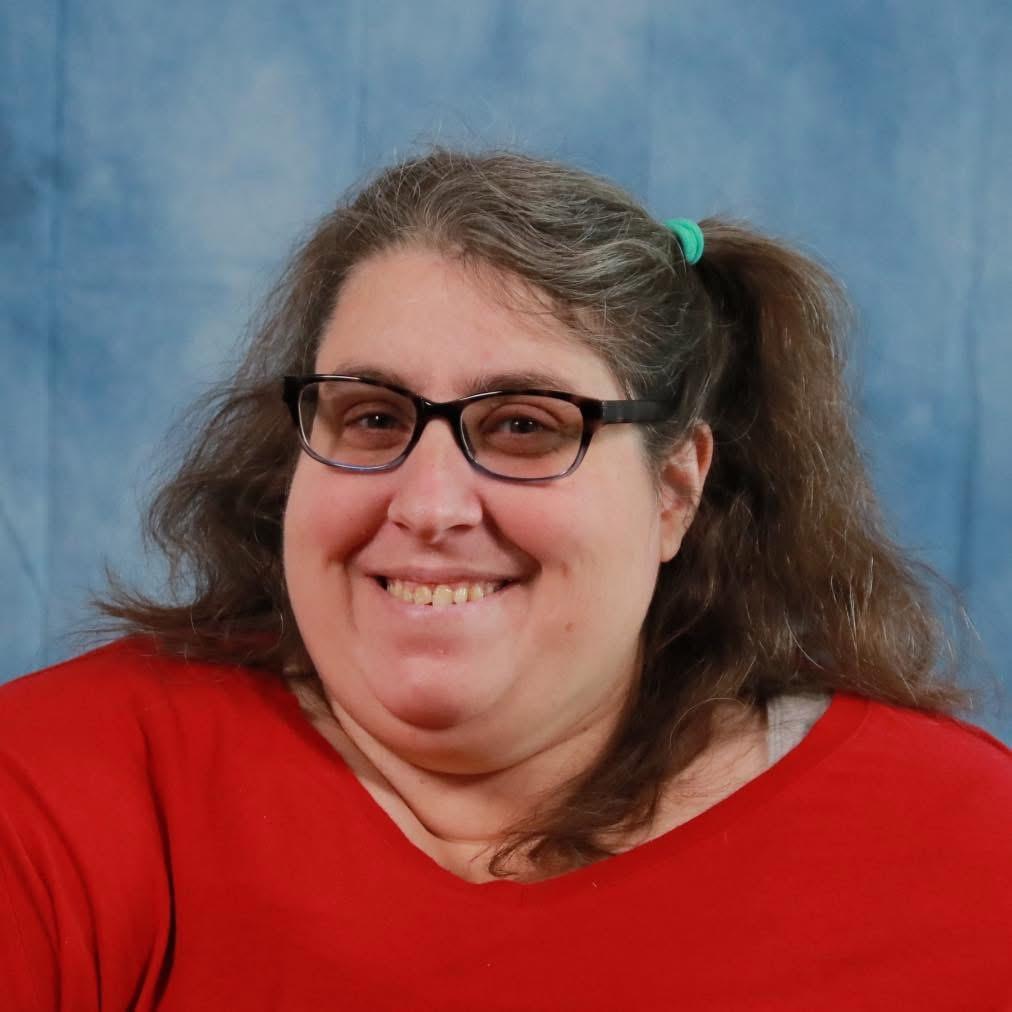
Community Ambassador, Alicia Hopkins, from Cincinnati, Ohio, not only advocates for issues within her own community, but also throughout the state. In her own words, she is "focused on communication and how access to the right tools can empower people to make their own decisions and achieve Supported Decision-Making."
Alicia shared her community's stories in three ways:
- Recording interviews with legislators, experts, and peers
- Writing blog posts
- Creating visual art pieces
|
|
|
|
|
Conversations that Drive Change |
|
Alicia used interviews to show how access to communication tools shapes advocacy, independence, and decision-making. Her conversations connected lived experiences with policy change and brought new perspectives into disability advocacy. |
|
Speaking with State Senator Casey Weinstein (D-Hudson)
Senator Weinstein plans to file a bill to ensure that all Ohioans have a voice by requiring insurance to cover Augmentative and Alternative Communication (AAC) devices. AAC means ways that someone can communicate besides talking. "Communication is a basic human right," said Weinstein. "It's critical for independence, meaningful relationships, and quality of life." He stressed that there will need to be a strong coalition to get this done. Alicia shared her perspective as someone who relies on AAC. She shared her own story of the barriers she faces in getting the tools she needs to communicate, and she talked about her fear of losing independence if her needs aren't met.
She also connected the bill (to be titled The Right to Communicate Bill) to current initiatives, such as Supported Decision-Making (SDM) and Techology First. Both frameworks would make the legislation stronger and more inclusive. Senator Weinstein valued her input and invited her to testify on the bill, recognizing how important her expertise and lived experience are to policy discussions.
Listen to her interview! |
|
Conversations with Professionals and Fellow Advocates
Alicia spoke with two blind advocates, Mike and Dawn, to explore how AAC and other communication tools affect participation across different disability communities. They talked about how barriers like cost, inaccessible formats, and lack of awareness often push people out of important conversations.
This conversation also highlighted SDM: when people have the right tools, they can make their own choices and fully participate in decisions that affect their lives. Having access to AAC and other communication supports is crucial for independence, inclusion, and self-advocacy.
Hear from Alicia, Mike, and Dawn! |
Raising Awareness Among Peers
Alicia is aware that even in disability advocacy spaces, many people don't know much about AAC or how important it is for inclusion. She spoke with two friends and fellow advocates, Amy and Duke, and asked them to consider, "How many AAC users do you see in advocacy spaces?"
Too often, the answer is "not many." Small changes, like giving people more time to respond, adding alt-text to images, and respecting people regardless of how they communicate, can bring more people into advocacy conversations.
She challenged them: "Work on including people that use alternative forms of communication."
Listen to the conversation! |
|
Ohio Advocacy Heartbeat: Insights and Stories from Advocacy |
|
Alicia shares her experiences and resources through her blog, The Pulse, on her media website Ohio Advocacy Heartbeat. Throughout the Community Ambassador Project, she wrote two blogs to give readers a window into how communication tools and advocacy intersect. |
Speaking Is a Privilege: Dystonia Awareness and AAC Advocacy in the Disability Community in Ohio
In this post, Alicia writes about living with dystonia, a condition that causes involuntary muscle movements and can make speaking difficult. Many people with dystonia rely on AAC part-time, and when they are in situations that don't allow extra time for them to speak, they can be left out of the conversation. Alicia educates her readers on how AAC devices work, and that a pause in communication doesn't mean the speaker isn't engaged.
"Everyone deserves respect and to be listened to, regardless of communication method."
Read her dystonia awareness month blog |
#EveryoneCommunicates How AAC Has Helped Me Make Decisions and Advocate in Supported Decision-Making
Alicia explores how AAC and SDM give her control over her own choices and advocacy. With her SDM team and AAC tools, like picture exchange cards (PECs), she remains the ultimate decision-maker, even with autism and other complex disabilities like dystonia. Her writing shows that when people have the right tools, they can make informed decisions and improve their health and everyday life.
Read her Supported Decision-Making blog |
|
Art as a Form of Communication |
|
| Alicia uses visual art to help her tell her story and advocate for change. Online, she goes by @Audacity2Speak, and much of her advocacy is tied to the hashtag #EveryoneCommunicates.
In Alicia's words, "Art speaks for me when I can't speak. It helps me process information and connect with people to share stories. It also provides a way to advocate for my needs. When I was going through a care crisis, I painted to survive, telling people stories through art. And it showed I wasn't alone. Art gave me the courage to advocate for bigger issues."
Alicia has advocated for the Direct Support Professional (DSP) crisis by:
- Creating a 25-foot painting to tell stories about wages for direct support professionals (DSPs) and the impacted disability community who can't access care. She presented her art to legislators and has spoken at the State House multiple times.
- Leading a statewide postcard campaign called Dear Ohio Legislators, where she helps people write to their legislators about the care crisis. Purchase postcards made by Alicia!
|
|
Take a look at some of Alicia's latest artwork: |
|
|
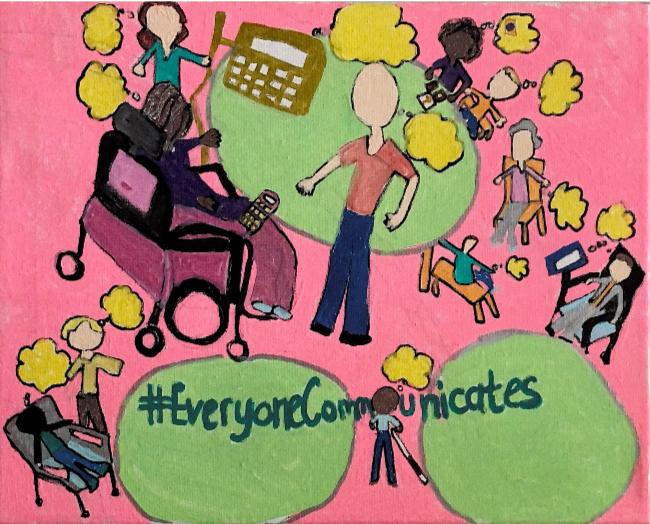
"This piece is room of people having community and conversation. There are people with disabilities and nondisabled people, and they are having conversations using AAC and [American Sign Language]. It's about having conversations and respecting and honoring the ways people communicate and including them in community.
"When I use my AAC in the community people exclude me. It happens a lot in Ohio [state level] advocacy spaces. People are used to when I speak, so they don’t understand when I need to use AAC.
"Did you know, up until last week [September 8 - 12, 2025], zero resources used [picture exchange communication systems] (PECS) with Supported Decision-Making? There are also zero resources for AAC in Supported Decision-Making.
"I keep pushing the issue, and I am speaking at the Synergy Ohio Conference on this topic." |
|
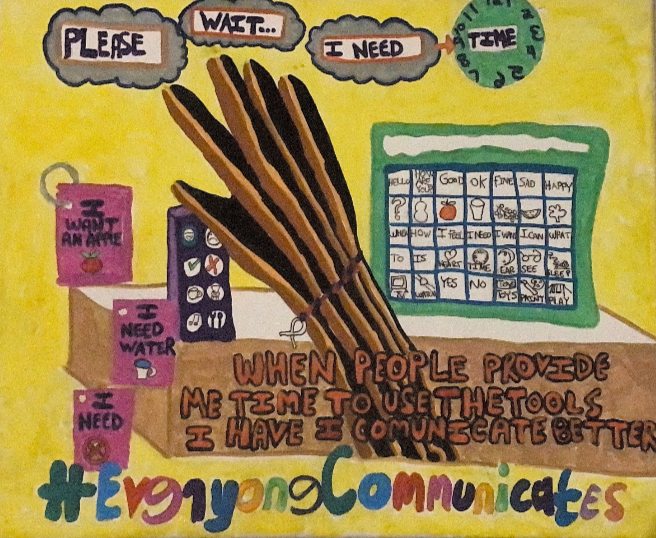
"This art piece is two parts. Often, when I use my AAC, people cut me off or don't give me time to communicate. It's been proven that when I have the right tools and time, people can understand me.
"The toolbox in the painting has my tools in it. I need people to realize that even though I speak sometimes, these tools help me communicate and get me consistently involved. I need people to respect the form of communication I need that day." |
|
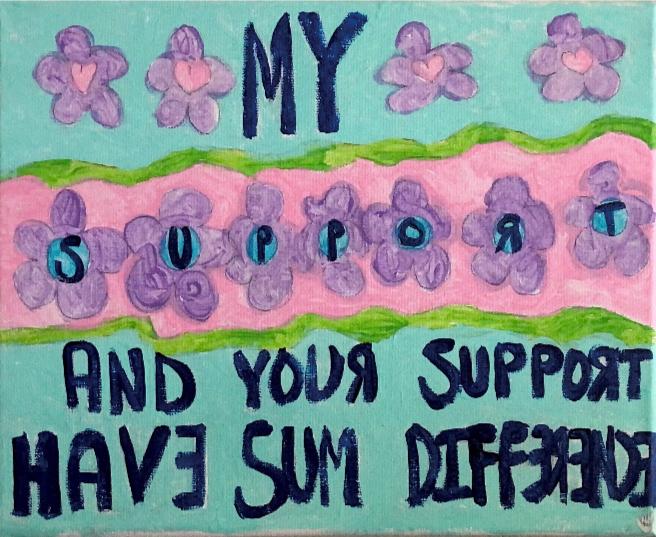
"I painted this to show that everyone's support needs are different. We should be person-centered and respect how people need support." |
|
|
|
|
| About the Community Ambassador Project: The Community Ambassador Project is a storytelling initiative of the Ohio Developmental Disabilities Council. The project features individuals from across Ohio who lead their own stories on what's happening in their town within their DD community, along with issues faced and positive change happening to improve community inclusion. Community Ambassadors choose one or two topics to focus on and provide an outline of how they will approach the topics. Then, the ambassador works on building stories around those topics to share with their entire community and beyond. Storytelling includes interviews, research, photos, videos, and more. The goal is to have people with DD in front of their communities and telling their stories in an authentic and positive way while raising awareness about issues and successes. For more information, visit the Ohio DD Council's website.
This project is supported, in part by the Ohio Developmental Disabilities Council, under a grant from the U.S. Administration for Community Living, Department of Health and Human Services, Washington, D.C. 20201. Grantees undertaking projects with government sponsorship are encouraged to express freely their findings and conclusions. Points of view or opinions do not, therefore, necessarily represent official ACL policy. |
|
|
|
|