UARK COE Working Group to Advance Smart AG Seminars |
|
| The University of Arkansas College of Engineering Working Group to Advance Smart Agriculture is hosting a seminar series featuring experts at the forefront of groundbreaking research in smart agricultural systems.
This series brings together leading researchers who are shaping the future of agriculture by improving efficiency and modernizing the traditional agro-food system from farm to fork. Speakers will be listed below in chronological order, with their professional biographies and seminar abstracts added as they become available.
All University of Arkansas students, faculty, and staff are invited to attend these inspiring presentations. |
|
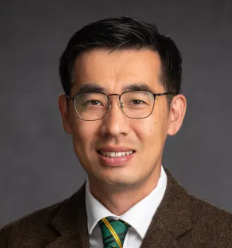
| Dr. Xin (Rex) Sun Associate Professor North Dakota State University
Seminar Info:
- Thursday, Feb. 12
- 9:30-11 a.m.
- ENGR 339
|
|
Title:
AI and Robotic Applications in Precision Agriculture |
Abstract:
Artificial intelligence and robotics are increasingly shaping the practice of precision agriculture by enabling data-driven, site-specific, and autonomous decision-making at field scale. This talk, drawing on research conducted primarily in the Upper Midwest and Northern Great Plains, highlights recent advances in sensing, edge-based machine learning, and robotic platforms developed for real-world agricultural applications, including autonomous weed management, crop stress and freeze damage detection, soil health assessment, and high-throughput phenotyping. Based on ongoing work integrating UAVs, ground robotic systems, hyperspectral and RGB sensing, and deployable deep learning models, the presentation emphasizes practical system design, on-device processing, and the transition from experimental prototypes to operational farm tools. The talk concludes with perspectives on scalability, workforce development, and the role of automation in supporting sustainable and resilient agricultural systems. |
Bio: Dr. Xin (Rex) Sun serves as the inaugural endowed chair and Director of the Peltier Institute for the Advancement of Agricultural Technology at North Dakota State University. Dr. Sun's research primarily focuses on precision agriculture technologies aimed at enhancing livestock, crop, and food production. His areas of expertise include artificial intelligence, robotics and automation, remote sensing, hyperspectral and multispectral imaging technologies, and food product non-destructive inspection technologies. He has authored more than 160 peer-reviewed publications, book chapters and conference papers, and has been supported by over $22 million in various funding from federal agencies, state programs and industry partners. Additionally, he serves as associate editor, guest editor, and review board member for over 30 different funding organizations and international academic journals. |
|
|
|
| Dr. Argelia Lorence James and Wanda Lee Vaughn Endowed Professor Lead, A-State Phenomics Core
Seminar Info:
- Friday, April 3
- 9:30-11 a.m.
- BELL 4008
- Join on Teams link
|
|
Title:
Rice that Beats the Heat |
Abstract:
High night temperature (HNT) stress negatively impacts both rice yield and grain quality and has been extensively investigated because of the significant yield loss observed (10%) for every increase in air temperature (1°C). Most of the rice HNT studies have been conducted under greenhouse conditions, with limited information on field-level responses for the major rice sub-populations. This is due to a lack of a field-based phenotyping infrastructure that can accommodate a diverse set of accessions representing the wider germplasm and impose growth stage-specific stress. I will discuss the construction of six high-tunnel greenhouses and their use in screening 310 accessions from the Rice Diversity Panel 1 in a replicated design. Each greenhouse had heating and a cyber–physical system that sensed ambient air temperature and automatically increased night temperature to about 4°C relative to ambient temperature in the field for two cropping seasons. These greenhouses were able to withstand constant flooding, heavy rains, strong winds, and thunderstorms. Selected US rice cultivars showed an average of 24% reduction under HNT. I will also discuss results of two novel genes we have identified to confer tolerance to HNT stress in rice under greenhouse and field conditions. |
Bio: The most significant contribution Dr. Argelia Lorence has made to plant sciences has been the discovery of a novel biosynthetic pathway for vitamin C that involves myo-inositol as a main precursor. Her laboratory uses the model plant Arabidopsis to better understand the role of various subcellular pools of vitamin C in plant physiology. Her ongoing research has potential applications for the development of crops with enhanced nutritional content, better growth, and improved tolerance to multiple environmental stresses. In addition to Arabidopsis, her current models of study include rice, soybean, camelina, and maize.
Dr. Lorence directs the Plant Phenomics Facility at A-State that serves academic and industrial clients. She co-led the Wheat and Rice Center for Heat Resilience (WRCHR; http://wrchr.org/), a consortium of Nebraska-, Kansas- and Arkansas-based researchers looking for rice and wheat varieties that are tolerant to high night temperature stress, one of the main challenges limiting the yield of the two most important crops worldwide wheat and rice.
Since joining A-State in 2005, Dr. Lorence has secured over $19 million in grants from the National Science Foundation, the National Institutes of Health, the U.S. Department of Agriculture. Her accolades include a James and Wanda Lee Vaughn Endowed Professorship at A-State, the Arthur Neish Young Investigator Award from the Phytochemical Society of North America, Distinguished Woman in Science by the Congress of the State of Morelos (Mexico), the Outstanding Hispanic Achiever of the Year Award from Hispanic Community Services in Jonesboro, the 2021 Excellence in Diversity Faculty Award from A-State and the 2024 Chancellor Medal for Research and Creative Activities. She was inducted in the Arkansas Latino Hall of Fame in March 2026. Prior to joining A-State, Dr. Lorence was a post-doctoral research associate at Texas A&M and at Virginia Tech. Dr. Lorence received a doctorate in 1997 and a master’s degree in biotechnology in 1995 from the National Autonomous University of Mexico (UNAM). She earned a bachelor’s degree in biochemical engineering from Autonomous Metropolitan University (UAMI) in 1991. |
|
|
|
| Director of Minnesota Robotics Institute
Seminar Info:
- Thursday, April 30
- 9:30-11 a.m.
- BELL 4008
|
|
Title:
View Planning for 3D Reconstruction of Plants |
| Abstract:
Active vision (AV) has been in the spotlight of robotics research due to its emergence in numerous applications, including agriculture and biomedicine, to name a few. A major AV problem that has gained popularity is the 3D reconstruction of targeted environments from multiple 2D views. While collecting and processing a large number of arbitrarily taken 2D images may become an arduous process in several practical settings, an efficient solution is to seek the optimal placement of available cameras in the 3D space to obtain the necessary visual information from fewer yet more informative images to effectively reconstruct environments of interest. This process, termed as view planning (VP), can be markedly challenged in the presence of noise emerging in the environment, location of the cameras, and/or in the extracted images.
We present an efficient and realistic VP pipeline, which aims to optimize the viewpoints of cameras and hence the quality of the 3D reconstruction of a field of row crops without the need for a given mesh model. This is achieved within four steps: (i) an initial flight to obtain a sparse point cloud, (ii) the generation of an initial simple mesh model utilizing the sparse point cloud, (iii) the planning of images via a discrete optimization process, and (iv) a second flight to obtain the final reconstruction. We demonstrate the effectiveness of the proposed VP framework against commonly used baseline methods for agricultural data collection and processing. This is joint work with A. Bacharis, H. Nelson, K. Polyzos, and G. Giannakis |
Bio: Prof. Papanikolopoulos (IEEE Fellow, NAI Fellow) received his Ph.D. in Electrical and Computer Engineering from Carnegie Mellon University. His thesis was entitled “Controlled Active Vision” and focused on using computer vision in a controlled fashion to detect, track, and manipulate objects in the environment. His research work has focused on robotics, agriculture, image processing, computer vision, and intelligent transportation systems. He has received numerous honors and awards for his research and contributions. He has been a Distinguished McKnight University Professor at the University of Minnesota since 2007 and has been a McKnight Presidential Endowed Professor in Computer Science since 2016. In 2016, he received the IEEE RAS George Saridis Leadership Award in Robotics and Automation as well as the Center for Transportation Studies Research Partnership Award. |
|
|
|
|
|
|