| I've been driving for over 25 years now, and I've taken more smog tests than I can count. Some passed easy. Some... did not. One time my old Civic failed so bad the technician just looked at me and shook his head. Good times. Anyway, I did some digging, talked to a mechanic buddy of mine, and put together everything I learned. This article walks you through the whole history of vehicle smog testing in America, from the smoggy skies of Los Angeles in the 1940s to the sensors sitting under your hood right now. Grab a coffee. Let's get into it. Key Takeaways Before we dive deep, here's the short version if your in a hurry:
- Smog testing started because of seriously bad air pollution in cities like Los Angeles back in the 1940s and 50s
- California was the first state to require emissions testing, way before the federal government got involved
- The Clean Air Act of 1970 changed everything and pushed testing nationwide
- Modern smog tests now rely mostly on your car's onboard computer (called OBD-II) instead of tailpipe sniffing
- Electric vehicles are starting to change what "smog testing" even means going forward
- Not every state requires smog checks, so your experience depends heavily on where you live
Okay, now let's get into the details. Why Smog Testing Even Started Picture this: its the 1940s in Los Angeles. People are stepping outside and literally can't see across the street some days. Their eyes are burning. Kids are coughing. Nobody really knew why. At first, folks blamed factories. Made sense, right? Big smoke stacks, lots of soot. But scientists eventually figured out something surprising. A huge chunk of the problem was coming from cars. All those tailpipes, pumping out exhaust day after day, were reacting with sunlight and creating a nasty chemical soup. This soup got a name: photochemical smog. Not fog. Smog. A mashup of "smoke" and "fog," and honestly, a pretty accurate description. By the 1950s, Los Angeles had a full blown air pollution crisis on its hands. Visibility was terrible. Health complaints were piling up. Something had to give. California Leads the Way Here's a fun fact that surprises a lot of people: California didn't wait around for Washington D.C. to fix this problem. In 1959, California passed the nation's first motor vehicle emissions standards. Then in 1966, California required all new cars sold in the state to have emission control devices. Think about that for a second. This was years before the rest of the country caught up. Why California specifically? Well, a few reasons:
- Los Angeles had a unique geography (mountains + valley) that trapped pollution like a bowl
- The state had massive car culture, meaning tons of vehicles on the road
- Local politicians and scientists were under serious pressure to act
By the late 1960s and into the 70s, California created its own regulatory body called the California Air Resources Board, or CARB. This organization still exists today, and honestly, it's kind of a big deal. CARB standards are often stricter than federal standards, and other states frequently just adopt California's rules instead of writing their own. Its like California became the trendsetter of clean air rules, and a bunch of states just followed the trend. The Clean Air Act Changes Everything Okay so here's where things get national. In 1970, Congress passed the Clean Air Act. This was a massive piece of legislation, and honestly one of the most important environmental laws in U.S. history. The Clean Air Act did a few major things:
- Created the Environmental Protection Agency (EPA)
- Set national air quality standards
- Gave the EPA power to regulate vehicle emissions
- Allowed states with serious pollution problems to require emissions testing
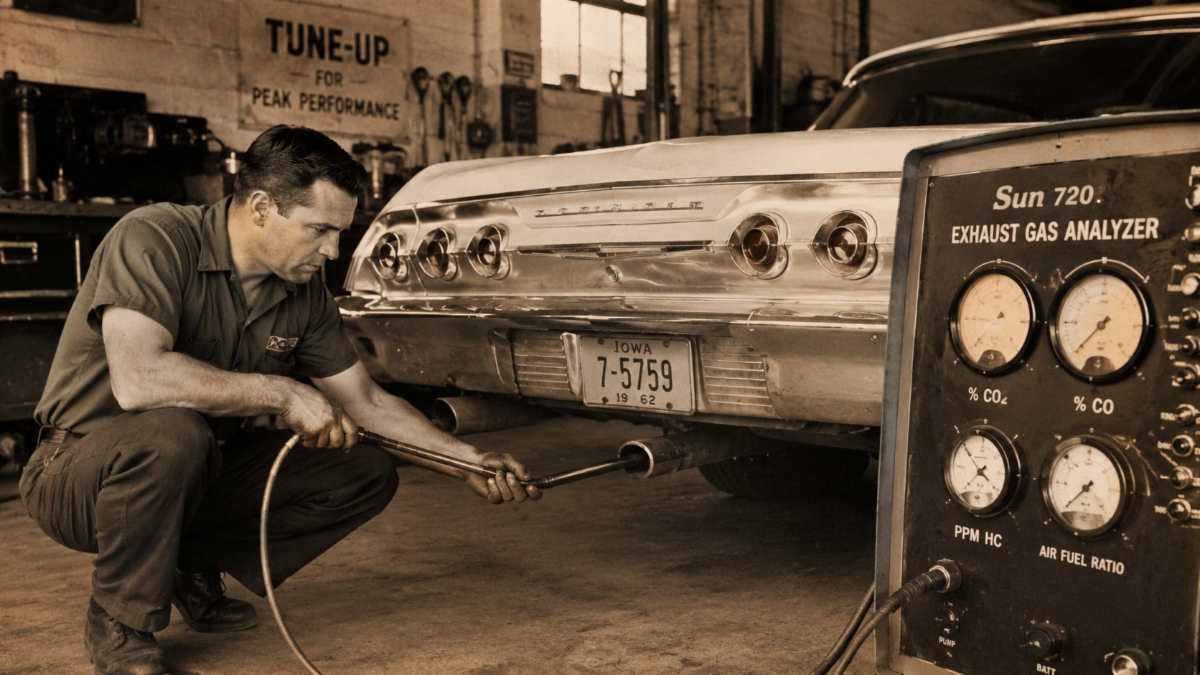
This is when smog checks started spreading beyond California. States with big cities and bad air quality—think Texas, Arizona, New York, and later many others—started rolling out their own testing programs throughout the 1970s and 80s. The goal was simple, even if the science behind it wasn't: get the worst polluting cars off the road, or at least force them to get fixed. What Early Smog Tests Actually Looked Like I asked my mechanic buddy what testing looked like back in the day, and he laughed a little before answering. Early smog tests were pretty basic compared to what we have now. Technicians would literally stick a probe into your tailpipe and measure what came out while the engine idled. That was basically it. No computers involved. No fancy sensors. Just a probe, a gauge, and a technician hoping your car passed. This method, called the idle test, checked for things like:
- Carbon monoxide levels
- Hydrocarbon levels
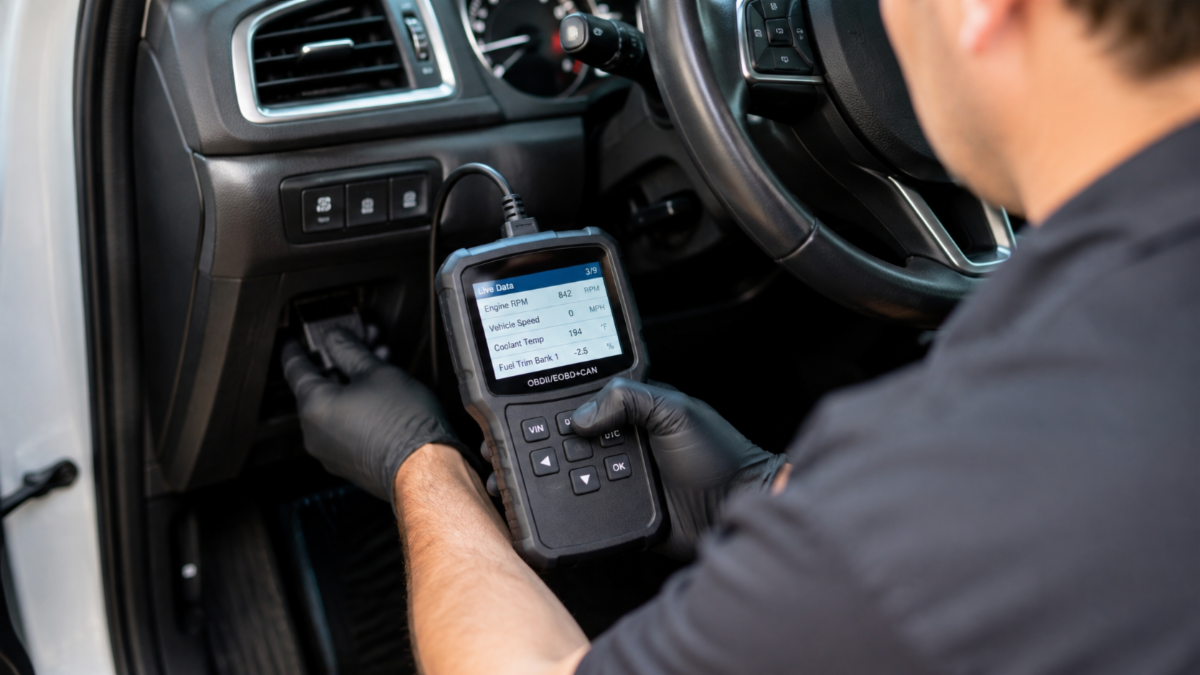
It worked okay for catching the really bad offenders. But it missed a lot too. A car could pass while idling in the shop and still pollute like crazy out on the highway. Enter the 1990s: Testing Gets Smarter By the 1990s, engineers realized idle testing wasn't cutting it anymore. So states started introducing something called the IM240 test. This stood for "Inspection and Maintenance, 240 seconds." Instead of just idling, your car would actually run on a treadmill-like device called a dynamometer, simulating real driving conditions for 240 seconds. This was way more accurate. It's kind of like the difference between checking someones fitness by watching them stand still versus watching them actually jog on a treadmill. Makes sense when you think about it that way, right? Around this same time, something even bigger was happening under the hood of American cars: the rise of onboard diagnostics. OBD-II: The Real Game Changer (Sorry, Had to Use That Phrase Once) Starting in 1996, every new car sold in the United States had to include something called OBD-II, short for onboard diagnostics, second generation. This little computer system sits inside your car and constantly monitors your engine, exhaust system, fuel system, and emissions controls. If something goes wrong, it flags it and often turns on that dreaded check engine light. I remember the first time my check engine light came on in my old Corolla. I panicked, assumed the worst, and drove straight to the mechanic. Turned out it was just a loose gas cap. Felt pretty silly after that one. But here's why OBD-II mattered so much for smog testing: instead of technicians sticking probes into tailpipes, they could now just plug a scanner into your car's computer and read the data directly. This changed smog testing dramatically because it:
- Made tests faster
- Made tests more accurate
- Caught problems that tailpipe testing would completely miss
- Reduced the need for expensive dynamometer equipment at every station
Nowadays, if your car is a certain age (usually 1996 or newer), your smog test is mostly just a computer plugged into your dashboard checking for stored error codes and system readiness. Way less dramatic than the old probe-in-the-tailpipe days, but way more effective. |