[[trackingImage]]

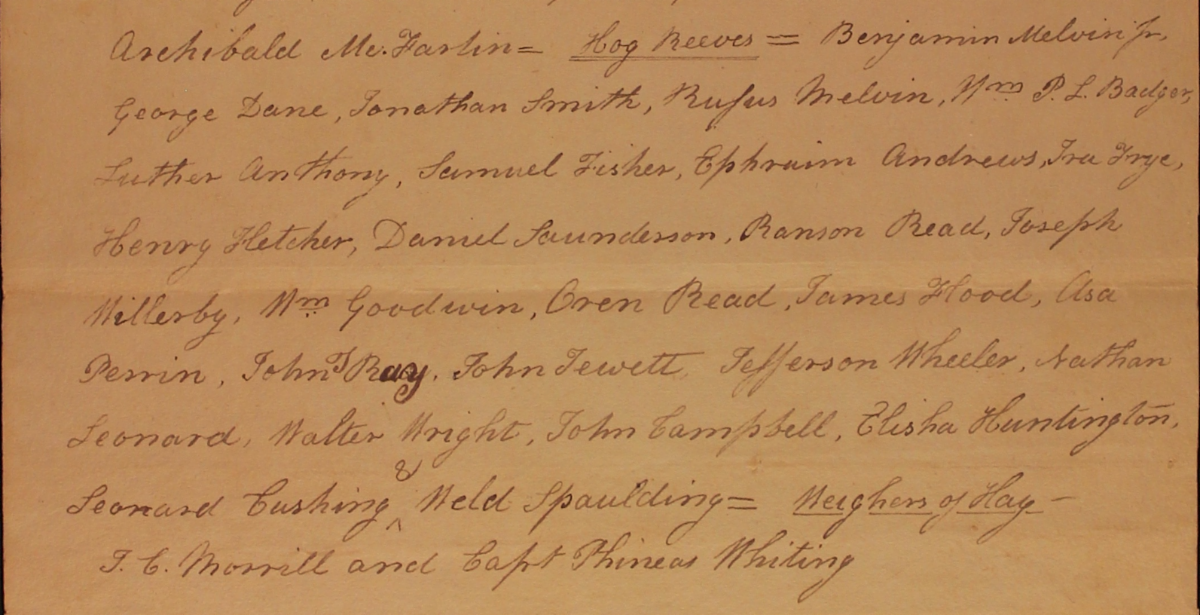
See the whole 1826 document by clicking here

A hog reeve was an officer responsible for preventing and appraising the damage done by stray hogs, also referred to as swine or pigs. 


In the “Town of Lowell” (1826 to 1836) documents that have been digitized only the terms “hog” or “hogs” and “swine” were found. The first use of the term “pig” in City documents was in 1845 in the “Petitions & Communications 1843 to 1846” collection. The fits with the frequency of use for the three terms shown by using the Google Books Ngram viewer. All three terms were used in the years 1800 to 1820; however, “pig” was the least used of the three. “Pig” surpassed “hog” in usage in 1830, and “swine” in 1837, and has been the most used of the three from then up to the present.


There were 26 hog reeves in the newly-established town, which is a testament to their importance. This responsibility seems quaint in retrospect; however, it addressed a serious problem in this period of history. One of the first hog reeves was Elisha Huntington who was also a physician and would go on to be an eight-term mayor of Lowell and the Lieutenant Governor of Massachusetts.


Loose swine were a big problem because of the damage they could do to gardens and crops. The swine would not just eat the leaves of plants, but would rip them up by the roots, destroying important sources of food. Owners of swine were responsible for controlling them and placing rings in their noses. The nose rings allowed the swine to eat, but made rooting painful. If a swine got loose, a hog reeve was responsible for capturing and impounding it. If the animal did not have a ring in its nose, then the hog reeve would place the ring and could charge the animal’s owner a fee. 


If a swine destroyed someone’s crops, the hog reeve would appraise the damage and the swine’s owner would be required to reimburse the owner for the value of the damaged crops. There were punishments and fines for not fitting hogs with nose rings and not keeping them penned.