colLABorate consilience 2025 |
|
| colLABorate consilience is a half-day event exploring how an interdisciplinary approach can yield unique, novel solutions for sustainable laboratories.
Three project teams will share three complementary case studies providing examples of collaborative efforts across multiple disciplines that were instrumental in the synthesis of their facility’s design or operation.
The novel format of colLABorate enhances the interaction between presenter and attendees to provide a more in-depth learning and sharing experience by distributing the synopsis of each presentation in advance. Allowing you to have the opportunity to provide questions and comments while also analyzing the content to have an open dialogical during the presentation.
With three physical locations to gather and a virtual option, the conversations are bound to be diverse and wide-reaching.
When: Tuesday, June 3rd, 2025
Where: BWBR, 380 St Peter St, Unit 600, St Paul, MN 55102 Findorff, 300 S Bedford St, Madison, WI 53703 Perkins&Will, 410 N Michigan Ave, Suite 1600, Chicago, IL 60611 Virtually: Microsoft Teams Live Event
Event Details: 12:00 pm - Lunch and Registration 12:45 pm - Announcements, Introductions and Logistics 1:00 pm - Case Study A: Sustainability and State Regulations: A Tale of Two Projects 2:00 pm - Case Study B: Richard King Mellon Hall of Sciences: A Model for Sustainable, Interdisciplinary Design 3:00 pm - Case Study C: Microgrids- What’s possible 4:00 pm - Closing Remarks 4:10 pm - Networking |
|
Sustainability and State Regulations: A Tale of Two Projects |
|
| Narrative
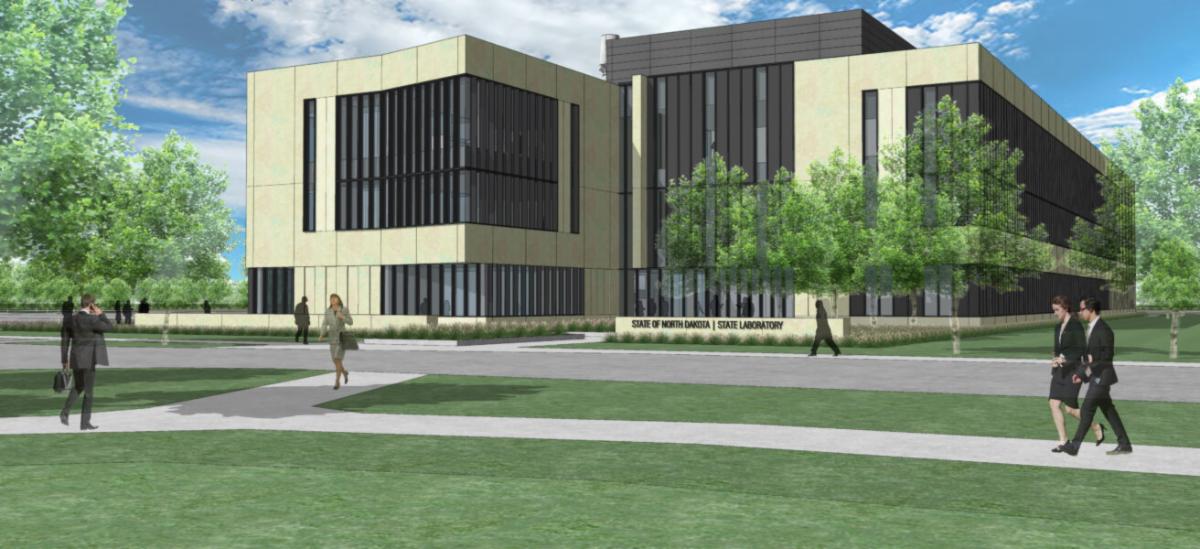
While sustainability is a global goal, it’s a decidedly local practice, as this deep dive comparison into two recent BWBR-designed projects will demonstrate. The North Dakota State Lab (housing the departments of Environmental Quality and Health & Human Services) and the University of Minnesota Fraser Hall Chemistry building offer an opportunity to compare and contrast approaches to sustainable solutions when working with multiple stakeholders, existing campus constraints, and very different state regulatory requirements.
Fraser Hall is a careful renovation of a nearly 100-year-old library building alongside a new addition, where the bulk of the program includes chemistry teaching labs and related spaces such as hazardous materials storage. The North Dakota State Laboratory is new construction on the state capitol campus and includes testing and research labs, biosafety level 3 (BSL-3) space, a public tour route, training rooms, and offices. While both projects are over 100,000 gsf and share sustainability goals around reduced energy consumption without compromising safety, they diverge in the needs of their program spaces, the regulatory requirements of their respective jurisdictions and, as a result, the way their sustainability aspirations were achieved.
The takeaway? While local regulations can dramatically influence the design process, there is still a way to achieve sustainable results which successfully serve the owner, the end users, and ultimately the community.
Collaborative Approach
The two projects share the need to program spaces as efficiently as possible related to quantity of square footage, quantities of equipment and fume hoods, and the relation of all of the above to energy use, long term maintenance, and operational costs. Both projects had potential to utilize existing campus-wide systems and become places to invest in long-term campus-wide sustainability strategy. While neither project pursued LEED, publicly funded projects in the state of Minnesota require a similar tracking system called Buildings, Benchmarks, and Beyond (B3), whereas the state of North Dakota does not currently have a similar system. The presentation will walk through the exploration and selection of the systems and elements included in the final designs.
Examples of Specific Design Considerations, Approaches, or Methodologies
Both projects exist within campus environments, which inform the infrastructure and services, exterior design aesthetic, and the interaction between the built form, landscape, pedestrians, and vehicular traffic. Fraser Hall was challenged to repurpose historic library space into functional labs, navigating numerous constraints of the existing building including the roof, systems, and air acuity management in relation to energy reduction. The North Dakota State Laboratory challenges related to long-term flexibility and adaptability--as testing programs and protocols develop over time, laboratory spaces need to be able to change to accommodate the updates without major impacts to operations or significant renovation costs. Another specific example relates to how the rules of the Inflation Reduction Act impacted each project.
Stakeholder Engagement
From the early stages, a wide range of stakeholders were involved in both publicly funded projects, with initial conversations around the project scopes and budgets going back several years. The North Dakota State Lab involved multiple workshops with the scientific staff, frequent communication and review with the state facility managers, and regular feedback and update sessions with the state government. Because of the wide range of stakeholders, conversations about laboratory needs and desires were also framed in the context of how the building would serve the State of North Dakota and engage the public in STEM opportunities within the state. For Fraser Hall, meetings with all stakeholders were similar, though the pandemic and related construction cost increases significantly impacted the design schedule.
Presenters Kat Lauer, Lab Planner, BWBR Brian Lapham, Project Manager & Lab Planner, BWBR Cesar Honorio-Arroyo, Lab Planner, BWBR Wes Schlichting, Mechanical Engineer, Dunham Tony Nelson, Project Manager and Electrical Engineer, CMTA |
|
Richard King Mellon Hall of Sciences: A Model for Sustainable, Interdisciplinary Design |
|
| Narrative
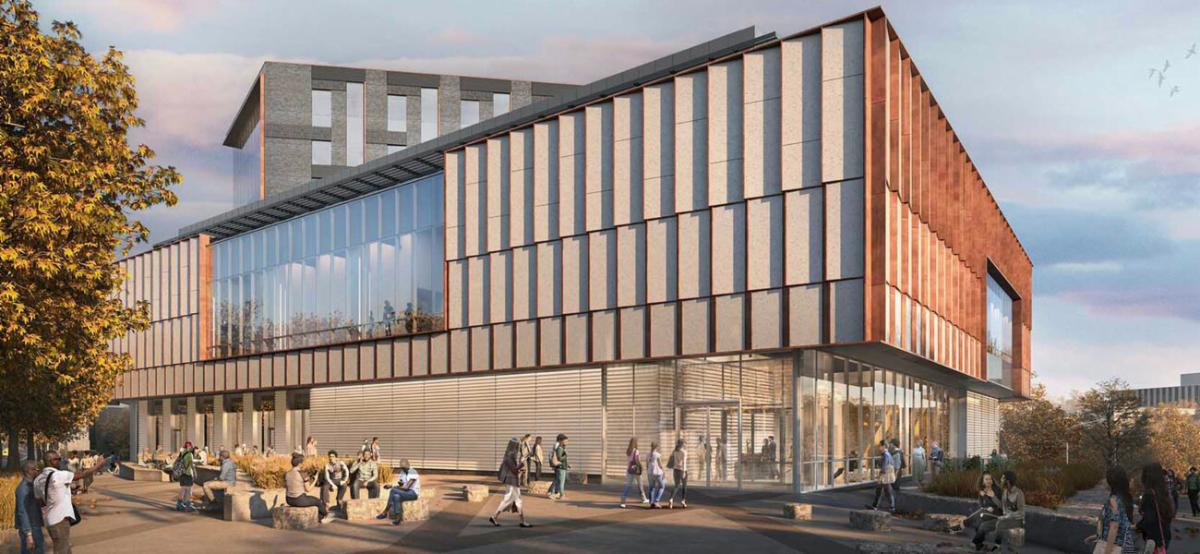
The new Richard King Mellon Hall of Sciences at Carnegie Mellon University (CMU) is poised to redefine the university’s approach to interdisciplinary research, inspiring scientists, creators, and students to deliver world-changing results all under one roof. Once completed in the fall of 2027, the seven-story, 338,900-square-foot facility will house the Mellon College of Science, the School of Computer Science, and the Institute for Contemporary Art (ICA) Pittsburgh. Occupying a prominent site adjacent to landmark Pittsburgh institutions such as the Carnegie Museum of Art, the Richard King Mellon Hall of Sciences will strengthen connections between CMU and the city’s broader cultural landscape while establishing a welcoming and exuberant campus edge.
Economic pressures, particularly those arising from post-pandemic inflation, have shaped the project’s evolution in significant ways. The design team reevaluated key components to enhance programmatic efficiency and operational resilience, prompting a strong focus on embodied carbon reduction. The site’s unique challenges, including shallow rock formations and a steep grade, resulted in intelligent excavation methods and design strategies that enhanced the building’s physical integration with the campus and surrounding neighborhood.
With a holistic approach to sustainability, the project is on track to be LEED Gold certified and “Zero Carbon Ready”. RKM Hall of Sciences contains a series of strategies that allow for it to be considered “zero carbon ready”.
- Heat Recovery Chillers takes the first steps towards electrifying the buildings heating systems through the implementation of heat recovery chillers which reduce scope 1 emissions from the combustion of natural gas. The switch to electricity as the heating source enables the use of renewable electricity to be used as the energy source.
- Low Temperature Hot Water: Hot water equipment is sized for a peak hot water supply temperature of 130F, enabling future integration of decarbonized heating sources such as ground or air source heat pumps.
- Adiabatic Humidification: Removes the requirement for steam, enabling the use of hot water generated from a future decarbonized heating source.
- Bellefield Heat Recovery: A plan to recover waste heat from the nearby Bellefield boiler plant and use it to generate hot water at RKM is under development.
The cumulative impact of these strategies is a building that on day 1 has taken a series of meaningful steps towards carbon neutrality and is well positioned to be carbon neutral soon. As shown in the dynamic benchmarking dashboard available here (https://tinyurl.com/28mjdyuk) that leverages the I2SL benchmark database, RKM’s design site EUI of 103 kBtu/sf/yr is 57% less than the median, placing it on a path to outperform 93% of its peer group.
Collaborative Approach
- The Richard King Mellon Hall of Sciences exemplifies a deeply collaborative and interdisciplinary design approach. From the outset, the project was shaped by an integrated team that included architects, engineers, sustainability consultants, energy performance analysts, and the construction manager, all working in close coordination with Carnegie Mellon University leadership and key academic stakeholders. Decision-makers from the three user programs, Mellon College of Science, School of Computer Science, and the Institute for Contemporary Art (ICA) Pittsburgh, were also deeply integrated throughout the process, helping to shape a program that brings together the diversity of the arts and sciences disciplines under one roof. This inclusive approach fostered transparency, shared ownership of the design goals, and a commitment to creating spaces that are innovative, flexible, operational, and future-ready.
- The interdisciplinary nature of the team directly influenced the building’s radically flexible program. Early engagement with faculty and user groups helped define a range of adaptable environments, from convertible teaching labs that can shift between wet and dry lab functions, to modular research suites that support evolving faculty needs and interdisciplinary collaboration. The building also integrates public-facing spaces like the ICA Pittsburgh’s modular galleries that are intended to support rotating exhibits rather than a permanent collection.
- This deep consistent cross-disciplinary dialogue allowed the team to anticipate how the needs of research, teaching, and public engagement might evolve. Consequently, the building is intentionally designed to support innovation, interdisciplinary exchange, and programmatic transformation well into the future, while also ensuring operational efficiency with its advanced building systems.
Examples of Specific Design Considerations, Approaches, or Methodologies
- A defining design challenge and opportunity was the site's triangular geometry, complex topography with shallow rock formations, and a significant grade change. These conditions called for creative programming and innovative structural solutions. One of the most impactful strategies was stacking laboratory space directly above the subterranean parking garage. The regularity of the structural grid required for parking garage design closely aligns with that of the flexible lab modules, allowing the design team to optimize the structure and the building system distribution. This approach not only addressed the site’s constraints efficiently but also improved operational efficiency by simplifying the distribution of infrastructure and enhancing long-term adaptability.
- A focus on reducing embodied carbon also shaped key design and material decisions. The design team worked closely with the Construction Manager and regional suppliers to help educate and develop specifications for low-carbon concrete, positioning the project as a market driver in the region for sustainable construction practices. The project also includes features such as a green roof, advanced heat recovery systems, solar panels, and heat recovery chillers. The building will be the first on campus designed for future heating system electrification using a low-temperature hot water system.
- For key design decisions, interactive dashboards were constructed to better understand potential paths forward. Examples of these include System selection (https://tinyurl.com/5vyddru8), Humidification type (https://tinyurl.com/4bmkwp9y) Natural ventilation (https://tinyurl.com/3p8rzaa5), Using well water for cooling towers (https://tinyurl.com/24d47mh4), Envelope optimization (https://tinyurl.com/mrxprr3r), Heat recovery chillers (https://tinyurl.com/4a84upfw). These tools helped ensure the best-informed decisions were made.
Stakeholder Engagement
- Stakeholder engagement played a key role in shaping the final design of the Richard King Mellon Hall of Sciences. Over a series of collaborative workshops, themed as Unearth, Aspire, Define, Shape, and Achieve, the project team worked with CMU to identify the aspirations, priorities, risks, and opportunities of each stakeholder, and to find a common framework for a single building that met the overarching goal of the project, combining disciplines to propel new ways of thinking. Throughout this process, five guiding tenets emerged: to design a radically flexible building that could serve CMU for the next 100 years; to design in three dimensions, leveraging opportunity in the site’s dramatic topography; to engage the public realm and connect back to campus; to be a good neighbor to adjacent art museums and retail establishments; and to embody a spirit of innovation with a bold expression appropriate for its gateway site.
- Instrumental in the successful design and engineering of the building was the close collaboration and communication between the Design Team and CMU’s Campus Design and Facility Development team. Their combined expertise and innovative approaches resulted in a building that not only meets the current needs of its researchers and artists but is also adaptable to future demands. This synergy ensured the integration of cutting-edge technologies and sustainable practices, enhancing operational efficiency and environmental performance. The project has been widely praised for its seamless blend of aesthetic appeal and functional excellence, setting a new benchmark in architectural design and engineering collaboration.
Additional Information
The Richard King Mellon Hall of Sciences showcases how a complex site, economic pressure, and ambitious programming can be reconciled through innovation, resilience, and design excellence. The facility reflects a strategic institutional investment in CMU’s long-term identity and commitment to interdisciplinary collaboration.
Presenters
Jamison Fielding - Principal Project Manager, Carnegie Mellon University Cameron Fritts – Mechanical Engineer, Affiliated Engineers, Designer Chris Augustyn – Senior Project Engineer, Affiliated Engineers, Designer Brad Reed – Principal, ZGF Architects, Project Management Lead Jesse Wetzel – Associate, ZGF Architects, Project Design Lead |
Microgrids- What’s possible |
| Narrative
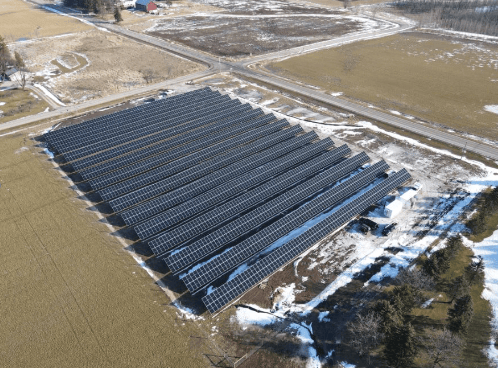
Faith Technologies designed and installed a microgrid system for our Vision center in Stockbridge, WI. This microgrid system serves a 40 acre parcel with a 19,000 square foot Vision Center, an EV Charging Depot, two residential homes, a small office building, a shop, and 6 future condos. We can provide all electricity to these facilities without an electrical utility connection. We do have a gas utility connection for our combustion engine for long winter nights.
Collaborative Approach
FTI had to work through plenty of challenges to ensure reliability and resiliency with a microgrid that is not connected to the utility. We have multiple battery energy storage systems, and multiple solar arrays that work together to provide sufficient power. Our control system for the microgrid makes decisions in real time what to do with power generated by our solar array, when to deploy stored energy in the battery systems, and when to call for generation from our combustion engine.
Examples of Specific Design Considerations, Approaches, or Methodologies
Design challenges included all the following.
- Tracker versus non tracker system for ground mount solar array
- Battery selection- type of battery, manufacture, physical size
- How do we ensure resiliency, how much stored energy do we need for the site
- Systems integration- Ensuring all assets are communicating properly and the sequence of operation is followed 100% of the time
- Amount of EV charging that will be needed at the facility
- Design considerations in the event we add loads in the future. How do we build a microgrid that we can add power requirements to in the future.
- No electrical distribution in the Vision Center. How do we build an E-house that is a separate building
- Building a software package for the control of energy
- Building a modeling software package to understand how much energy we will need and how much energy we can generate at the site
- Electrical in floor heat versus natural gas heat. What would be best. We landed on electrical in floor heat and built the solar array to support
Stakeholder Engagement
Input from the stakeholders was around resiliency of the system. How do we ensure uptime is better than an electrical utility? Building for the future, could we add more homes in the future and utilize DC electrical distribution, power sharing between homes, DC appliances. How do we cut down on potential electrical losses by inverting power from DC to AC, back to DC, and ultimately to AC to deliver to existing loads.
Additional Information
FTI has been running this site for more than three years in an on off grid situation. We have data and lessons learned that are valuable to the energy space and end user clients.
Presenters Matt Sabee- Group Leader Field Energy with Faith Technologies Sawyer Stuckey- Pre-construction Manager with Faith Technologies Dan Nordloh- Senior Vice President and GM, DCentriQ |
|
colLABorate Collaborators |
|
|
|
|