Global Issues, Student Voices: Insights from the Conférence de Montréal |
|
| Marianopolis is committed to providing students with meaningful learning experiences that extend beyond the classroom, including opportunities to engage in real-world dialogue on today’s most pressing issues.
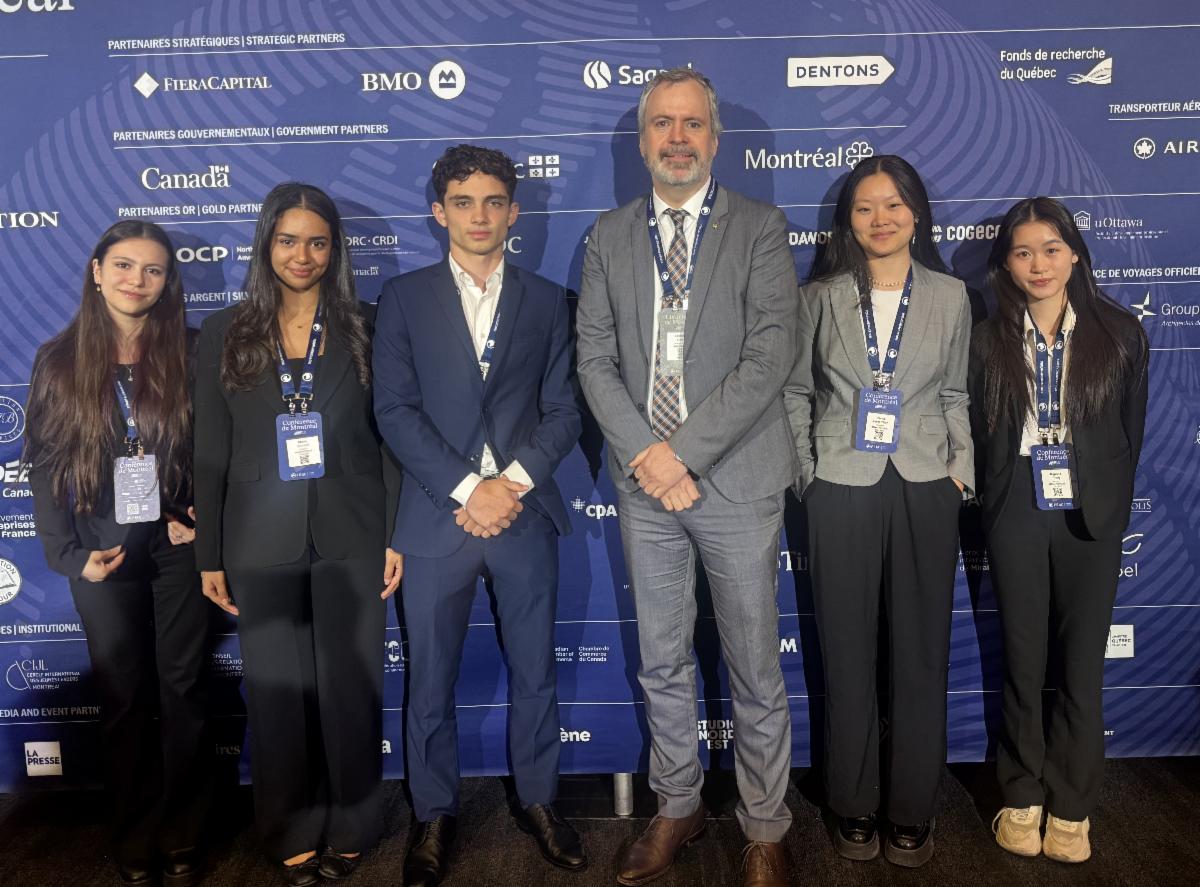
As part of that mission, five members of the Class of 2025 had the opportunity to attend this year’s Conférence de Montréal, an international forum that brings together global leaders in business, government and academia.
Over three days, Mona Ahmed, Daphne Fung, Isabelle Kondo, Alexander Paliotti and Nancy Tang Chen took part in high-level discussions on topics ranging from climate policy and artificial intelligence to interprovincial trade and global investment. They also met with professionals, policymakers and entrepreneurs, gaining valuable insight into the challenges and opportunities that lie ahead.
Read their reflections on what they learned and how the experience shaped their thinking. |
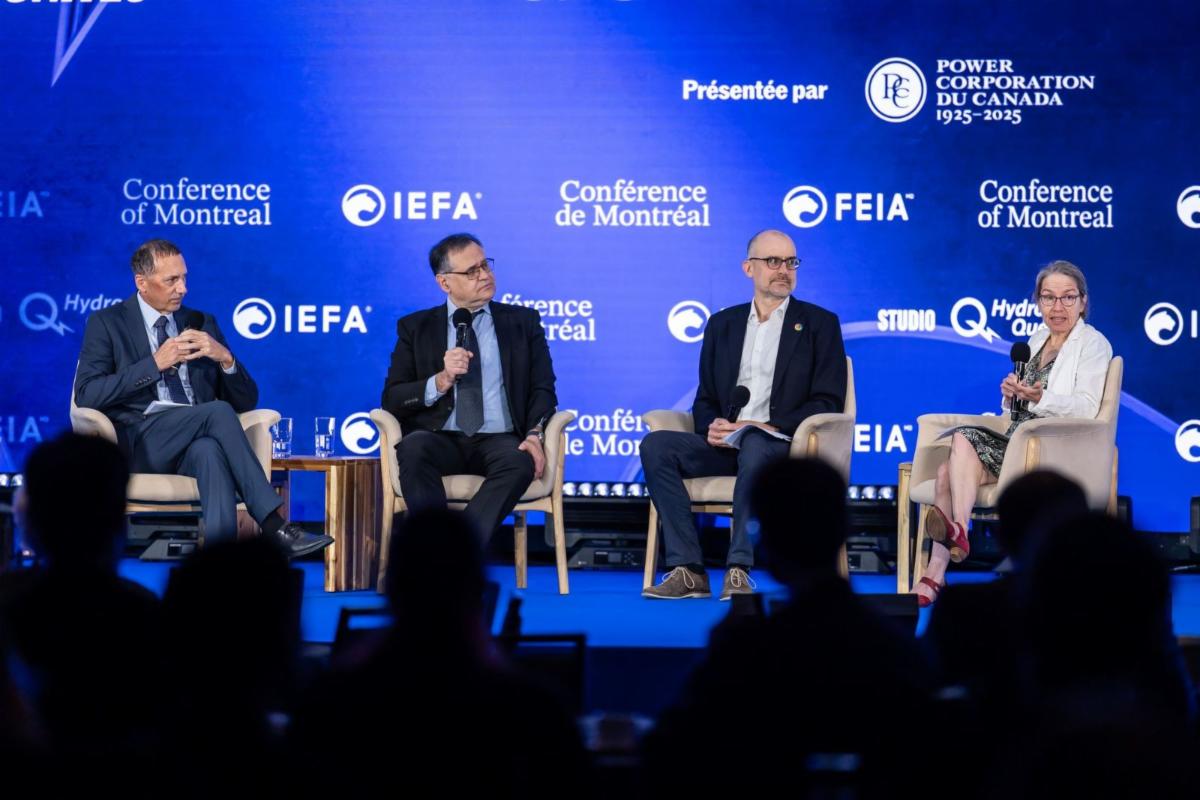
Speakers Vincent Oliva, President, FMSQ; Karl Weiss, Prof. of Medicine and Chief of Infectious Diseases, JGH; Andrew Gonzalez, Biology Prof., McGill; and Hélène Carabin, Veterinary Medicine Prof., UdeM, at the “Adopting a One Health Approach” session on June 11 at the Conférence de Montréal. |
| Parachuting Cats and the Changing Geopolitical Landscape Nancy Tang Chen, Arts & Sciences, Class of 2025
As a student in the Arts & Sciences program, I spent a lot of time over the last two years observing connections between the human condition and the natural world. Having the opportunity to attend an event like the Conférence de Montréal, which brings together policymakers and experts from a wide range of fields, reinforced the importance of that interdisciplinary perspective.
One of my main takeaways from the conference was the deep interconnectedness of the global challenges the international community now faces.
Two of the discussion sessions I attended during the three-day event particularly stood out. While the sessions entitled “Adopting a One Health Approach” and “Staying the Course in Canada’s Transitioning Economy” might seem unrelated at first glance, I noticed unexpected connections between key points in each discussion.
The “Adopting a One Health Approach” event began with a conversation about the far-reaching effects of antibiotic resistance and the transmission of animal-borne illnesses on biodiversity and climate change, both topics I had also explored in my Biology class.
The health of all living beings is inherently tied to agricultural practices and climate change, and all three are closely linked to economic development. Within and across industries, there are complex chains of cause and effect that we must recognize and take into account.
At the “Staying the Course in Canada’s Transitioning Economy” session, panelists described an ongoing shift in global alliances in light of recent international developments. Each speaker proposed strategies such as increasing reliance on domestic resources, especially critical minerals, and diversifying trade partnerships.
These were concepts I was familiar with thanks to my participation in school-organized guest speaker panels and Model UN conferences, where global issues and international relations were frequently discussed.
What stood out most was the parallel between the complexity of natural ecosystems and the current geopolitical landscape, which made me wonder whether the reordering of relationships between states could also risk triggering unanticipated chain of events.
During the “Adopting a One Health Approach” discussion, one of the panelists, Université de Montréal Professor of Veterinary Medicine Hélène Carabin, shared a fascinating and almost unbelievable story about a malaria outbreak on the island of Borneo caused by mosquitoes.
The World Health Organization’s response was to use DDT to eliminate the mosquitoes, a decision that ended up significantly impacting the local environment. The dispersal of DDT led to a decline in the cat population, which in turn caused a spike in the rat population. That increase ultimately resulted in an outbreak of the plague. To fight the rat infestation, public health officials resorted to a dramatic measure: air-dropping cats by parachute into the affected areas.
As absurd as the image of parachuting cats might be, the domino effect in this story serves as a cautionary tale. It highlights the importance of systemic thinking, analyzing all components and stakeholders before taking action, a lesson I will certainly remember.
The discussions and insights I gained at the Conférence de Montréal helped me apply classroom learning to real-world issues and deepened my understanding of their broader significance. This experience has made me a more informed and engaged global citizen, and I intend to carry these lessons with me in the years ahead. |
|
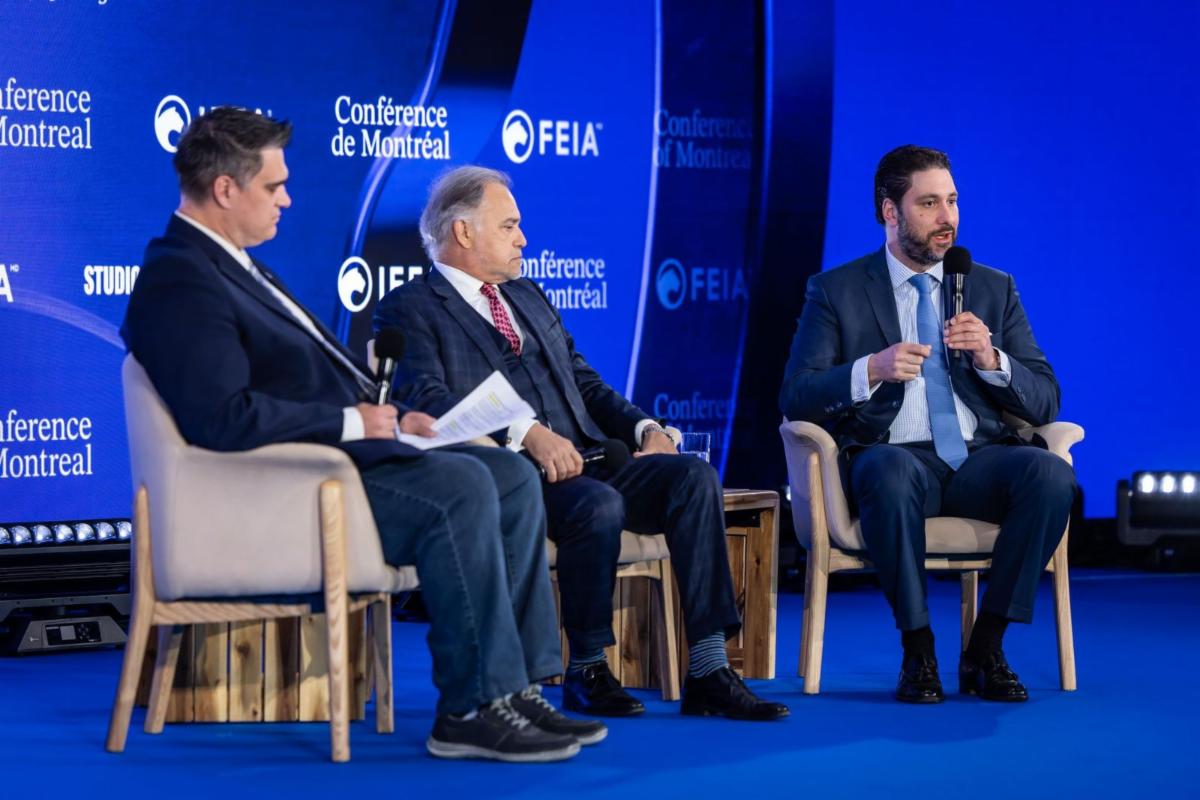
Yan Plante, President and CEO of RDÉE Canada; Yves Desjardins-Siciliano, CEO of Siemens Mobility Canada; and Rodolphe Husny, international trade consultant and political analyst, at a panel on interprovincial trade at the Conférence de Montréal on June 11. |
|
| Stepping Into the Conversation: My Experience at the 2025 Conference de Montréal Mona Ahmed, Liberal Arts, Class of 2025
I had the extraordinary opportunity to attend the 2025 edition of the Conférence de Montréal, where I spent several days immersed in high-level discussions on some of the most pressing issues of our time.
It was a space where decision-makers, academics, business leaders, and students could engage with real-world challenges, and I felt lucky to be part of it.
One panel that left a lasting impression was “Strengthening Interprovincial Trade”, held on the final day of the conference. I had never considered the complexity of Canada’s internal trade barriers or how they affect economic collaboration. Panelists discussed how overlapping regulations between provinces can hinder companies looking to scale nationally and pointed to efficiency gains that could come from simplifying these systems.
One idea that stood out to me was the call to reward innovation. “L’innovation doit être récompensée,” one speaker said. Another described Canada as “Un petit joueur, mais on a beaucoup de pouvoir,” emphasizing the country’s untapped potential. While these comments framed innovation as something that should be encouraged more actively, the discussion also left me thinking critically about the balance between streamlining policy and ensuring public oversight.
But what truly elevated the Conference experience was the people. Beyond the panels, the conference became a place of connection. I had the chance to meet individuals from across Canada and beyond, researchers, entrepreneurs, policymakers, each with a different story, each generous with their time and insight.
These one-on-one conversations were often just as impactful as the formal programming. One recurring theme that stood out was how nonlinear most people’s career paths are.
Many of the people I met had studied one subject but built careers in entirely different fields. It felt less like a detour and more like a natural evolution, which was both comforting and motivating.
Above all, I was struck by how warmly we were welcomed as students. People were curious about our perspectives and open to dialogue. It reminded me that age and title aren't barriers to participation, curiosity and willingness to listen are what matter most.
I am sincerely grateful to Marianopolis for making this experience possible. It was more than a learning opportunity, it was a moment of growth, a chance to see the world in motion, and to realize that we, too, have a place in it.
|
|
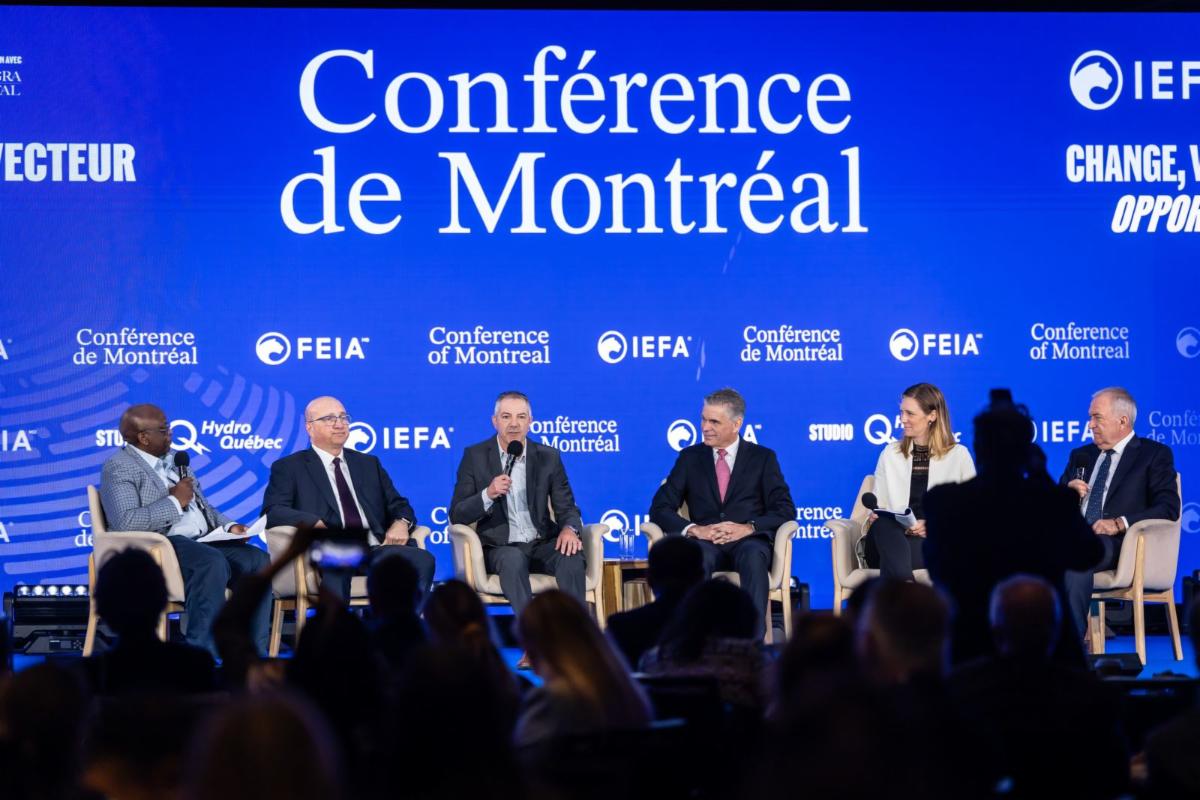
Panelists at the "Shaping a Balanced Energy Future" session on June 10 at Conférence de Montréal. |
|
| Speaking Up for a Sustainable Future Isabelle Kondo, Social Science, Class of 2025
The Conférence de Montréal provided a unique learning experience, allowing me to explore niche business topics related to sustainability, international politics, and artificial intelligence.
As someone who believes in the utmost importance of a sustainable world for future generations, I was especially drawn to the panels focused on energy conservation, including the panel “Shaping a Balanced Energy Future.” This discussion brought together experts from the Canada Infrastructure Bank, Dentons’ Battery & Energy Storage Group, Énergir, Hydro-Québec, Engel Americas, and the Department of Electrical and Computer Engineering at Université Laval. Together, they explored how innovation and public policy must collaborate to improve energy efficiency. The conversation emphasized that the first step is simply using energy more wisely. For example, businesses could reduce consumption by turning off lights and equipment when not in use. More importantly, governments have a role to play by implementing policies such as penalties for overconsumption to encourage a shift in habits at the individual and corporate levels.
While the panels were very interesting, my favourite part of the conference was the networking opportunities, where I took the initiative to speak with other participants of the conference, including business and political leaders. Everyone was incredibly welcoming, and after learning that I was part of the first student delegation from Marianopolis College, many were eager to share insights about their careers and offer advice. Through networking, I had meaningful conversations with a wide range of individuals, including a lawyer and public policy executive, employees of the IEFA, volunteers, and the founder of Audace Au Féminin, an organization dedicated to empowering women.
One moment that especially stood out was speaking with the founder and president of Audace Au Féminin. She shared a quote that I will never forget: “The silent woman does not make history.” That powerful message inspired me to think about how I want to begin my business career, with confidence, authenticity, and the courage to make my voice heard. |
|
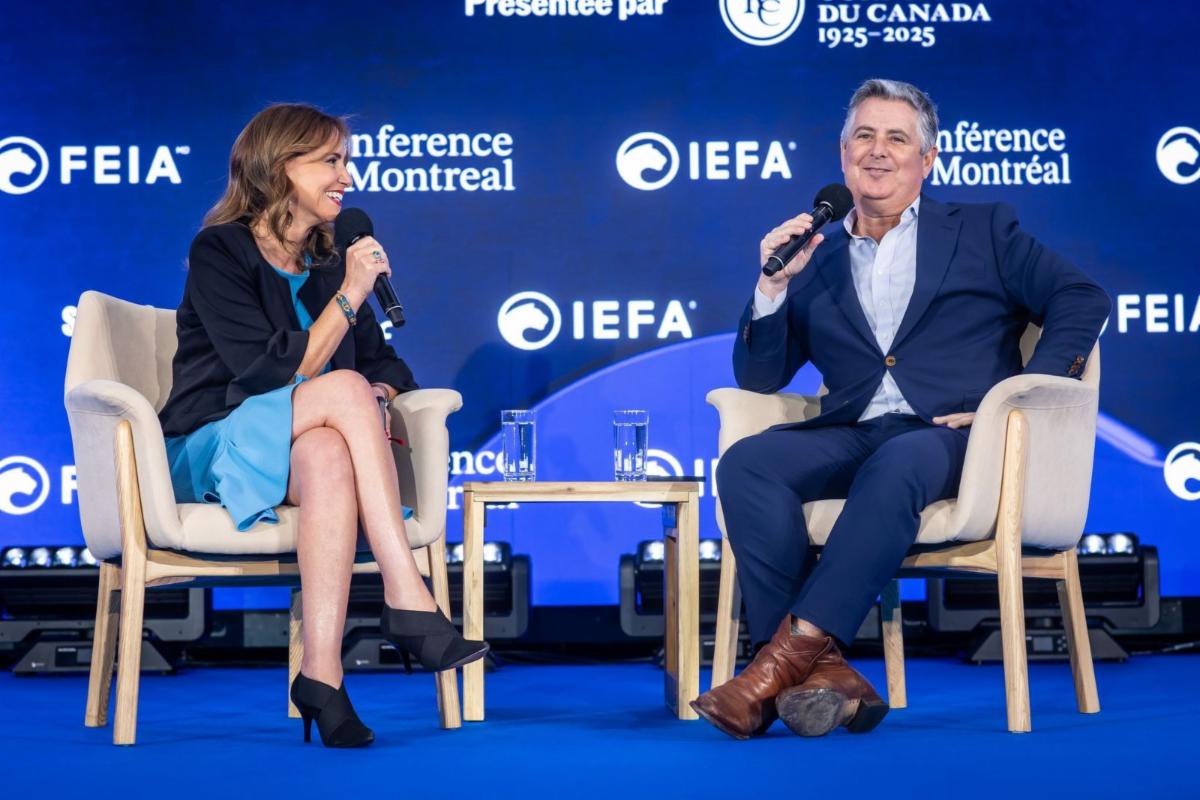
Caroline Codsi, Founder and Chief Equity Officer of Women in Governance, and Brian Timpone, Chairman and CEO of LocalLabs, during a June 11 luncheon fireside chat on AI and disinformation at the Conférence de Montréal. |
|
| Exploring Business, Law and Leadership Daphne Fung, Social Science, Class of 2025
As a student with a strong interest in the intersection of business and law, I was honoured to represent Marianopolis College at the Conférence de Montréal, a three-day international business forum that brought together policymakers, corporate leaders, and experts from around the world.
The conference featured a wide range of engaging panels exploring everything from global investment strategies and technological innovation to disinformation and geopolitical risk. Attending live discussions with speakers such as Canada’s Minister of Finance François-Philippe Champagne and Pierre Moscovici, First President of the France’s “Cour des comptes”, was both humbling and inspiring.
One of the most thought-provoking sessions I attended focused on the intersection of artificial intelligence and national security. The panel featured high-level business and political leaders who addressed the risks that AI and disinformation pose to democratic systems and offered recommendations on how governments and corporations can respond. These insights directly connected with topics I had studied in my ethics, business, and politics classes at Marianopolis, especially concepts related to corporate power, institutional fragility, and the ethical responsibilities of decision-makers.
Beyond deepening my understanding of global issues, the conference also gave me clarity about possible career paths. Hearing from professionals whose work blends legal expertise with business strategy helped me envision how I might contribute meaningfully in both fields.
What stood out most, however, were the one-on-one conversations I had during networking events. These informal moments allowed me to learn directly from leaders whose work I admire. Speaking with Dorothy Rhau, founder and CEO of Audace au Féminin, reinforced the importance of using one’s voice with confidence and purpose. A discussion with Carl Dholandas, a lawyer and policy executive, provided a nuanced look at public policy and legal practice in Canada. Nam Hoang, CEO of the Canada-Vietnam Chamber of Commerce, reminded me of the value of staying grounded and authentic in professional settings.
These exchanges not only sharpened my communication skills but also gave me a sense of belonging in spaces I once viewed as far removed. They encouraged me to see leadership and responsibility as something to embrace.
I’m deeply grateful to Marianopolis College for making this unique experience possible. It was a rare opportunity to apply what I’ve learned in class to real-world challenges, and to connect with people who are shaping the future of business and policy.
Opportunities like this one show just how important it is to bring young leaders into the conversation. I left the Conférence de Montréal more informed, more curious, and more committed to playing a role in shaping a better world. |
|
|
|
|