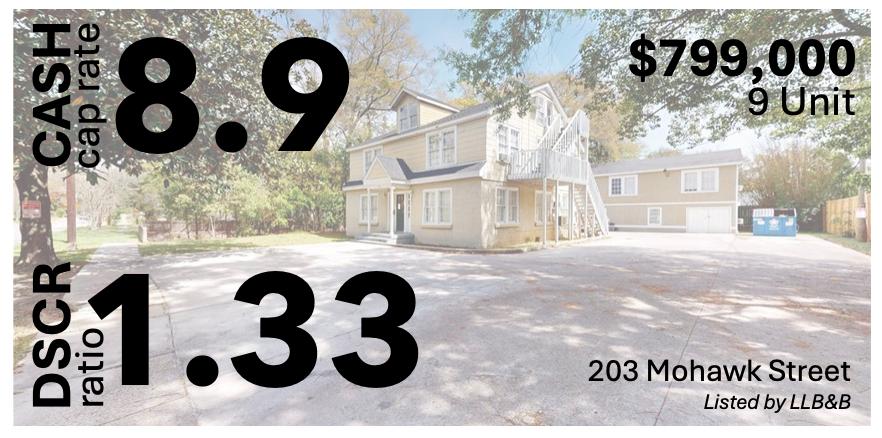
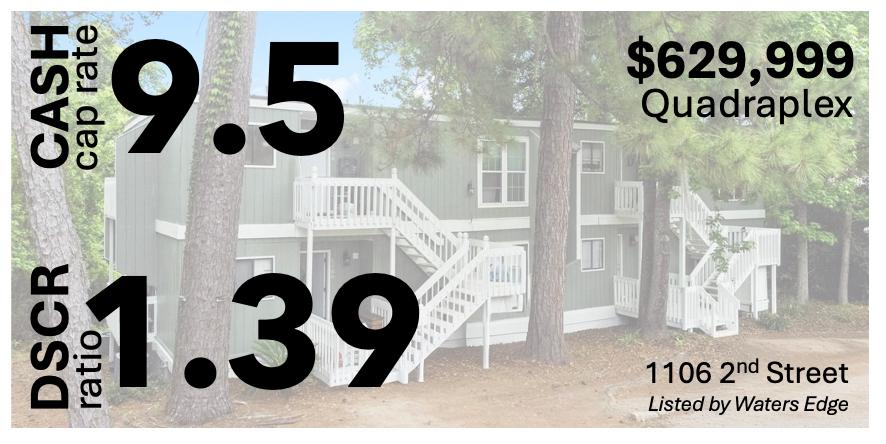
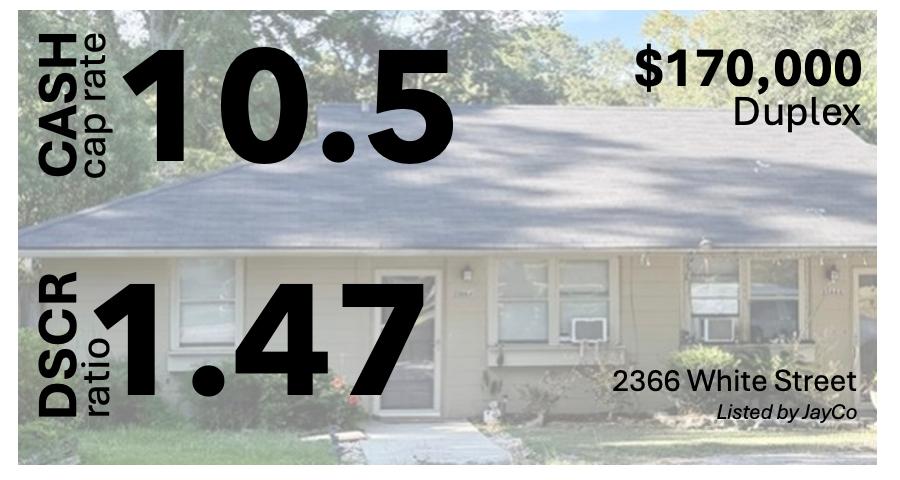
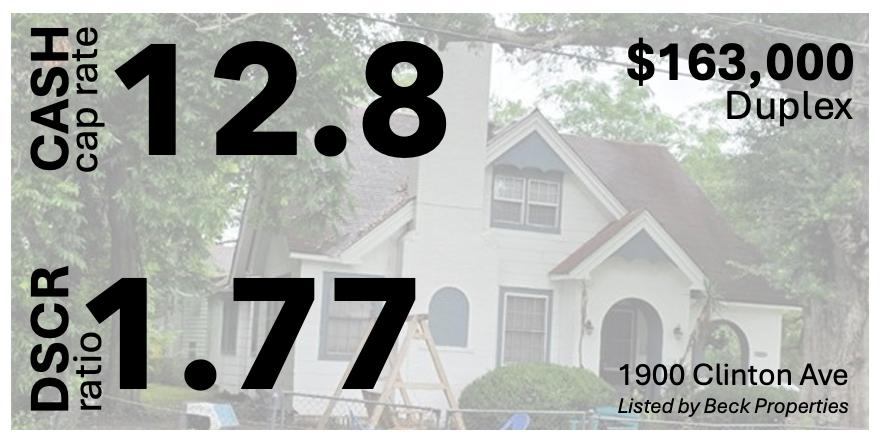
[[trackingImage]]

Why Mobile, Alabama Is Becoming an Investor’s Paradise for Rental Real Estate


How Investors Can Combine Home Equity, Rental Income, and DSCR Financing to Build a Real Estate Portfolio

For years, real estate investors have chased rapidly appreciating markets such as Atlanta, Nashville, Tampa and Charlotte. But as prices increased in many of those markets, achieving attractive cash flow became increasingly difficult.

That is one reason investors should be taking a serious look at Mobile, Alabama.

Mobile offers an interesting combination: Gulf Coast tourism, a major port, healthcare and education employment, manufacturing and maritime industries, a historic downtown, established neighborhoods, and housing that can still be comparatively approachable for investors.

The opportunity becomes even more interesting when investors understand two financing tools that can potentially work together:

A Home Equity Line of Credit (HELOC) and a Debt Service Coverage Ratio (DSCR) investment-property loan.

Used responsibly, these tools may allow an investor to leverage equity already accumulated in one property to acquire another income-producing asset.

Why Mobile, AL

Mobile isn't simply a tourism market or simply a traditional rental market.

It can potentially be both.

That distinction is important.

A successful rental market needs people who have reasons to live there, while a successful short-term rental market needs people who have reasons to visit there.

Mobile has demand generators on both sides of that equation.

Visit Mobile reported that nearly 3.5 million visitors came to Mobile in 2025, generating almost $1.9 billion in travel-related spending.

Mobile's visitor economy is supported by attractions, conventions, festivals, sporting events, cruises, business travel and, of course, America's original Mardi Gras.

Downtown Mobile also provides something increasingly valuable to short-term-rental guests: walkability. Restaurants, nightlife, museums, entertainment and the waterfront are concentrated in and around the downtown area.

But tourism represents only one side of the investment story.

Mobile Has Multiple Sources of Rental Demand

One characteristic I look for in an investment market is diversity of demand.

You don't necessarily want your entire investment thesis dependent upon one employer, one festival or one type of renter.

Mobile is positioned at the intersection of I-10 and I-65, has substantial port activity and is accessible through Mobile's airport infrastructure.

The broader economy also creates housing needs associated with healthcare, maritime industries, manufacturing, construction, education, government, military-related activity and professional services.

That creates opportunities across several rental strategies:

  • Traditional 12-month rentals
  • Short-term vacation and tourism rentals
  • Corporate housing
  • Furnished 30-to-90-day rentals
  • Housing for traveling professionals
  • Relocation housing
  • Longer-term executive rentals

For an investor, that flexibility can be extremely valuable.

A property that works under more than one rental strategy may provide alternatives if market conditions change.

The Short-Term Rental Opportunity

Mobile's personality gives it something that cannot easily be manufactured: a sense of place.

Historic architecture, Mardi Gras, restaurants, conventions, cruise traffic, museums, festivals, waterfront activities and proximity to the Gulf Coast create reasons for people to visit.

That can make certain properties—particularly those convenient to Downtown, Midtown and major employment or visitor destinations—interesting candidates for furnished and short-term rentals.

However, investors shouldn't simply buy a house and assume that putting it on Airbnb or VRBO will automatically make it profitable.

The numbers still have to work.

Investors need to evaluate expected occupancy, achievable nightly rates, seasonality, cleaning expenses, management fees, utilities, furnishings, insurance, maintenance, taxes and local regulations.

Mobile also imposes lodging taxes on qualifying short-term accommodations. The City currently states that lodging tax is 10% within the corporate limits, so tax and regulatory compliance needs to be incorporated into the investment analysis from the beginning.

That's why I prefer properties where there is a plausible Plan B.

If a property works as a short-term rental but could also work as a furnished monthly rental or conventional long-term rental, the investor potentially has more flexibility.

The HELOC + DSCR Strategy

Imagine that you own a home or another property with substantial equity.

You'd like to purchase a rental property, but you don't necessarily want to liquidate investments or drain your cash reserves to produce the down payment.

One possible strategy is using a HELOC—Home Equity Line of Credit—to access a portion of your existing equity.

That capital may potentially provide some or all of the cash needed for the down payment, closing costs, improvements or reserves on an investment acquisition, subject to lender requirements.

Then the investor finances the new rental property with a DSCR loan.

That's where this strategy becomes particularly interesting.

What Is a DSCR Loan?

DSCR stands for Debt Service Coverage Ratio.

Unlike a traditional mortgage that places substantial emphasis on the borrower's personal income and debt-to-income ratio, DSCR investment loans generally focus heavily on the income-generating ability of the investment property itself.

One lender describes its process as comparing the property's qualifying rental income with the proposed mortgage obligation to determine whether the property meets its required debt-service ratio.

In simplified terms:

DSCR = Qualifying Rental Income ÷ Qualifying Property Debt Obligation

For illustration, suppose qualifying rent is:

$2,500 per month

and the applicable monthly property obligation used by the lender is:

$2,000 per month

The simplified ratio would be:

$2,500 ÷ $2,000 = 1.25 DSCR

In other words, the property's rental income is 125% of the applicable debt obligation in this simplified example.

Individual lender formulas, qualifying expenses, rental-income calculations and minimum ratios vary, so investors should never assume that one lender's DSCR calculation will be identical to another's.

Why DSCR Financing Can Be Powerful for Investors

Traditional financing can become increasingly complicated as investors acquire additional properties.

DSCR financing approaches the transaction differently.

The fundamental question becomes:

Does this investment property generate sufficient qualifying income to support its debt?

Some DSCR programs therefore do not require traditional personal-income documentation such as W-2s or pay stubs. For example, NASB currently describes a long-term rental DSCR program that bases qualification on the subject property's cash flow rather than personal income documents.

That can be particularly attractive to:

Real estate investors, business owners, self-employed borrowers, retirees, commission-based professionals and investors building portfolios.

Putting HELOC and DSCR Together

Here is a simplified hypothetical example.

Assume an investor owns a primary residence worth:

$600,000

and owes:

$250,000

That represents approximately:

$350,000 in gross equity.

The investor doesn't necessarily have access to all $350,000—HELOC limits and combined loan-to-value requirements apply—but suppose a lender approves a HELOC and the investor accesses $75,000.

Now suppose the investor identifies a Mobile rental property for:

$250,000.

For illustration, assume the DSCR lender requires a 25% down payment.

Purchase Price: $250,000

25% Down Payment: $62,500

DSCR Mortgage: $187,500

The investor could potentially use HELOC proceeds toward the required down payment, assuming both lenders permit the structure and all underwriting requirements are satisfied.

Instead of selling the original property to access its equity, the investor has leveraged existing equity to acquire another asset.

That is an important distinction.

One Asset Helping Acquire the Next

This is where real estate investing can become powerful.

The concept isn't simply:

Buy a rental property.

The larger strategy is:

Acquire → Rent → Stabilize → Build Equity → Reinvest → Repeat

Over time, an investor may build a portfolio in which equity and cash flow from existing assets help support future acquisitions.

Mobile's potential advantage is that investors may still find properties where the relationship between acquisition cost and potential rent is more favorable than in some higher-priced metropolitan markets.

And that relationship matters tremendously when using DSCR financing.


The Strategy I Would Favor in Mobile

I would not automatically chase the property with the highest projected Airbnb revenue.

Instead, I would look for what I call a Multi-Exit Rental Property.

Ideally, the property could potentially function as:

Short-Term Rental → Mid-Term Furnished Rental → Traditional Long-Term Rental

That gives the investor several possible income strategies.

If tourism demand is exceptionally strong, operate short-term.

If corporate or traveling-professional demand becomes more attractive, consider furnished monthly rentals.

If the investor wants simplicity and predictability, transition to a traditional lease.

That flexibility can reduce dependence on a single business model.


Location Still Matters

Not every Mobile property is equally suitable for every investment strategy.

For short-term and furnished rentals, I would pay particular attention to properties with convenient access to Downtown, Midtown, entertainment, medical facilities, employment centers and transportation corridors.

For conventional rentals, the analysis becomes somewhat different.

There I would emphasize:

Purchase price + achievable rent + neighborhood stability + taxes + insurance + maintenance + tenant demand.

The objective isn't simply buying the least expensive property.

It's identifying the property offering the strongest risk-adjusted return.


The Biggest Mistake: Ignoring the HELOC Payment

There is an important warning when combining a HELOC with DSCR financing.

The DSCR lender may determine that the investment property supports its own mortgage.

But that doesn't mean the investor's overall strategy cash-flows.

The HELOC still has to be repaid.

Suppose your new rental produces $500 per month of cash flow after its mortgage and operating expenses—but borrowing the down payment creates a $600 monthly HELOC payment.

Your portfolio isn't producing $500 of additional cash flow.

It's effectively producing negative $100 before other considerations.

Therefore, investors should evaluate the acquisition as a complete capital stack, not simply look at whether the DSCR lender approves the property.


Run Three Numbers Before Buying

Before purchasing a Mobile rental property, I recommend evaluating at least three scenarios:

Scenario A — Short-Term Rental

Estimate nightly rate, occupancy, management, utilities, cleaning, furnishings, lodging taxes, insurance, maintenance and reserves.

Scenario B — Mid-Term Furnished Rental

Estimate 30-to-90-day rental income and expenses.

Scenario C — Traditional Long-Term Rental

Estimate market rent, vacancy, management, taxes, insurance, repairs, capital expenditures and debt service.

If the property works under multiple scenarios, you've potentially found a much more resilient investment.


Leverage Is a Tool—Not Free Money

A HELOC can be an excellent financial tool, but investors need to understand the risk.

If the HELOC is secured by your primary residence, your home is collateral.

HELOC rates may also be variable, meaning borrowing costs can change.

Investors therefore shouldn't ask only:

"Can I borrow enough money to buy this property?"

A better question is:

"Can this investment comfortably support the entire cost of the capital I'm using?"

I favor maintaining healthy reserves rather than deploying every available dollar of home equity.

Vacancies happen.

HVAC systems fail.

Roofs need replacement.

Insurance premiums change.

And short-term rental occupancy fluctuates.

The successful investor plans for those events before closing—not afterward.


Why Mobile Deserves a Serious Look

Mobile combines several characteristics I believe investors should be looking for:

Affordability relative to many larger Southern markets.

A substantial tourism economy.

A historic and increasingly active downtown.

Major employment and industrial demand generators.

Long-term rental demand.

Short-term and furnished-rental opportunities.

Accessibility via I-10 and I-65.

Multiple potential exit strategies.

And perhaps most importantly, Mobile isn't dependent upon only one story.

It isn't just a beach market.

It isn't just a college town.

It isn't just a manufacturing city.

It isn't just a port city.

It isn't just a historic tourism destination.

It's a combination of all of them.

That diversification is part of what makes Mobile so interesting from an investment perspective.


Your Equity May Be the Beginning of Your Next Investment

Many homeowners and investors are sitting on substantial equity but don't think of that equity as investment capital.

For the right investor, a carefully structured combination of HELOC financing and DSCR investment financing may provide a path for turning dormant equity into another income-producing asset.

The key isn't simply finding a house.

It's finding the right property, in the right location, at the right price, with the right rental strategy and the right financing structure.

That's where knowledgeable local representation becomes particularly important.

As a REALTOR® and real estate broker serving Mobile and the Gulf Coast, I help investors evaluate properties not simply as houses, but as potential income-producing assets.

That means asking:

What should it rent for?

Would short-term or long-term rental make more sense?

What are the realistic expenses?

What happens if our primary rental strategy changes?

Does the property still make sense after financing?

And, ultimately:

Does this property deserve your investment capital?

If you're considering using the equity in your existing property to begin—or expand—a rental portfolio in Mobile, Alabama, let's talk.

We can identify potential properties, analyze their rental strategies and help you assemble the real estate and lending professionals needed to determine whether a HELOC + DSCR strategy makes sense for your particular situation.


This article is for educational and informational purposes only and is not financial, tax or lending advice. HELOC and DSCR loan requirements, rates, down-payment requirements and underwriting guidelines vary by lender and borrower. Short-term rentals may also be subject to zoning, licensing, lodging-tax, HOA and other restrictions. Consult qualified lending, tax, insurance and legal professionals before making an investment decision.

Join Us for Our Free Networking Event at the Admiral Hotel. Pre-register at MobileNetworking.org