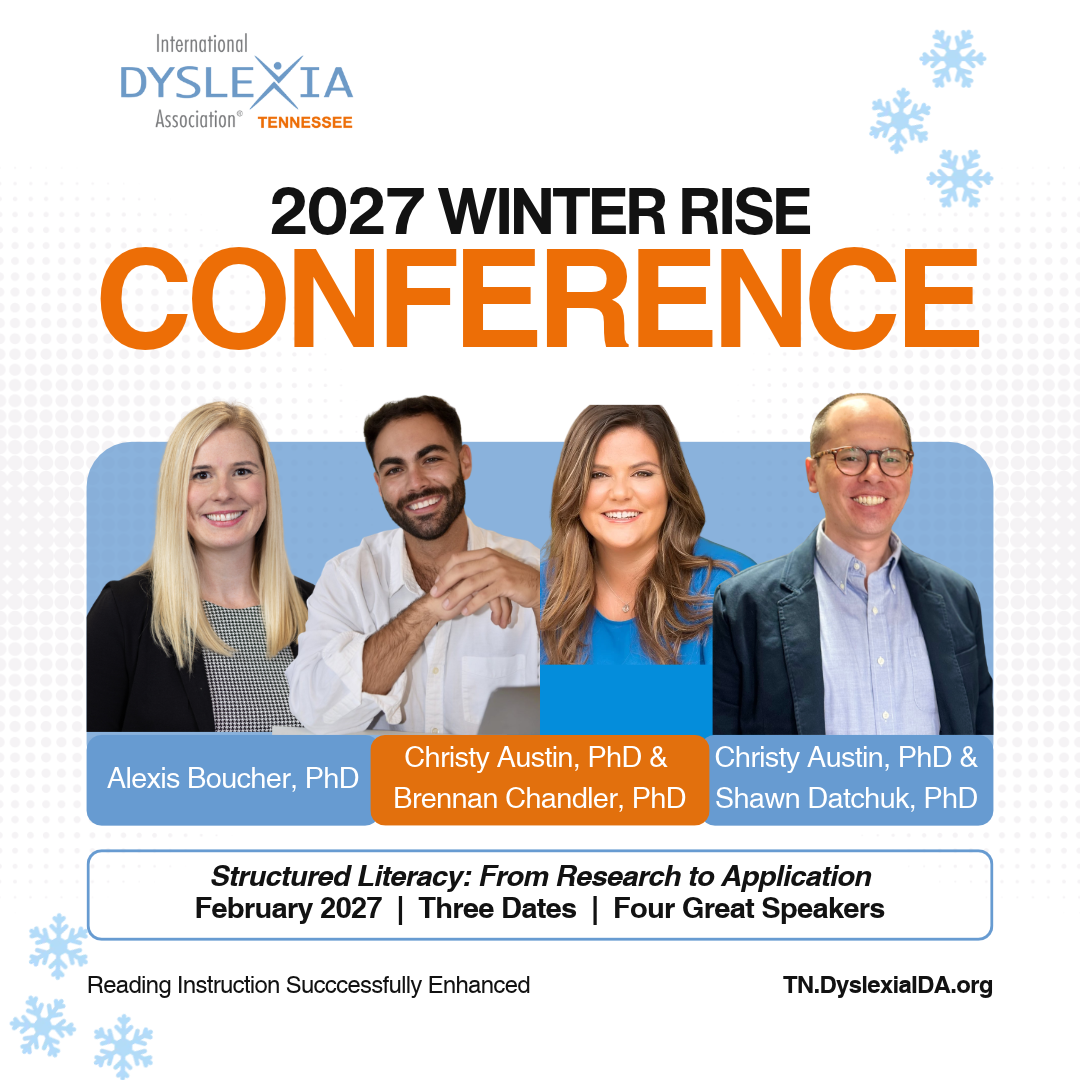
| February 6, 2027 Session 1 - The What & How of Structured Literacy, Dr. Alexis Boucher Why do some students thrive as readers while others struggle, and what can every educator do about it? This opening session lays the foundation for Structured Literacy, starting with the science of reading that shapes both what we teach and how. We’ll then explore who Structured Literacy serves, from whole-class instruction to targeted small-group support to intensive intervention for students with dyslexia and other reading difficulties. You’ll leave understanding the research behind Structured Literacy and the vital role you play in delivering it.
Session 2 - Explicit Instruction in Action, Dr. Alexis Boucher Ready to put research into practice? This session introduces the core principles behind effective Structured Literacy instruction: direct, explicit, systematic, and cumulative teaching that is interactive, multimodal, scaffolded, and data driven. Then we’ll preview the language content Structured Literacy integrates, from phonemes and morphemes to vocabulary, sentence structure, and text structure, which we’ll explore in depth throughout the series. You’ll leave with a practical framework for instruction that benefits all students and is necessary for those who struggle.
|
|
 |
| February 20, 2027
Session 1 - Unpacking the Science of Vocabulary Instruction, Christy Austin, PhD This session will provide educators with practical, evidence-based practices for helping students develop vocabulary knowledge that is both deep and durable. Participants will learn how to teach words deeply by integrating instruction across three dimensions. First, across form and meaning: students learn how a word is spelled, pronounced, and built from meaningful parts alongside what it means and how it relates to other words. Second, across contexts: students encounter and use each word in multiple settings, from the texts in which it appears to the discussions, examples, and scenarios that reveal its range. Third, across modalities: students listen to, say, read, and write each word so that knowledge is anchored in every pathway through which words are used.
Session 2 - Leveraging Morphology to Read and Spell Complex Words, Brennan Chandler, PhD As students encounter longer words, they need flexible ways to use word structure to support both reading and spelling. This session translates research on morphology into practical routines for teaching students to analyze, read, build, and spell complex polysyllabic words. Participants will explore how instruction in roots, prefixes, and suffixes can work alongside flexible syllable strategies and vowel knowledge. They’ll practice moving from meaningful word parts to whole words and connected text, with routines that can be adapted for core instruction or intervention.
|
|
|
| February 27, 2027
Session 1 - Is This a Long Run-On Sentence? Evidence-Based Tips to Teach Sentence Writing, Shawn Datchuk, Ph.D Do your students struggle to write complete sentences? Do they often write one long run-on sentence or several short, incomplete sentences? In this session, learn about evidence-based techniques to teach students how to write complete sentences and the links between sentence writing and other skills of writing (e.g., spelling) and reading (e.g., syntax). This session covers how to design and deliver explicit instruction in simple sentence writing and how to structure fluency practice.
Session 2 - Beyond the Words: Unlocking Reading Comprehension Through Text Structure, Christy Austin, Ph.D This session shows educators how text structure (descriptive, chronological/sequential, compare-and-contrast, cause-and-effect, and problem-and-solution) can anchor instruction at both levels, moving students from sentence comprehension to passage comprehension. Participants will first learn to use text structure to support sentence comprehension through the Does It Make Sense? (DIMS) routine. Participants will then learn how text structure supports main idea statements and brief summaries. Using the Get the Gist routine (Middle School Matters, Meadows Center for Preventing Educational Risk) Gist statements for each section then become a brief summary paragraph, and text structure guides the topic sentence. |
|