| Topics covered on this page:
- Fingleton Review (Nuclear Regulatory Review)
- North Sea Oil and Gas
- Regulation of water companies and questions around public ownership
- Rewilding
- Sewage and water pollution
- Thames Water
|
| Fingleton Review (Nuclear Regulatory Review) Last updated February 2026
To begin with, I appreciate that nuclear energy is a divisive topic, but to be upfront about my personal beliefs, I am of the opinion that nuclear energy must play a significant role in our future energy mix. We only have to look at France to see the reasons for this - sustained investment in nuclear has produced lower energy bills and more rapid decarbonisation in comparison to the UK.
A number of years ago, I acted on my support for decarbonising the energy system on a personal level - including, among other measures, installing solar panels. However, as vital as it is that we invest in solar and wind power across the country, a key benefit of nuclear energy is that provides an essential base-load. This is why I believe it has a vital role to play - crucially, alongside wind and solar.
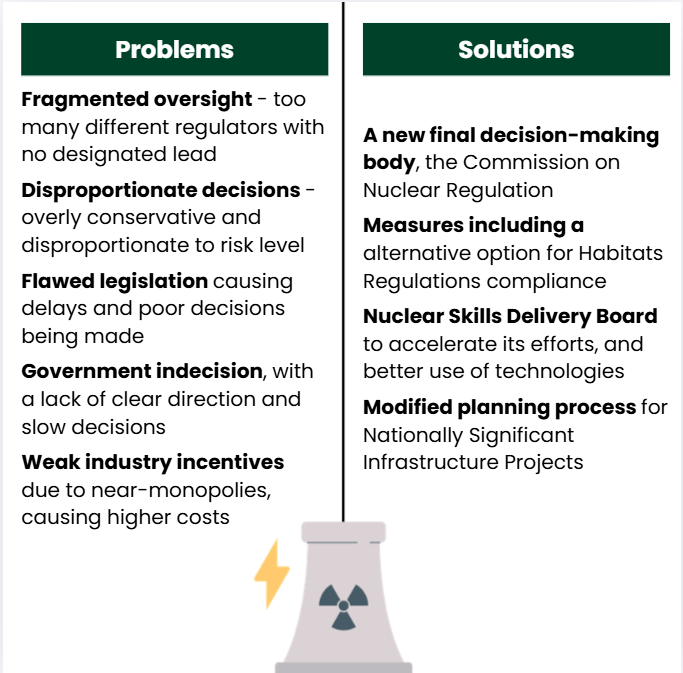
Regarding the Review specifically, I know that this is a complicated and technical topic, so I have summarised the it in the graphic below - both the problems it identified with the process as it currently stands, as well as some of its suggested solutions |
| North Sea Oil and Gas Last updated October 2026 Firstly, let me be clear – I fully support a fair and managed transition away from fossil fuels in the North Sea. In 2024, I stood on a manifesto that, rightly, committed to making use of existing fields throughout their remaining lifetime, while ending new licences for exploring new oil and gas fields. I strongly supported this at the time, and it is still my position.
You will also know that I don’t just talk about these issues but I act too – building a low carbon home in 2010-11.
This summer has been one of the most visible indicators of the climate crisis in which we find ourselves that I have seen in my lifetime. Climate change is an issue that I am very passionate about. You may be aware that it was Al Gore and his book ‘An Inconvenient Truth’ in 2006 that inspired and drove me to try and build my low-carbon house in 2006. I was thwarted by the District Council! So I took direct action personally, which ultimately led me into politics and why I’m here today. |
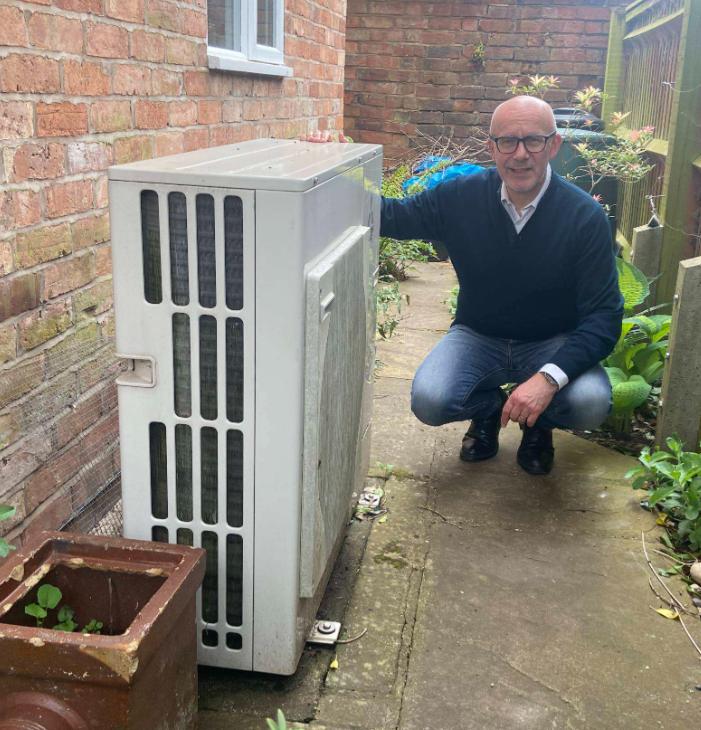
| (Pictured at home with my Air Source Heat Pump installed in 2010)
The 2010 General Election was a turning point in many ways but particularly in the incoming Coalition (Con-LibDem) Government slowing the pace of change that the previous Labour Government had been pursuing. Hundreds of local installers went out of business as David Cameron got rid of the “green cr*p” as he put it. The build-out of domestic heat pumps and solar panels did not happen and we must now make up for those lost 14 years.
However, thanks to Labour’s Climate Change Act of 2008 (the first by any nation worldwide), the UK still leads in its transition. That said, I know there has been recent speculation on the Government’s position on North Sea oil and gas. While I am not party to discussions on this issue within government, I know that the Prime Minister has been clear that he intends to govern in accordance with the manifesto on which I was elected two years ago and has made no announcements to the contrary.
Equally, there have been no changes as yet in the Government’s approach to implementing this pledge since Andy became Prime Minister. The Government’s strategy continues to actively support a transition away from North Sea oil and gas by setting out how existing fields will be managed responsibly while encouraging the growth of the clean energy industries of the future and the jobs that come with them.
On Rosebank and Jackdaw, let’s be clear here: the two fields were given formal approval by the last Conservative Government. However, the situation remains that the Government must make an impartial decision through a formal, evidence-based process. I welcome that, following court rulings against the previous Conservative government’s decision-making on this issue, this Government responded swiftly by issuing new guidance to ensure future decisions fully take environmental impacts into account.
More broadly, I am of the belief that the only long-term solution to Britain’s energy challenges lie in expanding renewable energy and improving the energy efficiency of our homes. That is why I continue to support the Government’s mission to deliver clean power by 2030 and to upgrade millions of homes so that they are warmer and more energy efficient.
But with roughly 3 in 4 homes in England and Wales dependent on mains gas to heat their homes – including an estimated 34,329 homes in the Warwick and Leamington constituency that are entirely dependent on mains gas to heat their home – we will continue to need gas for the next decade or two as we build out a fully electrified economy.
This will NOT happen overnight despite the fantasy policy costings and economics of other parties. So in the short-term we will continue to need gas. That’s the harsh reality. Therefore, what is crucial is the relative carbon consumption. By taking this into account, the question becomes – as posed by Dale Vince himself – is it not better to use LOW-CARBON gas from the North Sea rather than continuing to import gas from Qatar and Norway, which are significantly higher in carbon?
Converting all of the existing housing stock to heat pumps, with a necessary huge programme of insulation upgrade and the massive investment in power grid infrastructure, will take time. Having done all this to my own home I know what is needed and it is not straightforward, no matter what people tell you. |
| People's Emergency Briefing Last updated August 2026 In May, I attended a screening of the People's Emergency Briefing in Leamington. In case you haven't seen it, it is a film which addresses the climate and nature crisis which affects all of us in a variety of different ways. If you're interested in watching it for yourself, see here for information about local screenings.
Many of you will know that it was Al Gore’s book ‘An Inconvenient Truth’ that drove me to build a low carbon house in 2010. I took direct action personally and this led me into politics.
There have been significant calls for the Government to commission a televised emergency briefing across all the main channels, delivered by independent experts and supported by the UK’s Chief Scientific Adviser. I see this as a sensible step, and have signed the Parliamentary Call organised by the makers of the film in support of this. I will continue to advocate for this and will follow any developments closely.
|
|
Regulation of water companies and questions around public ownership Last updated October 2026 Since privatisation, water companies across the board have underinvested in new infrastructure. As a result, it takes far less for the system to be over capacity, and therefore for overflow discharges to begin. Alongside this, there has been a lack of regulation and oversight - water companies have been allowed to get away with polluting our waterways without consequence (or at the most a slap on the wrist).
The Water (Special Measures) Act introduced by the Government last year takes pragmatic action on both of these issues. On regulation and enforcement, water company bosses can now face imprisonment for lawbreaking. The water regulator, Ofwat, will be able to ban the payment of bonuses if environmental standards are not met, and there are powers to introduce automatic and severe fines against water companies. Water companies will also have to install real-time monitors at every sewage outlet, and they will be held accountable against a new code of conduct.
Meanwhile, action is being taken to force water companies to invest in infrastructure, preventing money being used for dividends or bonuses. Overall, following Ofwat negotiations, companies will be required to invest £104 billion over the next five years to build and upgrade infrastructure.
Alongside advocating for strict regulation of water companies, I have tried to be to be pragmatic on the issue of public vs private ownership. In short, have no opposition at all to the principle of public ownership (I believe that Thatcher's privatisation of the sector in the first place was misguided), however while it should be kept as an option, I think there are compelling reasons why blanket renationalisation isn't necessarily a silver bullet.
The first, and most significant, reason is the cost. The best estimates suggest that renationalising the water sector would cost around £100 billion. That's a lot of money that has to be spent before fixing the years of underinvestment. Surely the pragmatic step in the short term is to restrict bonuses and dividends and instead force companies to reinvest in infrastructure - as they should have being doing for years?
Secondly, bringing water companies back into public ownership now would also force the taxpayer to foot the bill for upgrades in infrastructure, rather than requiring water companies to redress decades of investment being sacrificed in favour of bosses' bonuses and shareholder dividends.
I think the Prime Minister's thinking on this is very sensible. He has announced new plans for the water industry, including the lifting of the ban on public ownership of water companies, to allow this to be available as an option, for instance where private companies prove unable or unwilling to up their game. It will also pave the way for greater local control of the water network.
|
|
Rewilding Last updated March 2026 The UK is one of the most nature-depleted countries worldwide. This is not only a crisis for nature, but for people too - as I touched on above when discussing sewage, our environment underpins our economy and wellbeing, and when our environment thrives so do we. And yet, UK species have declined by around 19% since 1970, and nearly one in six (yes, one in six!) species are now threatened with extinction.
A few years ago, the previous Government created a national Environmental Improvement Plan (EIP). When the current Government came into office, it ordered a rapid review with the intention of making the plan more ambitious. Crucially, this plan aims to proactively restore our natural environment, not simply stem further decline. The updated plan includes interim targets for the next five years on air quality; water, terrestrial and marine biodiversity; and resource efficiency and waste reduction.
In practice, over the short term, this means creating 250,000 hectares (equivalent to the land area of 220 Warwicks, if you're looking for a tenuous locally-themed analogy) of new wildlife-rich habitat by 2030, reducing exposure to PM2.5 particles by nearly a third by 2030 compared to 2018 levels, investing at least £85 million into improving and restoring our peatlands and setting aside £1 billion for tree-planting, creating 167,000 hectares (or the land area of 147 Warwicks) of new forest.
This also comes on top of the plan to clean up our waterways that I discussed earlier in this newsletter.
I believe that the EIP is a good framework to guide our national response to the crisis of nature depletion, and over the coming years I will continue to monitor the situation to ensure we are on track to meet the targets.
You can read the full Environmental Improvement Plan via this link.
|
|
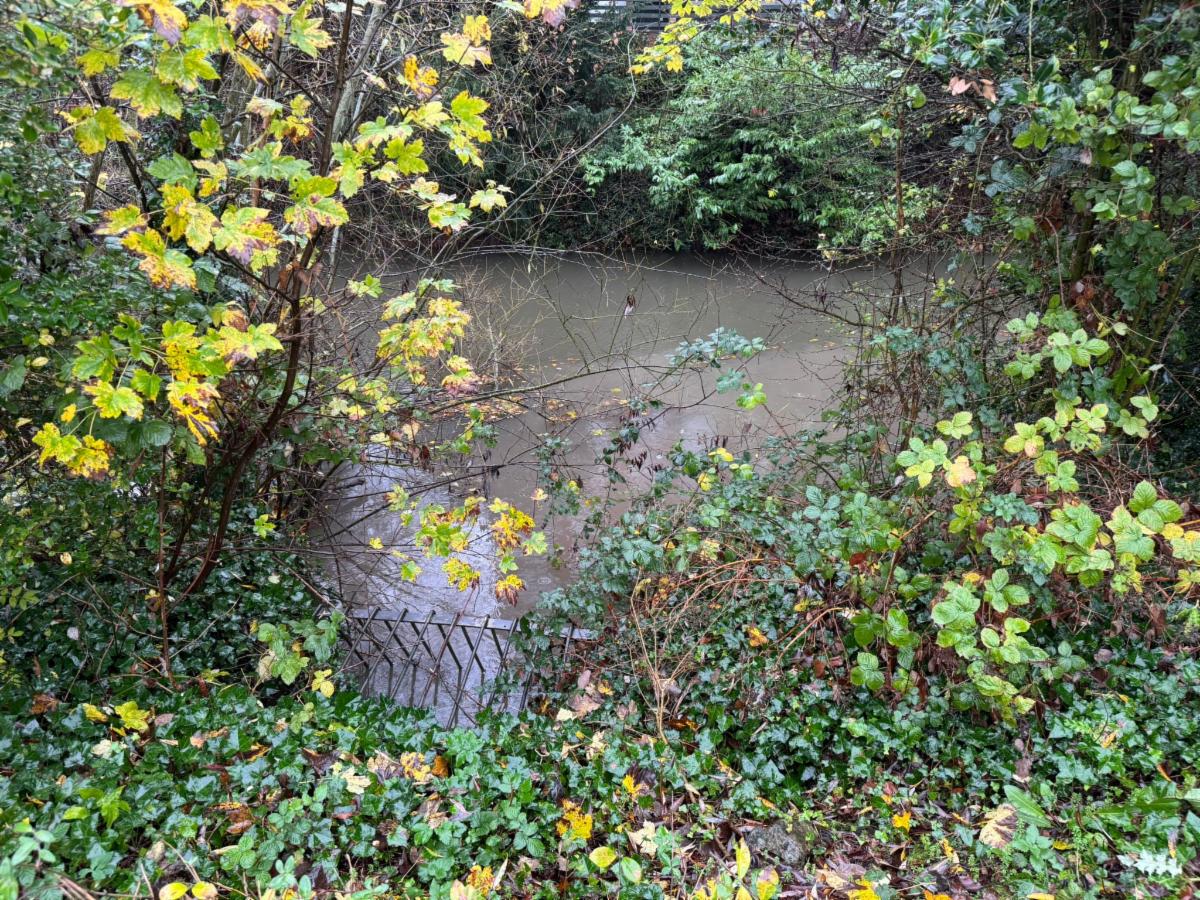
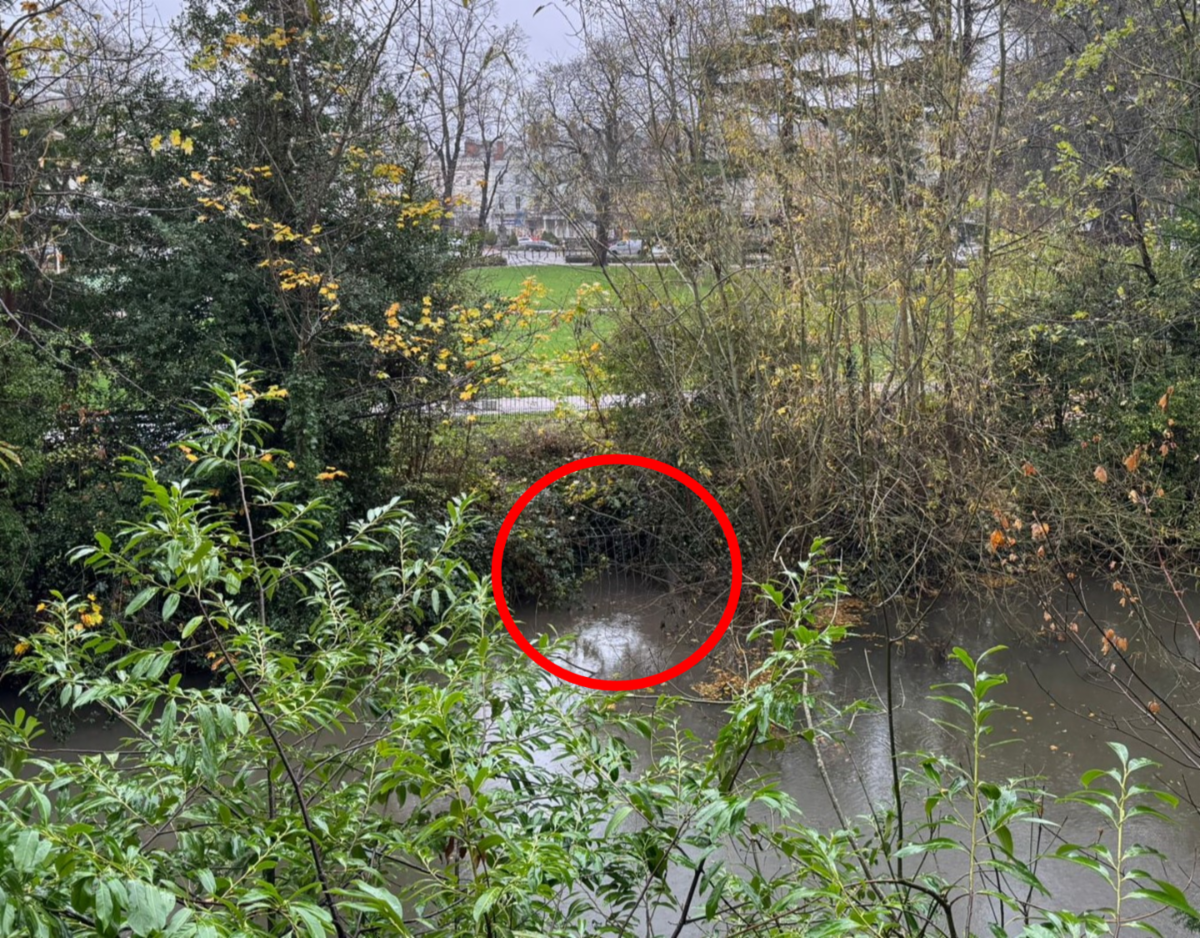
Sewage and water pollution Last updated November 2025 It rains in England. It has done so for some time. And yet every year, I am dumbfounded that water companies are repeatedly unable to properly manage our sewage systems. During the recent stormy weather, raw sewage was discharged into our local rivers from several different combined sewage overflows.
|
|
|
This, I'm sure you'll agree, is totally unacceptable, and I used it as an opportunity to once again raise concerns with Severn Trent Water CEO Liv Garfield. It's also why I'm pleased that the Government has taken concrete action on this issue - for far too long, water companies have been allowed to get away with polluting our rivers without consequence. The previous Government weakened regulation, failed to invest in infrastructure and allowed water bosses to take massive bonuses while pumping record levels of sewage into our waters.
Through the Water (Special Measures) Act, the Government has given regulators new powers to block the payment of bonuses to executives who pollute our waterways and bring criminal charges against persistent law breakers, as well as to imposing automatic and severe fines for wrongdoing and ensuring independent monitoring of every outlet.
|
|
|
Thames Water Last updated October 2026 I know that many people have specific concerns about the financial situation of Thames Water, the company that provides water for significant parts of London and the South East. I won't discuss this issue in great detail as it doesn't directly affect us here in Warwick and Leamington, but I understand the Government previously expressed concerns regarding the proposal put forward by the London and Valley Water Consortium, the group of creditors to which this situation was referred. I know Ministers were worried that the proposal does not sufficiently protect consumers and that its request for reduced performance standards will also affect the environment. The next steps lie with Ofwat, the regulator, and I will follow developments on this closely.
I am told that Thames Water is financially stable, but that the Government is prepared for all eventualities, including a special administration regime if one were needed. Thames Water is currently under a cash lock-up arrangement. This means only Ofwat can approve any further dividend payments, and this restriction will remain in place until Thames Water’s credit ratings improve.
|
|
|
|
|