| Welcome to the latest edition of the NHS Wales Executive Stakeholder Update.
This bulletin provides a glimpse into some of the system work underway and will be issued monthly.
This month, we’ll take a closer look at the way the Executive collaborates with partners and stakeholders to tackle some of the challenges facing health and care in Wales.
It was a pleasure to see so many colleagues from across NHS Wales come together at the Cabinet Secretary Priorities event hosted by the Welsh NHS Confederation earlier this week. We look forward to working with partners to deliver on the five priority areas.
Please do get in touch if you’d like to discuss any aspect of this update further.
Senior Leadership Team of the NHS Wales Executive |
|
Working collaboratively to make a difference to people in Wales: Five case studies |
|
Case study 1: Value Transformation |
|
|
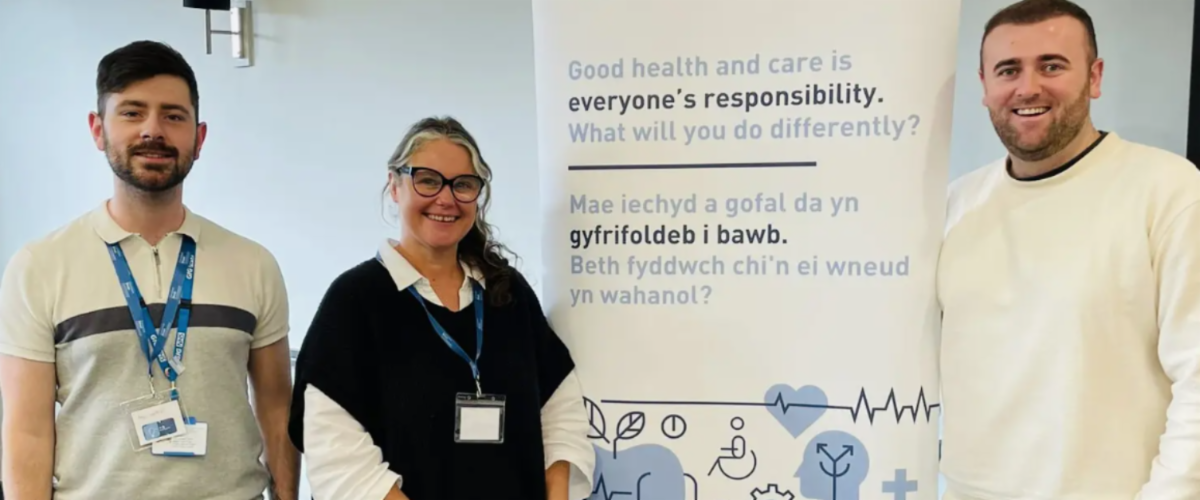
Our Value and Transformation team has designed the optimum pathway for High Value High Impact Interventions by developing a set of metrics to evidence value for our patients and for the wider system.
Run as a single programme but with multiple projects, we worked across the Executive and clinical networks to design the optimum pathway for High Value High Impact Interventions, and agree a set of metrics that will evidence value created for both patients and the system in Diabetes, Cardiovascular (Heart Failure), MSK (Bone Health), Orthopaedics (Hip and Knee Arthroplasty).
Each of these pathways has been presented and cascaded through the Value and Sustainability Board. The system collaboration will change the way care is accessed and provided.
The benefits include:
- Virtual care through wearable technologies and remote monitoring and digital tools
- Delivering Value through the routine use of the PROMs Standard Operating Model
- Liberating data for business and clinical intelligence for clinical service design and improving health literacy.
This new methodology will be applied systematically across Wales, with support from clinical networks to work in this way, and from the Value and Sustainability Board to consider the tangible opportunities and make robust recommendations to NHS Wales, to reduce variation, improve access for patients and ensure equity for our population.
Lessons for success:
Person-centred value based approach to health care – Delivering value to patients and the system, and routine collection and use of outcomes that matter
Optimised resources, skills and knowledge – demonstrating the value of the NHS Wales Executive for the benefit of the wider NHS Wales
Liberated data for business and clinical intelligence for clinical service design and improving health literacy
Whole system approach: Prevention to end-of life |
|
Case study 2: A National Community-Based Falls Response Framework for Wales |
|
|
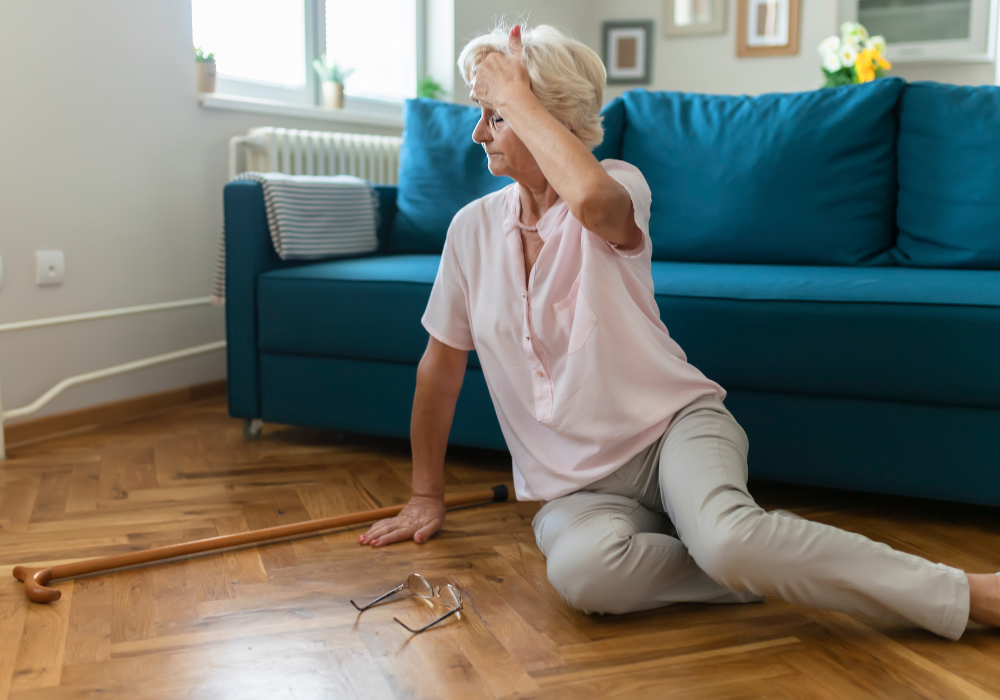
People who fall in the community are one of the top presentions to ambulance services, generating around 50,000 calls each year to the service. Through early conversations, sharing proposals and combining a range of expertise across directorates, our teams from Six Goals, Strategic Programme for Primary Care and Quality, Safety and Improvement worked to develop a National Community-Based Falls Response Framework for Wales. National Standards now ensure Level 1 and 2 Fallers in the community receive an equitable response (within two hours) 12 hours a day, seven days a week with full geographical coverage.
Through further work with our partners in Health Education and Improvement Wales, Welsh Ambulance Services Trust, health boards, Regional Partnership Board falls representatives and third sector colleagues from Age Cymru and Care and Repair, the new national framework has been confirmed.
The National Falls Response Taskforce launched the Framework to support the 50 Day Challenge. Each region reviewed their current service provision against the National Framework, gaps were identified and used to develop local action plans. Six Goals provided funding to health boards to begin to expand existing services into weekends, to build resilience throughout winter with an added focus on care homes. The work continues with our Financial Planning and Delivery and Performance and Assurance teams post-implementation. |
|
Case study 3: Review of Pathways of Care Delays (POCD), discharge practices, reporting and governance arrangements within health boards |
|
|
Our Performance and Assurance team collaborated with Six Goals, and health board staff to develop a Terms of Reference to review Pathways of Care Delays (POCD) discharge practices, reporting nad governance within health boards.
The review scope included the operational management and leadership arrangements within health boards appraised through semi-structured interviews, data reviews and shadowing scheduled meetings, with a focus on patient flow and system escalation.
The work is ongoing but will provide thematic review of POCD including opportunities for improvement.
The team are particularly proud to celebrate the success of working across directorates and the wider system, establishing a firm foundation for future joint working in POCD. Having clearly defined roles and responsibilities was key in delivering the review. |
|
Case study 4: Considering gynaecology models of delivery/pathways for one stop versus two stop outpatient clinics, and alternative management for women with unscheduled bleeding on HRT (providing an appropriate alternative pathway) |
|
|
This work was led by the Strategic Programme for Planned Care and supported by expertise from clinical and implementation networks,
An NHS Wales collaborative workshop with all health boards' and trusts' Gynaecology representatives and supported by wider NHS Wales Executive colleagues.
The workshop received excellent engagement and representation from all health boards and trusts that is informing the next stages of development for both the gynaecology models of delivery/pathways and the alternative management for women with unscheduled bleeding on HRT.
|
|
Case study 5: Wales Orthopaedic Network pathway development |
|
|
Our Strategic Programme for Planned Care worked with emergency departments, National Clinical Strategic Networks for Child Health and Musculoskeletal conditions and anaesthetic and orthopaedic colleagues to establish a process for developing all-Wales orthopaedic pathways
This involves the Clinical Reference Group, the Clinical Implementation Network, broader NHS Wales Executive and NHS Wales colleagues to review and iterat the pathays based on ongoing feedback, which at a time of immense pressure on NHS Wales, is greatly appreciated. |
|
NHS Wales Executive news round-up |
|
Raising awareness of eating disorders to promote early help-seeking
It is estimated that at least 1.25 million people in the UK are living with an eating disorder, which equates to more than one in 50 people. However, the real number could be even higher.
As part of Strategic Programme for Mental Health in the NHS Wales Executive, the Eating Disorder Network is committed to driving improvements in the quality and safety of care for people with eating disorders in Wales.
In partnership with stakeholders, the Eating Disorders Network is developing a national high-value pathway and service model for early intervention.
The pathway will support improvements that mean any person with an eating disorder, no matter who they are or where they live, can access help quickly.
Read more on our website |
|
Working together with a shared vision around suicide and self-harm in Wales
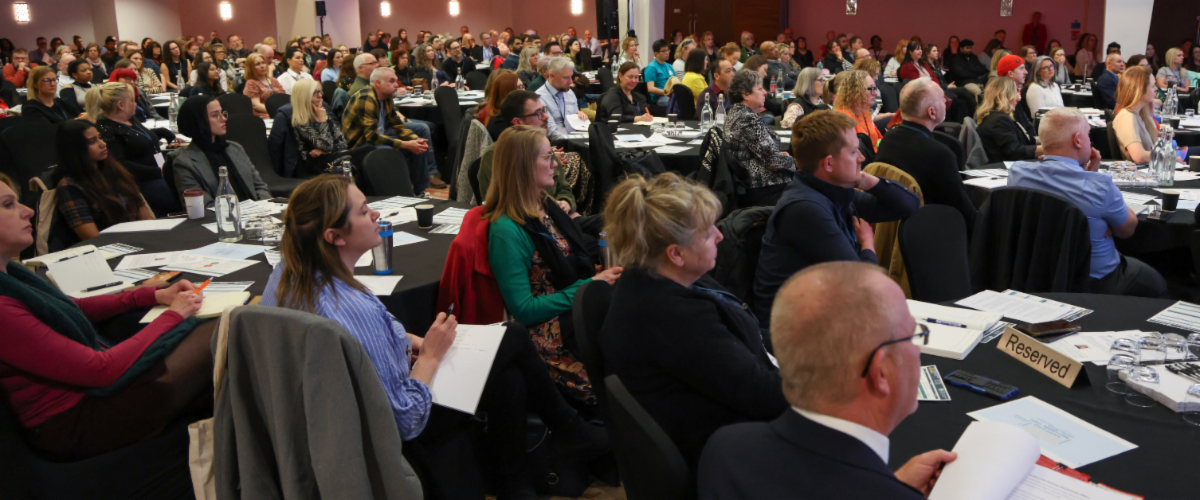
Around 300 people - representing sectors including healthcare, government, education, emergency services, and the Third Sector - gathered in Cardiff for the Suicide Prevention and Self Harm Conference in March.
The conference was opened by Sarah Murphy MS, Minister for Mental Health and Wellbeing, who highlighted the Welsh Government’s commitments in this area, as well thanking people for sharing their lived experience to help make a difference.
The event, organised by the NHS Wales Executive, was a brilliant example of the progress that is being made through multi-agency working and collaboration in Wales - working towards a shared vision to tackle stigma, reduce suicide deaths, better support people who self-harm, and support people bereaved by suicide.
Read more on our website |
|
Unprecedented opportunity to understand health outcomes and experiences in Wales
The NHS Wales Executive now has access to one of the biggest datasets of patient reported outcome and experience measures (PROMs and PREMs) that Wales has ever seen.
More than 26,000 adults, aged 45 and over living in Wales, took part in a population survey which asked them about their quality of life, physical functioning, psychological well-being and experiences, particularly in a GP practice setting.
Co-ordinated, designed and delivered by the Welsh Value in Health Centre, now part of the Digital, Data, Technology, Innovation and Value directorate (DDTIV), the survey also sampled 75 GP practices across Wales.
Read more on our website |
|
Acute Physical Deterioration Implementation Network established for NHS Wales
A new implementation network hosted by the Executive will support NHS Wales organisations to effectively recognise, escalate and respond to acute physical deterioration.
Hosted by the National Strategic Clinical Network for Critical Care, Trauma and Emergency Medicine, the Acute Physical Deterioration Implementation (APDI) Network will work with organisations until January 2027 to reduce variation in the tools, protocols and procedures surrounding deterioration, to achieve reliable rapid response systems to improve patient safety.
The Clinical Reference Group for the APDI Network has been formed and its inaugural meeting is taking place in April 2025.
Read more on our website |
|
Promoting the Health Profile
The Learning Disability Programme in our Quality, Safety and Improvement directorate ran a successful campaign to promote the Health Profile last month.
Research has found that people with a learning disability are dying 20 years earlier than their peers in the general population, and the Health Profile is a proven tool to help address this inequality.
The Health Profile is a booklet owned people with a learning disability to share important information about themselves. It makes it easier for individuals to communicate with services, improving their experiences and leading to better patient outcomes.
Inspirational marathon runner Lloyd Martin featured in the campaign to talk about how his health profile is just as important to him as his world record certificates.
Lloyd, who has Down’s syndrome, attracted hundreds of comments on social media and boosted awareness of the positive impact of having a Health Profile.
Informed by insights from third sector stakeholders, the campaign asked people with a learning disability, their families, and carers to visit the Health Profile webpage and to download the Health Profile template.
Partners in health and social care helped to spread the campaign’s key messages, which achieved nearly 15,000 extra webpage visits in one month.
Learn more about the Health Profile |
|
Driving improvement in cellular pathology
Six health boards are working to reduce cancer diagnosis time for patients in Wales as part of a new All-Wales Cancer Cellular Pathology Collaborative, supported by our Quality, Safety and Improvement (QS&I) directorate and vehicle manufacturer Toyota.
Since October 2022, more than 100 staff across NHS Wales have completed training in Toyota’s version of lean methodology, the Toyota Production System (TPS) as part of the Suspected Cancer Pathways project, which was funded by the National Strategic Clinical Network for Cancer and implemented in partnership with Toyota.
Through a phased approach, staff from Aneurin Bevan University Health Board, Betsi Cadwaladr University Health Board and Swansea Bay University Health Board took principles from TPS to increase the pace and reliability of the early diagnostic stage of the cancer pathway.
As the three teams saw results from applying lean methodology to cellular pathology, this approach is being rolled out to the other three cellular pathology labs in Cardiff and Vale University Health Board, Cwm Taf Morgannwg University Health Board and Hywel Dda University Health Board as part of a 12-month collaborative. The first learning session takes place in April, with work expected to finish by March 2026. Keep checking our website for the latest updates on this work.
|
|
|
|
Health Minister shows support for rare disease awareness
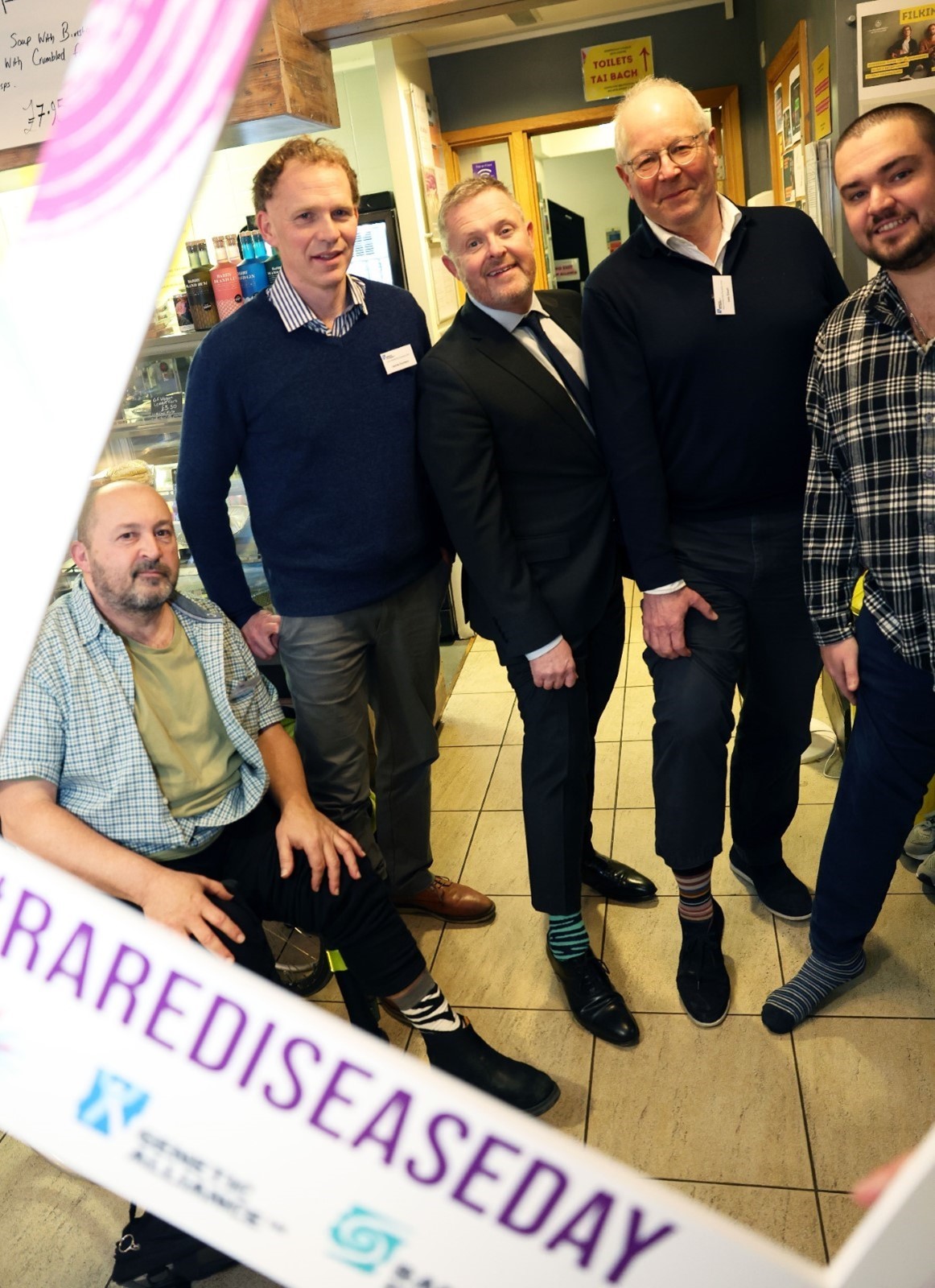
Pictured (l-r) sporting stripey socks in support of Rare Disease Awareness Day, held annually on the last day of February:
Alan Thomas, Ataxia and Me charity
Jamie Duckers, Clinical Lead, Rare Diseases Implementation Network
Jeremy Miles MS, Cabinet Secretary of Health and Social Care
Iolo Doull, Chair of the Rare Diseases Implementation Network
James Fisher, parent of Violet, who died aged 11 months of a rare disease. |
|
|
|
Save a Life Cymru takes CPR message to the Senedd |
|
| Save a Life Cymru’s important work to improve survival of out-of-hospital cardiac arrests was celebrated with survivors and their families, Members of the Senedd, emergency services and professional sportspeople at a special event held at the Senedd in March.
Sponsored by Rhianon Passmore MS, delegates were able to hear from survivors of out of hospital cardiac arrests about how CPR and defibrillators had saved their lives.
Showing his support on the day was Craig Bellamy, head coach of the Wales football team, pictured below with Professor Len Nokes, independent chair of Save a Life Cymru and part of the Football Association of Wales's medical team, as well as medical director at Cardiff City Football Club. |
|
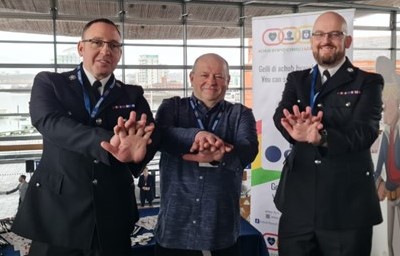
| A special reunion
In August 2023, Neville Owen (above, centre) was driving home to Llanfairpwll in Anglesey. As he drove into the Conwy Tunnel he had sudden cardiac arrest and collapsed behind the wheel of his car.
Within minutes, Traffic Wales officer Leon Kynaston and colleague arrived at the scene and began carrying out CPR.
They managed to keep Neville alive until North Wales Police Roads Crime Constables Duncan Logan (above, left) and Huw Capper (above, right) arrived with an Automated External Defibrillator (AED).
The device successfully shocked his heart back into rhythm until paramedics took over. |
|
|
| We are looking forward to the launch of the Safe Care Partnership in May, and will bring you more on this in a future edition. Throughout the year there are a number of training opportunities, in April the following are available for NHS Wales staff:
Fundamentals of Improvement Training Monday 14 April | 09:00 – 16:30 | Matrix House, Swansea
Perfect for beginners, this introductory course covers improvement methodologies and how to apply them in your area of work. If you want to drive positive change, this is a great place to start.
Book your place here
For more details, contact improvementcymruacademy@wales.nhs.uk
You can also explore additional resources in the Academy Resource Library. |
|
|
|
|