[[trackingImage]]
Ohio Developmental Disabilities Council
Community Ambassador Program
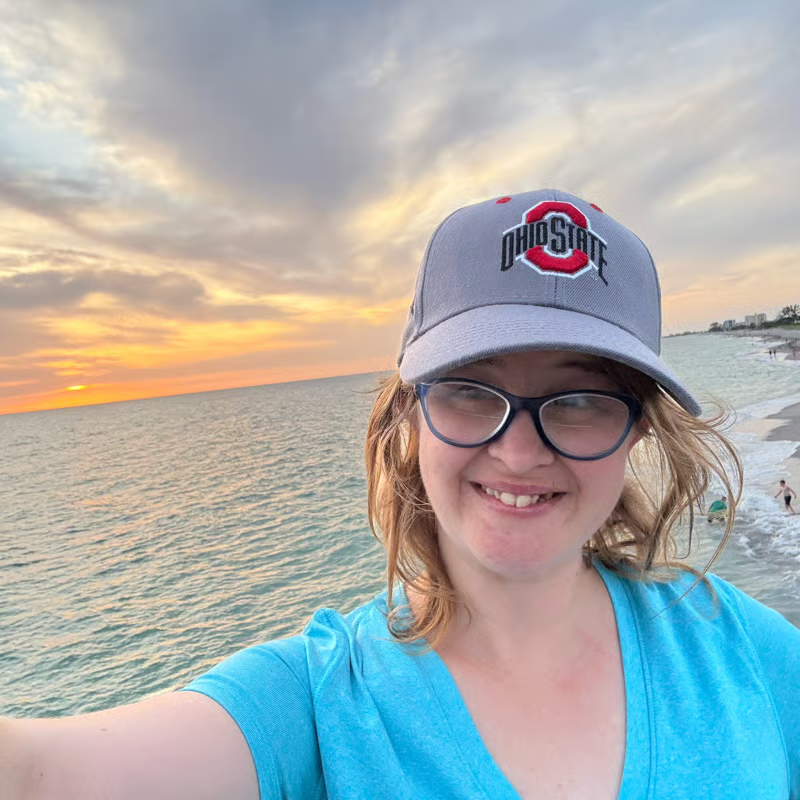
Jocelyn selfie at the beach

Meet ODDC Community Ambassador Jocelyn Gilardi


The Ohio Developmental Disabilities Council (ODDC) Community Ambassador Program is a platform for Ohioans with developmental disabilities (DD) to report on what's happening in their local communities. These reporters, called Community Ambassadors, share their own lived experiences and gather perspectives from others to raise awareness around barriers and successes for people with DD.


Community Ambassador Jocelyn Gilardi from Knox County wrapped up her project in May 2026, focusing on assistive technology (AT). Assistive technology is any tool that makes life more accessible and supports independence for people with disabilities. Ohio is a Technology First state, meaning Ohio prioritizes technology when considering services and supports for people with DD.


Jocelyn is a life-long AT user, advocate, and leader. Her project combines personal stories, interviews, and community outreach to explore how technology can help people with DD build independence and participate fully in their communities. Read Jocelyn's project below!


Technology and Me: How We Work Together to Improve My Life!

by Jocelyn Gilardi, annotated by Kaitlynn Banbury

This is Jocelyn's story of how technology has made her life easier from a young age. From hearing aids to cochlear implants to home-based assistive technology, she shared how these tools have opened doors and "made independent life more accessible for [her]."

The story of working with technology began when I was two years old. That was when I got my first set of hearing aids. After I got my hearing aids from my audiologist, it was like playing catch-up. Catching up to speed with all the new sounds and finding out new techniques to make life easier for me. I always had to touch to sense what was going on. It was definitely like a puzzle, putting all of the pieces together to understand the English language all my life. Different doctor appointments all the time, and doing the best I could to soak up all the new technology that was now embedded into my life. 


Then came elementary school, where the challenges definitely got more intense. With all of the different sounds and lots of kids in the halls all the time, it made it hard to figure out who was talking to me and who was not. So, I got an FM system. It is a piece of technology that has a little microphone on it and a receiver, so someone would speak into the mic, whether it was a teacher or a student speaking, and the receiver helped me understand what everyone else was saying by cancelling out the background noise. I wore it around my waist and it got to the point where I barely remembered it was there. 


With this technology starting in elementary school, I realized I have always had an auditory memory, meaning that I remember things better by hearing them. So saying that I lived by my hearing aids all throughout school is the understatement of the century. I always took my time to understand things and never rushed through anything. 


Starting my technology journey so young and having it in multiple different ways has helped me progress through life by working with it, and not against it. 


After graduating high school in 2009, I proceeded to Central Ohio Technical College to get my associate’s degree in Elementary Education. During this time, I also helped teach at St. Vincent De Paul Elementary School and every day was different. While in college, I got a CCTV, which is a device with a camera on it that helps zoom in on rather small text to enlarge it to a font that I can read. It also changes contrast for people who can read some contrasts better than others. I mostly used it to help with reading different textbooks. I also got extra time on tests in a quiet room which helped me focus. I also got large print books that helped me be able to read the articles we would talk about in class. Not much changed from high school to college. Learning how to advance from high school to college with the same technologies made college more normal to me because I already had the things I needed to succeed from high school. I graduated from college in 2014 and that was a huge success for me to start my adult life. 


The Journey to Getting my Cochlear Implant

After graduating from college, I started the journey to getting my cochlear implant, also known as CI. A cochlear implant is a sound processor that takes the everyday sounds we hear and changes them into sound waves that go directly to the brain. Getting my CI was anything but easy. I had to go through multiple tests with my audiologist to test if my hearing aids were not amplifying enough sounds, and then go through the process of seeing if I was eligible for the CI. The scariest part was the fact that once I got the surgery, there was no going back. When they do this major surgery, they kill off all of your natural hearing cells so then your body learns how to hear with the processor. After jumping through what felt like 1,000 medical hoops, we finally got the go-ahead for surgery. 


Post surgery, it felt like I had to figure out how to sleep again. Every time I went to lie on my side, I felt like I was falling through the sky with serious vertigo. It was definitely a tough time trying to go back to work with just one hearing aid. We were trying to work with the technology when everything in me was working against it to heal. 


Every two weeks, my family and I went to appointments with my audiologist and came home with different homework to work on different parts of hearing the world again. It was like I was two years old all over again, trying to navigate the world with this new technology. Just like when I was learning how to use my hearing aids. Once I got through all of those audiologist appointments, I realized that a hearing aid amplifies different sounds. My CI was like my FM system in the way that it clears the sounds and makes hearing simpler for me with less brain work and lip reading. 


Little did I know over 10 years ago, getting a cochlear implant would always be a never-ending journey to find normalcy again. Some of the biggest things I remember were when my mom and I were outside hanging laundry and I heard the birds chirping for the first time and it scared me so much that I ran inside. Another memory was being able to hear my nieces and nephews' little voices and tune out the background noises while they were growing up. I was shocked by the unfamiliar sounds for the longest time, but I soaked up every second of it. 


Home Ownership and Accessibility

Then came home ownership. My mom’s neighbor was selling their home, and so we decided to jump waist-deep and buy it. We had to do a lot of restoration and renovation to the space. Almost floor to ceiling of things we renovated to make it a space accessible for me to be able to live independently. Accessible to me means I need as much light as possible to be able to see what’s going on. With my eyesight being about the same as looking through holes in a straw, the more light I can have in my space, the better. 


While doing all the renovations, we started contacting my county’s board of DD to see what options there were to put into my home to accommodate my specific needs. We toured my county’s tech home and found a few pieces of technology that would be vital for me, such as a bed shaker alarm system to help me wake up in the mornings when I do not have my eyes and ears on. And having an integrated alarm system for fires, flooding, tornado warnings, and all things weather-related to make sure that I am able to get to safety. We also invested in a Ring camera system and a LOCKLY door lock, which is a device I can use to lock my door with my finger, my phone, or a combination within the door, so I can make sure my home is safe even when I am not home.


Little did I know that would just be a tiny sprinkle of technology to help make independent life more accessible for me.

Becoming a Leader in Assistive Technology

After years of using assistive technology in her own life, Jocelyn stepped into a leadership role to show other community members how technology can expand independence and opportunity for people with disabilities.

In Summer 2024, Jeanette Carpenter from the Knox County Board of DD came to me with an opportunity. She came to me and asked if I would be interested in making my home the Knox County Tech Home, and with living with tech all my life. I was overjoyed and eager to start this tech home journey. Even with having some technology already, I truly had no idea what was out there when I started this project. 


We truly hit the ground running in December 2024 when I met my tech-savvy provider, Kaitlynn, who worked alongside me for three months to set up all of the technology in my home. You name it, I had it in my home. From a refrigerator I can look at from my phone while I am at the grocery store, to a smart cooktop that can boil water in five minutes, to an LED mirror and shower head that can tell me the temperature from a colored display instead of me burning my hand to test if it was warm enough for me to get in. 


With all of these resources, it truly helps me live my best life alongside all of this technology. These technology resources help me with cooking independently, reading on my own with plenty of light, and using my Alexa to set timers, to listen to music, and even start my microwave!


Having all of this technology and using it every day also helps me give tech home tours to people in the community. When Kaitlynn and I started the tech tours, it just felt like showing people how cool my house is. I got to show my house to vital people in my community, like the mayor, the judge, and community board members. I also got to show my house to different SSA’s to help them provide the technology they see to the people they help support. We plan on expanding these tours to different counties that would like to, but we haven’t had any bites yet. We also had State Accreditation come into the home to make it a state-accredited home in February of 2025. 

Jocelyn gives a video tour of her tech home, showing how different tools and smart technology help her safely prepare meals and be more independent.

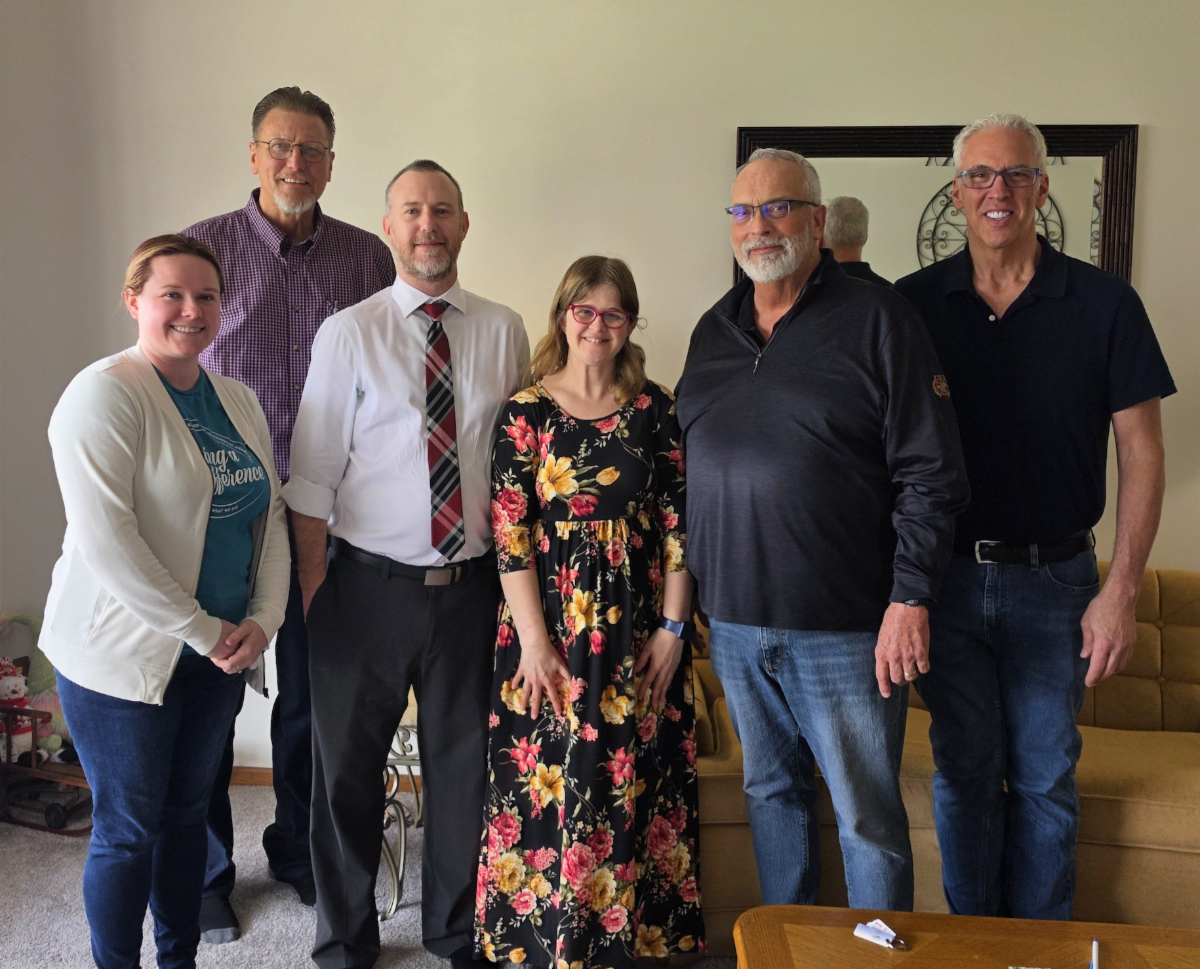
6 person group photo in Jocelyn's home

Jocelyn (center) gave a tech tour of her home to Mount Vernon Mayor Matt Starr (back left), Knox County Judge Jay Nixon (white shirt and tie), Knox and Coshocton County Boards of DD Superintendent Steve Oster (right), and community board members.

Email Jocelyn to schedule a tech home tour: Jocelyn's digital business card

Community and Assistive technology

Jocelyn connected with people across Knox and Coshocton counties to explore how technology can support greater independence, choice, safety, and dignity. Through interviews and live demonstrations, she helped others see how assistive technology and everyday tools can make life easier and more accessible for everyone.

Jocelyn interviewed Shelby Starr, ADS Manager for The Hive, on how shared assistive technology can create a more inclusive community. The Hive is an example of how shared resources can support learning, confidence, and independence for people with disabilities.

Jocelyn interviewed Jeanette Carpenter, Advocacy and Housing Manager at the Knox County Board of DD, on how technology can support safer and more independent living. Jeanette shared how the internet and smart home technologies can help people with disabilities have more control at home.

Jocelyn demonstrated a spill-proof cup holder at an advocacy camp she attends every summer called Because I said I would. By showing how the device keeps drinks steady while walking, she helped others see how simple technology can make everyday tasks easier.

Living, Learning, and Growing with Technology

My main goal is to make the DD community have more technology at their fingertips and work hand-in-hand with the technology to make their lives easier. Technology wants to work with us, not against us. Everyone deserves to have equal access to adaptive technology, whether they need the tech to hear and see like I do, or just simply being able to open a can without asking for help.


Having the technology to give us these little victories is not a small step; it is a giant leap towards independence. Technology is so much more than just our phones and computers. It is also a tool to enhance independence. For me, technology is like second nature, and I want for others to learn from my experience and my giant leaps to living independently by working hand in hand with technology. 

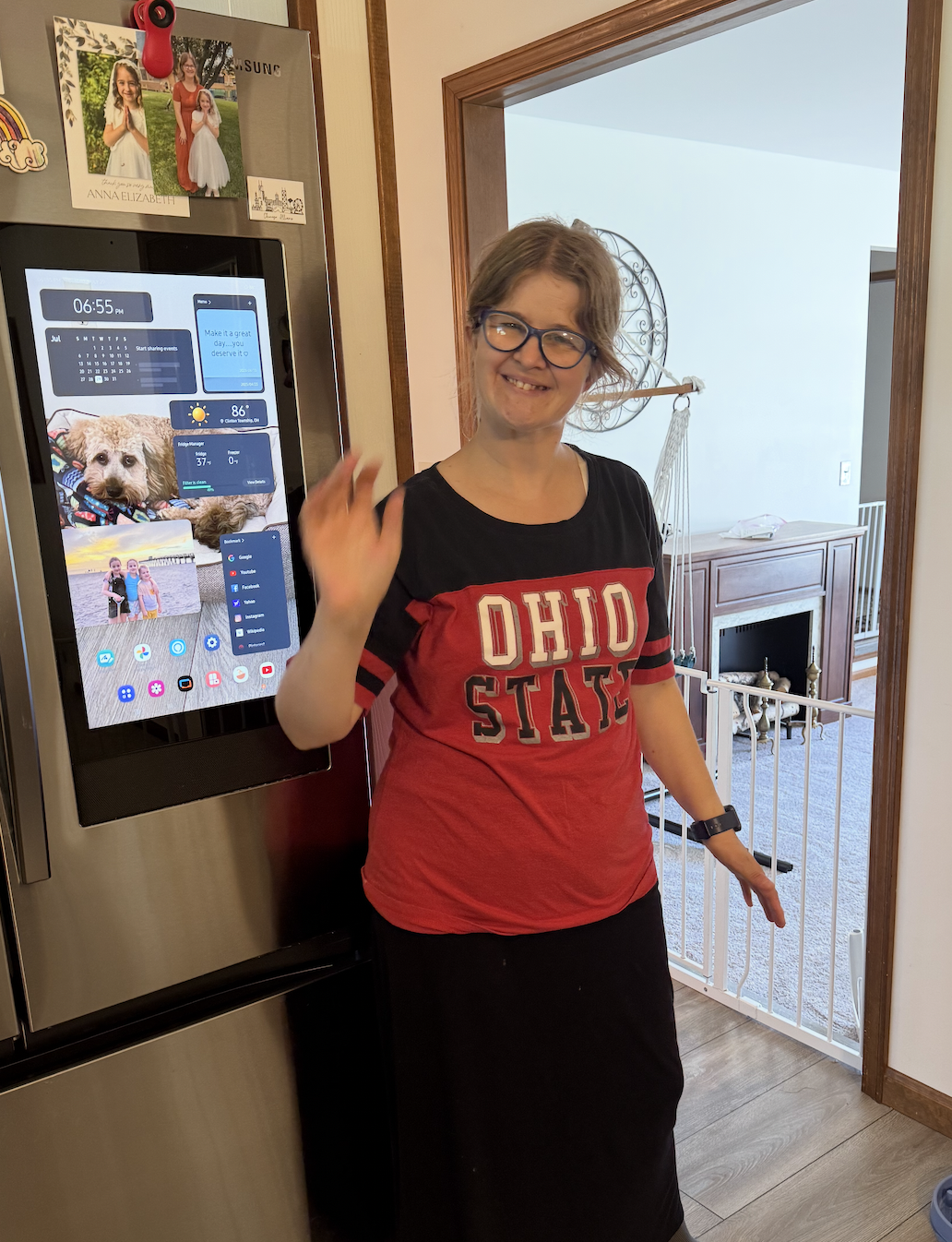
Jocelyn wearing an Ohio State shirt in front of her smart fridge

Jocelyn's smart fridge tells her when things are expired, shows her different tutorials for meals, and she can see the inside of her freezer from her phone at the store!

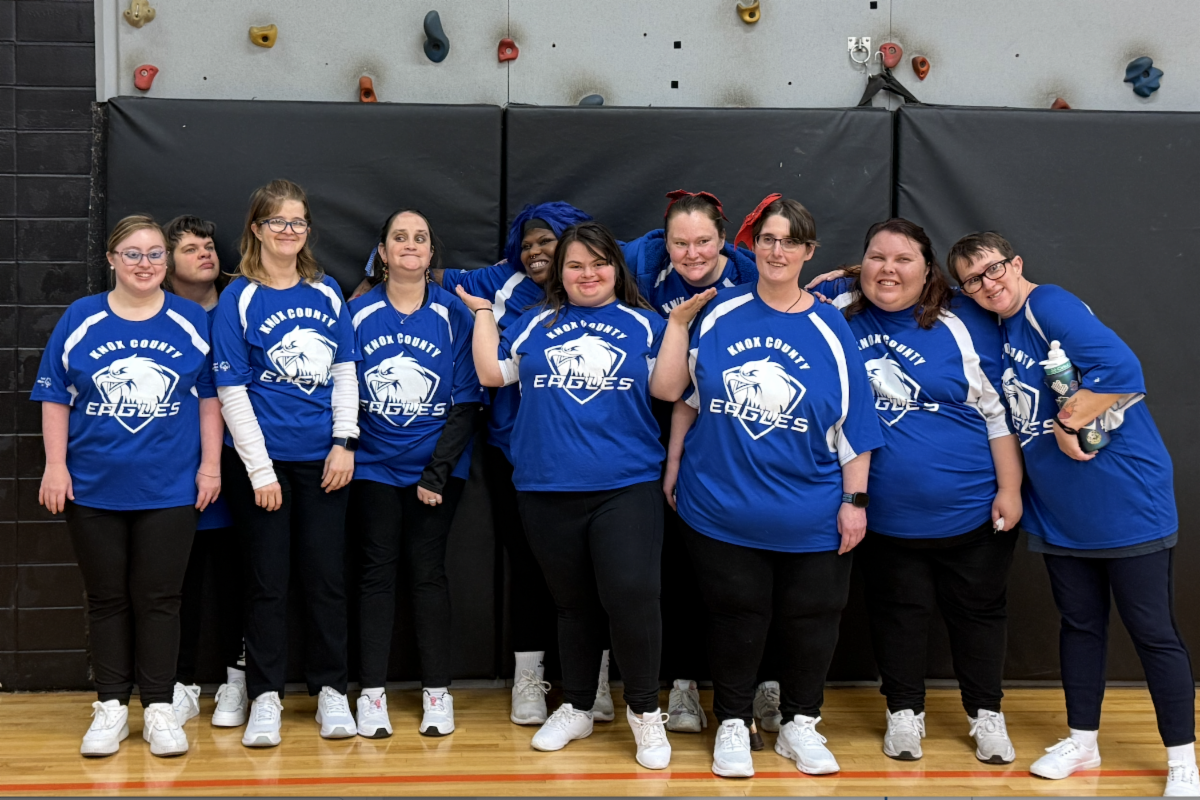
Cheerleaders in blue team shirts and black pants

Jocelyn's Special Olympics Cheer Team cheers on the boys basketball team at their home games.

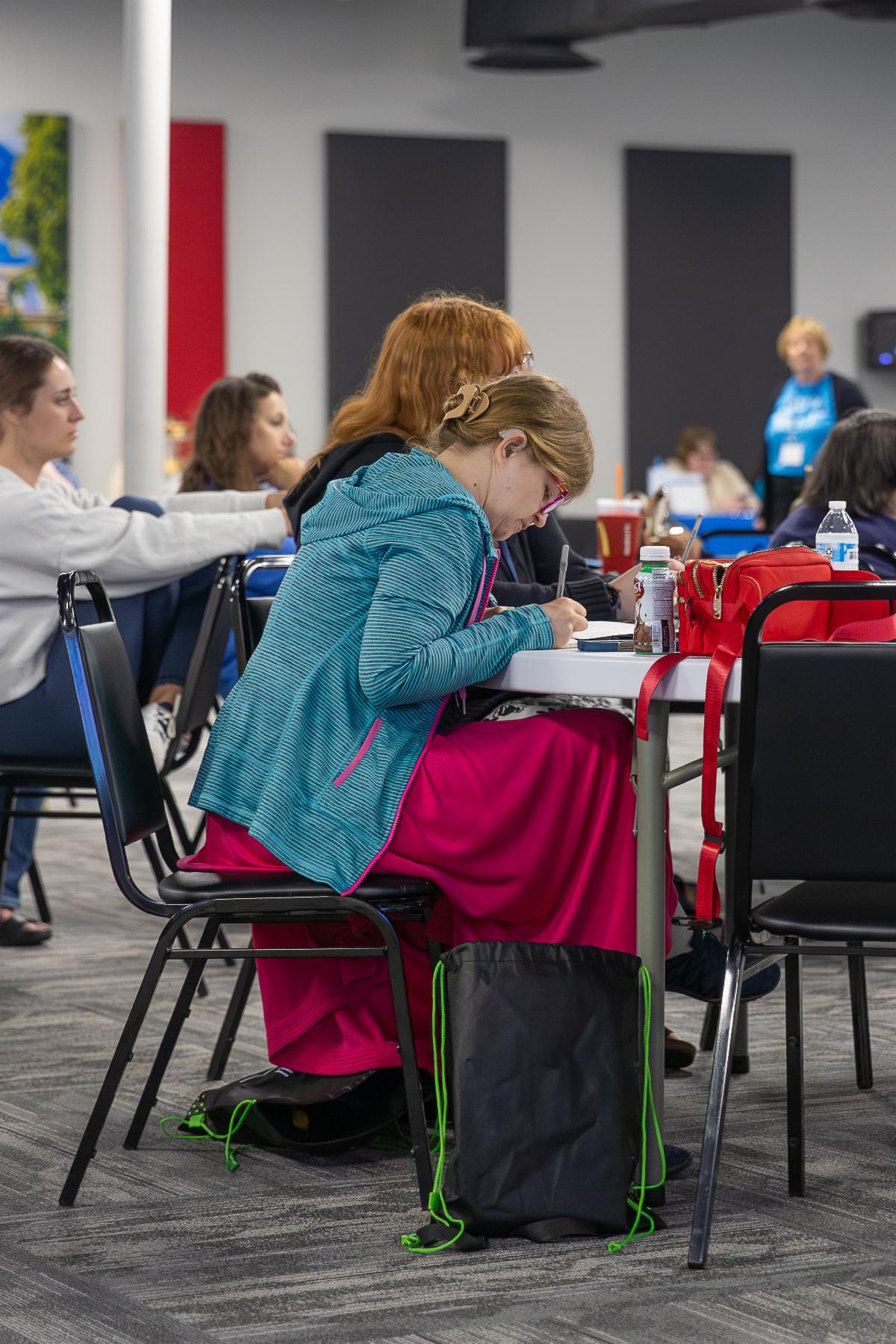
This is Jocelyn doing one of her favorite things: educating herself on different topics by attending conferences. This is at an Ask Autism conference, where she is learning about different techniques for people with autism and that autism is absolutely a spectrum. 

Watch Jocelyn's cheer team cheer on the Eagles!

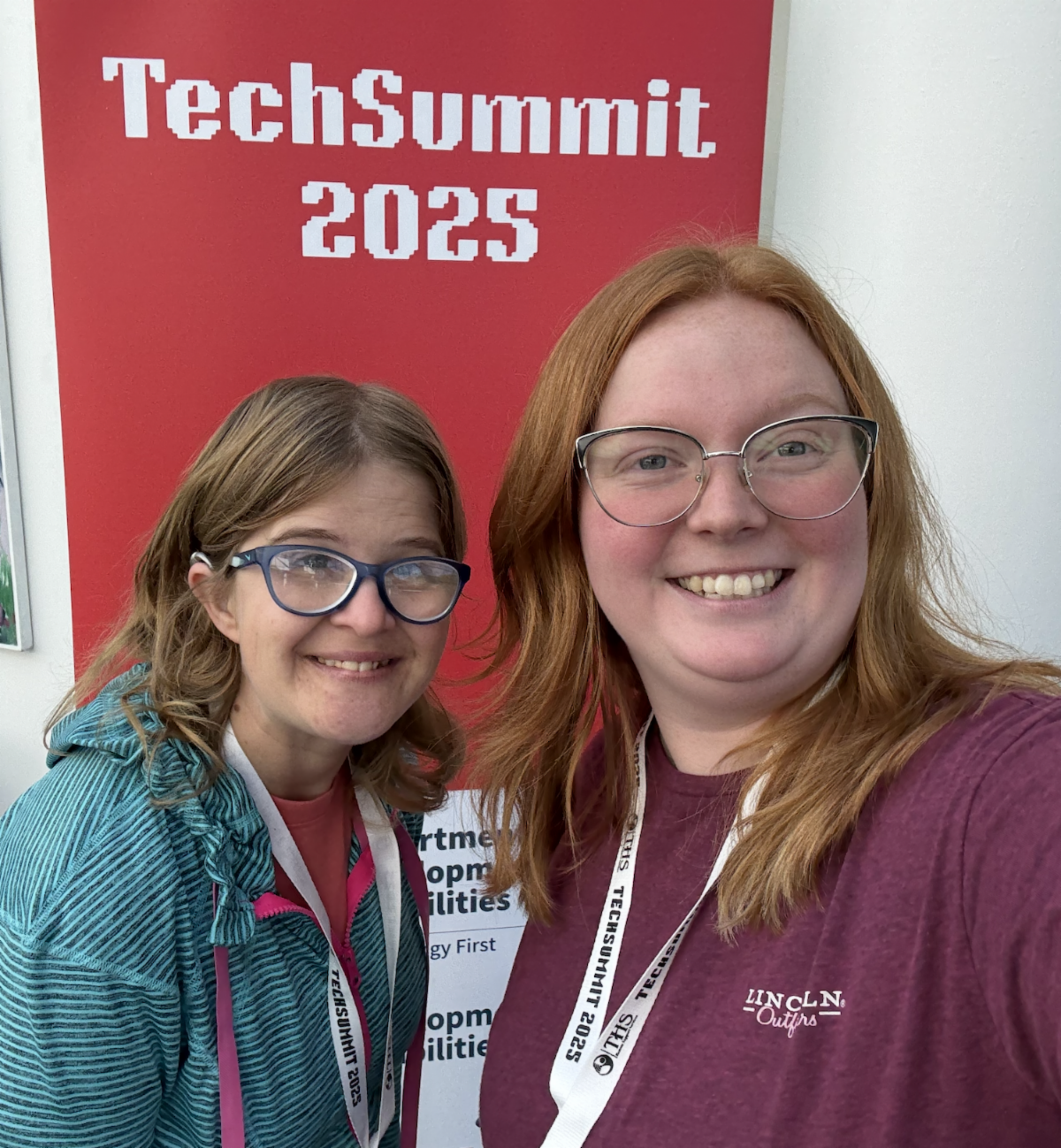
Jocelyn and Kaitlynn at Tech Summit 2025

Jocelyn and her provider Kaitlynn at the 2025 TechSummit.

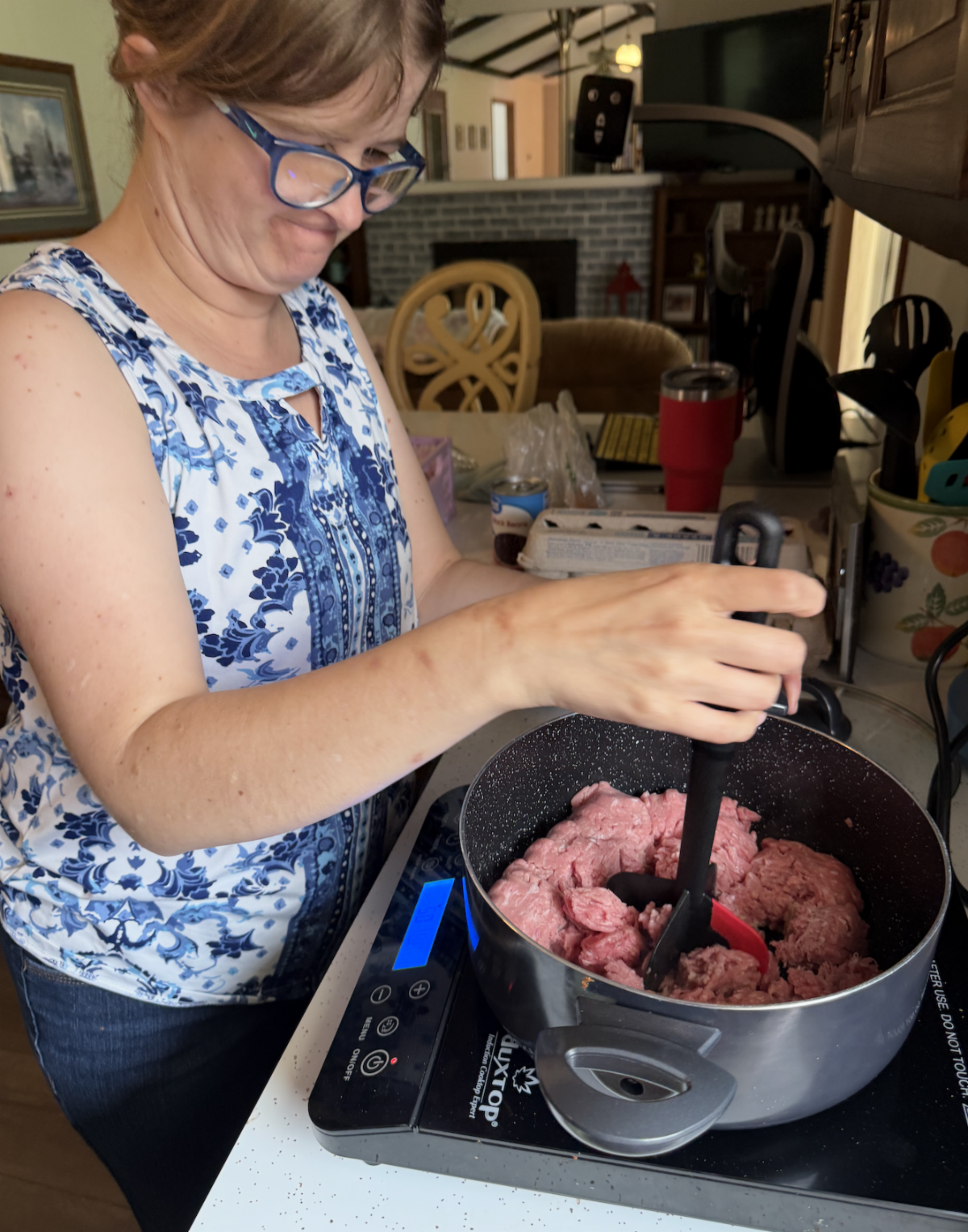
Jocelyn uses her meat masher, cooktop, and nonstick pot to make food for her dog!

About the Community Ambassador Project: The Community Ambassador Project is a storytelling initiative of the Ohio Developmental Disabilities Council. The project features individuals from across Ohio who lead their own stories on what's happening in their town within their DD community, along with issues faced and positive change happening to improve community inclusion. Community Ambassadors choose one or two topics to focus on and provide an outline of how they will approach the topics. Then, the ambassador works on building stories around those topics to share with their entire community and beyond. Storytelling includes interviews, research, photos, videos, and more. The goal is to have people with DD in front of their communities and telling their stories in an authentic and positive way while raising awareness about issues and successes. For more information, visit the Ohio DD Council's website.


This project is supported, in part by the Ohio Developmental Disabilities Council, under a grant from the U.S. Administration for Community Living, Department of Health and Human Services, Washington, D.C. 20201. Grantees undertaking projects with government sponsorship are encouraged to express freely their findings and conclusions. Points of view or opinions do not, therefore, necessarily represent official ACL policy.