Your Right to VOTE: Use It Well ! |
|
| People On the Go knows that this that may be a confusing time, for those with disabilities and their families, and other supporters.
While all elections are important, this one could be the most important of many people's lifetimes.
POG will not tell you how to vote. We will provide resources, such as explanation of issues in plain language, as well as open discussion during our biweekly or monthly member series. All ideas will be welcome. So long as the discussion remains civil, we know how people can be passionate about their views, during this difficult time. While passion is to be appreciated, disrespect is not.
We ask you to consider, before casting your vote for the president and your member of Congress: Go with the one who will help you be your best self and continue to live the life that you want to live. Choose that person for yourself, not because someone told you.
Look up the candidates, and their views on people with disabilities, and on topics like the ADA, healthcare, and Olmstead. Olmstead is the Supreme Court decision which says that states must provide, when possible, the opportunity for people with disabilities to live in the community. Also look up candidates’ perspectives on how to treat other marginalized groups, such as women, people of color, and the LGBTQ+ community.
Recently, our Deputy Director Tracy Wright and Rosanna Tufts led a presentation on voting issues during one of our regular BiWeekly Zoom calls, |
|
| including what it would mean for us if "Project 2025" became "the bible" for a new administration. That call was recorded, so if you missed it or want to see it again, click HERE. To download the slideshow and info sheets that go with it, also click HERE.
Again, POG will not tell you how to vote. We will ask you to please carefully consider your choice, and make the best one that you think will support you.
You have heard that one of the presidential candidates has suddenly changed. We hope this has made you excited about the prospect of exercising your most fundamental right, and make your vote and your voice heard!
Thank you. Good luck in voting, and be safe this election. Take care of yourselves and one another.
The POG Team Photo by Arnaud Jaegers on Unsplash |
|
|
|
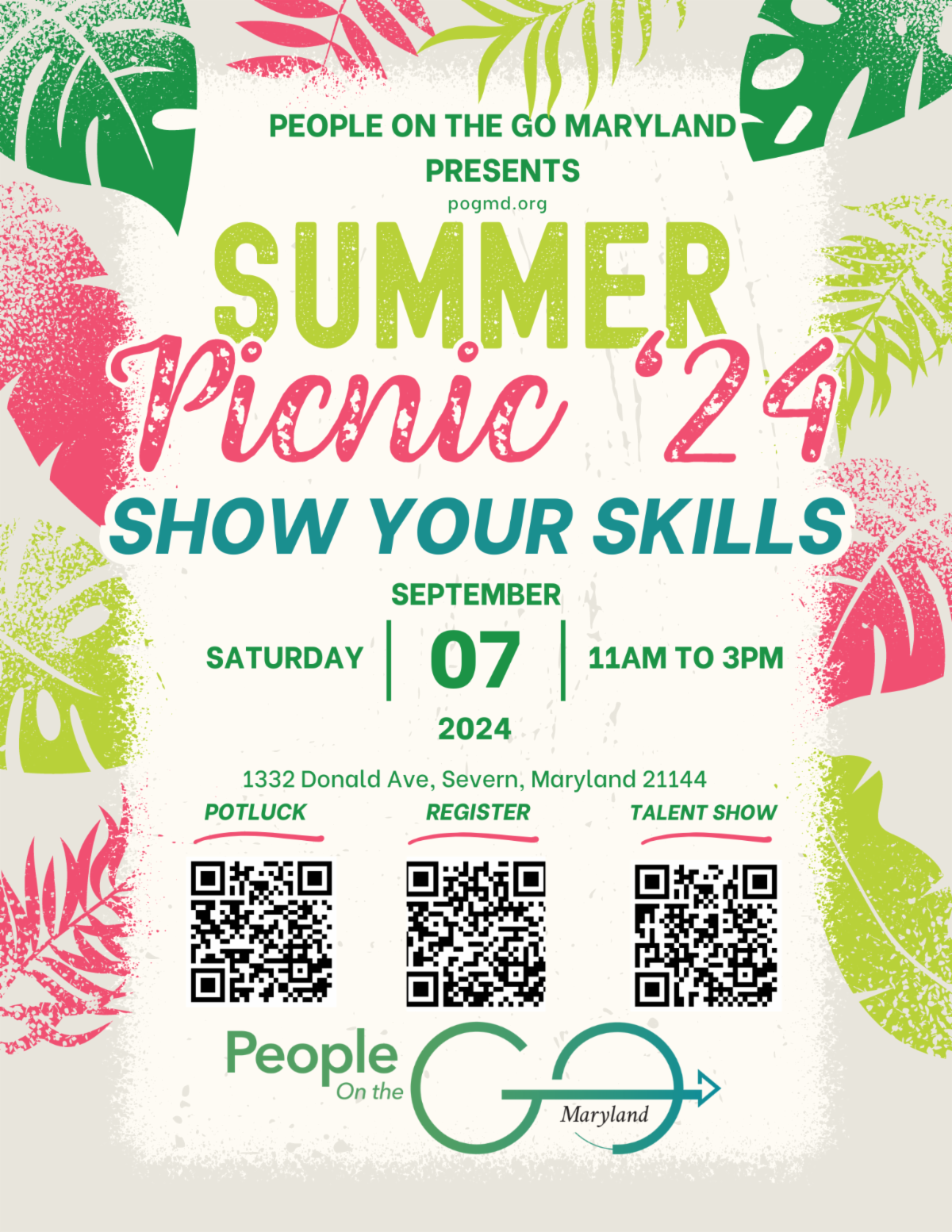
It's Almost Picnic Time!
Yes, POG is bringing back our Summer Picnic, a little bit later in the summer in the hope that the heat will begin to abate. We have a date: September 7, from 11 am to 3 pm — and a place: the outdoor Hake Pavillion at the ARC of Central Chesapeake, in Severn, MD! All PoG members are invited; we have space for 100 people. Admission is FREE for members; non-member guests are asked to contribute $10 to cover their food and drinks. Cody Clark will perform a magic show, and we'll also have a Talent Show, with Rosanna Tufts as the Emcee, complete with karaoke equipment! Register HERE to indicate your intent to come. If you wish to participate in the Talent Show, we have created a separate signup sheet, HERE. |
|
|
|
|
2024 Maryland Legislative Session, By the Numbers
During Maryland’s 2024 Legislative Session, POG was very active in providing testimony for 27 bills that affect the disability community. Of these, there were:
- 18 Bills we supported
- 9 Bills we opposed
- 8 supported Bills passed (44% of supported Bills, 30% of all testimony)
- 1 opposed Bill passed (11% of opposed Bills, 4% of all testimony)
So how well did we do?
OUR WINS: (Passed both Chambers, Signed by Governor)
- HB 60: Rehabilitation Services – Disability - Definition
- HB 93/SB 162: Landlord and Tenant - Termination of Residential Lease -Limitation of Liability for Rent
- HB 432: Courts and Judicial Proceedings and Criminal Procedure – Technical Corrections – References to Intellectual Disability
- HB0822: Maryland Medical Assistance Program - Employed Individuals With Disabilities (see separate article for more)
- HB981: Principal Departments - Individuals With Limited English Proficiency - Access to Public Services
- SB0092/HB0426: Open Captioning
- SB0226/HB0215: Attendant Care Program
- SB0891: Transportation - MobilityLink Paratransit Service Improvements - Study
OUR LOSSES: (We opposed this bill, but it passed anyway)
- HB0576/SB0453: Assisted Outpatient Treatment law (“AOT”)
BILLS WE OPPOSED, BUT DID NOT COME TO A FLOOR VOTE: (consider these to be temporary wins, since they stalled in committee)
- HB0142: Election Law - Polling Places - Establishing Voter Identity (Voter Privacy Act of 2024)
- HB0192: Elections - In-Person Voting - Proof of Identity
- HB202: Election Law - Absentee Ballots - Signature Requirements and Verification
- HB 1215: Retail delivery fees
- SB0759/HB0698: Estates and Trusts - Guardianship of the Person of a Disabled Person - Expedited Proceedings
- SB0907: Motor Vehicles - Disability Parking Placards - Photo Identification
- SB1085/HB1144: “Segregated Housing Limitations” B
- SB1096/HB1456: Licenses, Identification Cards, and Moped Operator’s Permits - Identification of Non-Apparent Disability
BILLS WE SUPPORTED, BUT DID NOT COME TO A FLOOR VOTE: (renew our support for these in 2025, should similar bills be proposed)
- HB32: Caregivers Tax Credit
- HB0071 Education: Holocaust Education Assistance Grant Program – Established
- HB0098/SB 185: Office of the Deaf and Hard of Hearing - Deafblind Co-Navigation Services Program – Established
- HB 318/SB 373: Criminal Law - Safe Carrier Act
- HB340/SB 388: Prescription Drug Affordability Board - Authority for Upper Payment Limits and Funding
- HB0641: Election Law - Curbside Voting (Passed House Committee, referred to Senate Committee)
- HB0987: Language Access Bill
- HB 1475: Health Facilities – Delegation of Inspection Authority – Related Institutions and Nursing Homes
- SB0432/HB0416: Public Schools - Active Shooter Safety Drills or Trainings – Requirements (Passed Senate Committee, referred to House Committee)
- SB0802/HB775: Election Law - Voters with Disabilities - Electronic Ballot Return
|
|
|
|
Developmental Disabilities Day at the Legislature, February 21 |
|
| Report by Rosanna Tufts
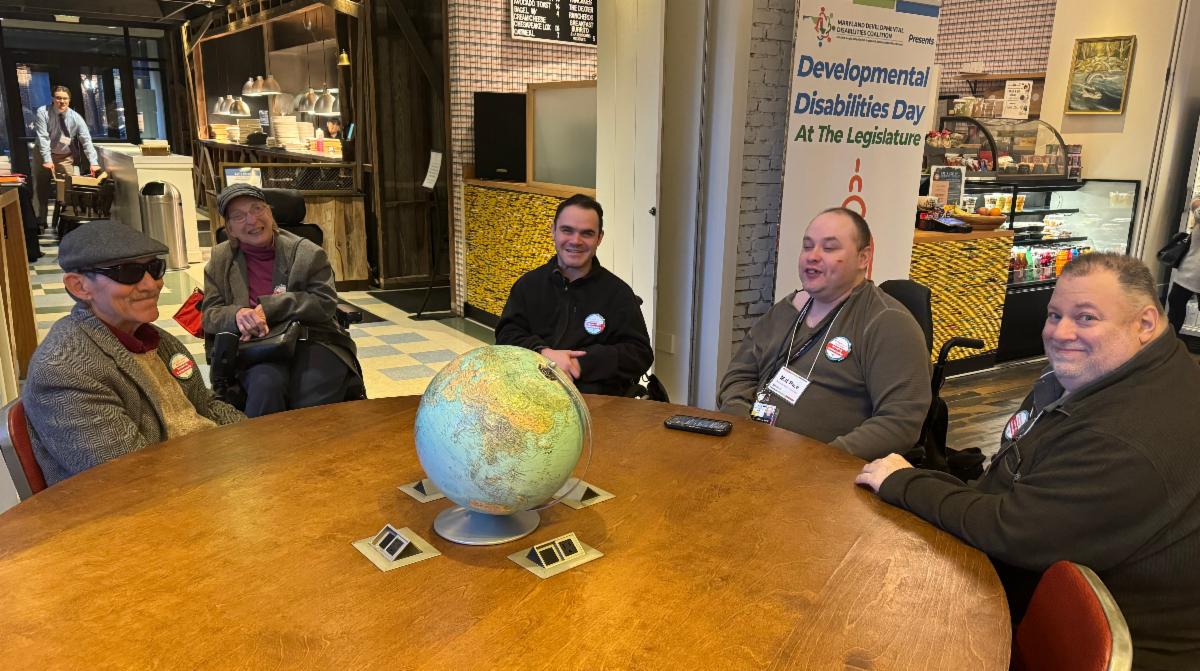
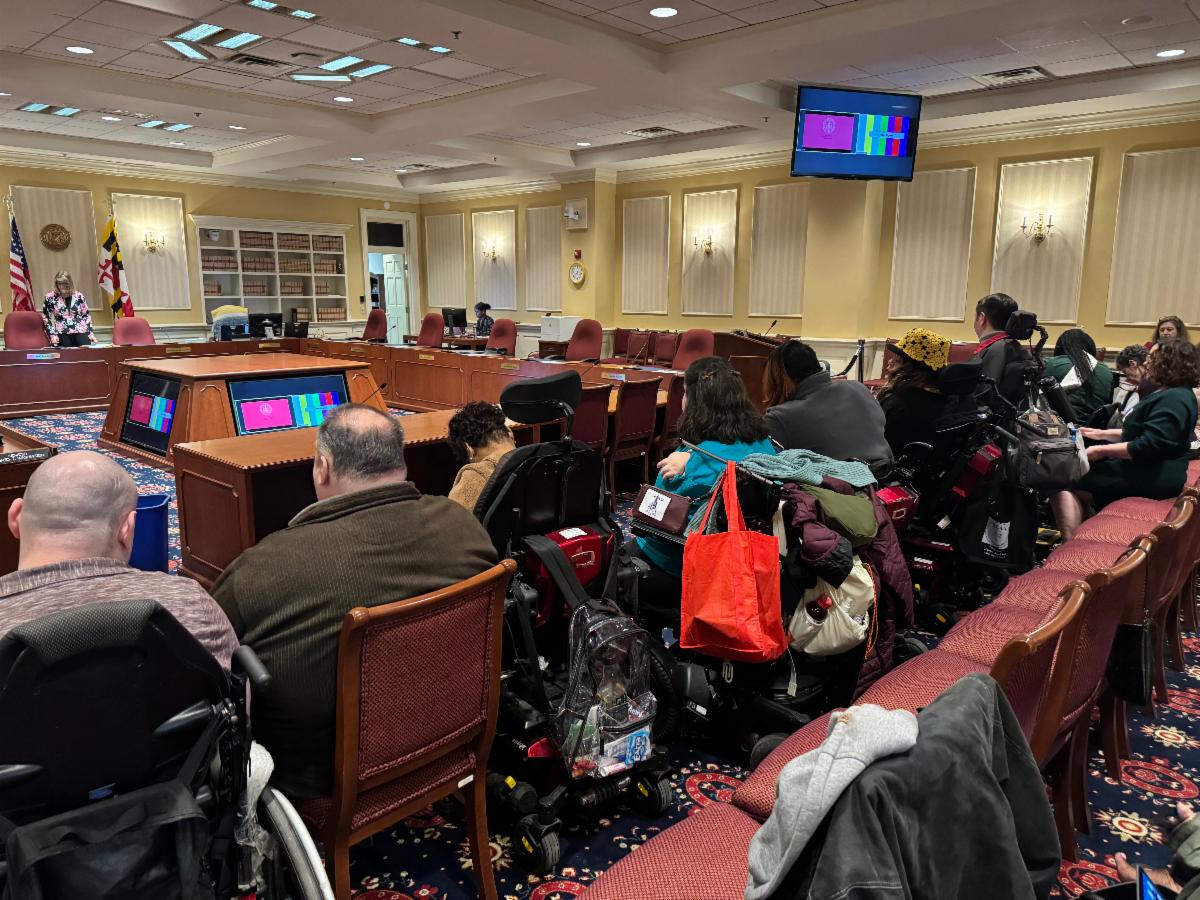
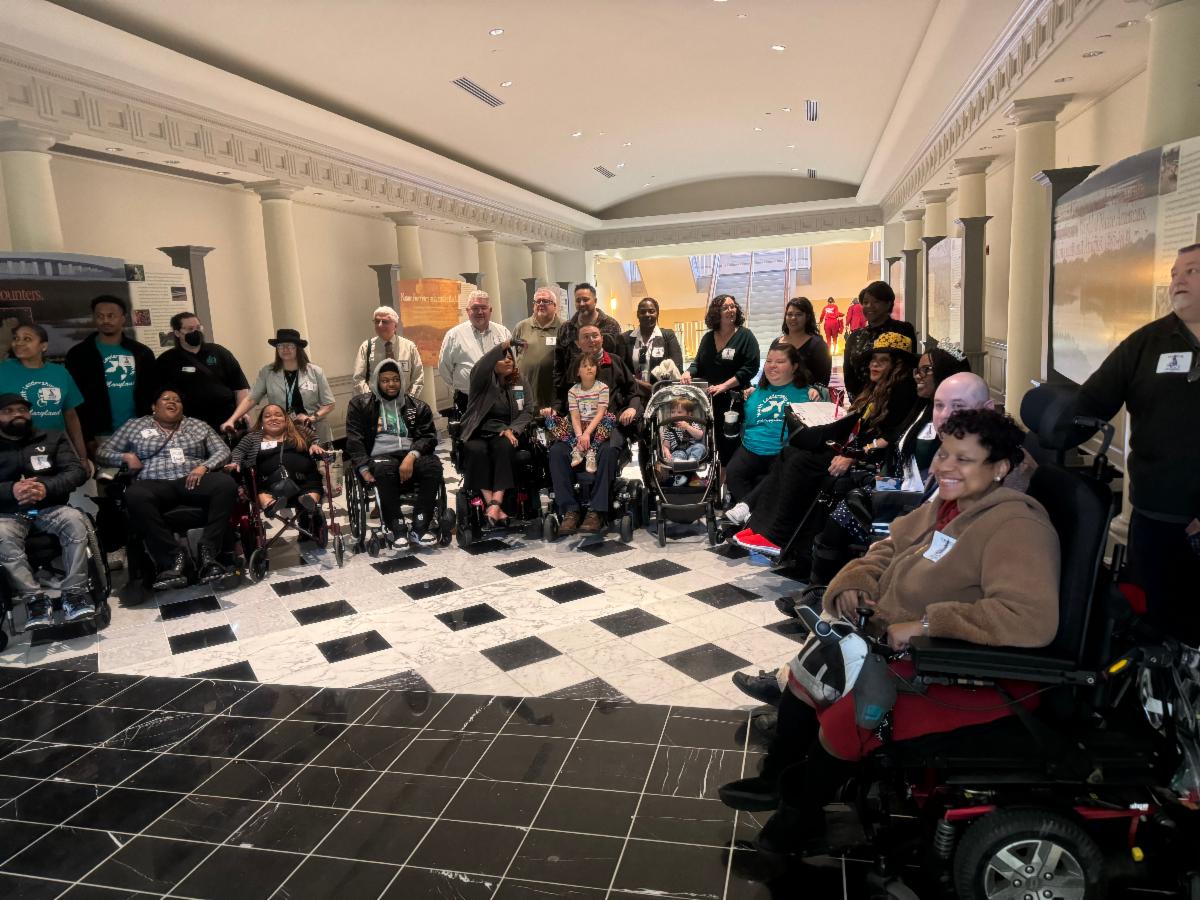
Our Maryland Delegates and Senators were bowled-over at the turnout for this event — almost 800 people with developmental disabilities and their advocates, including representatives from The Arc Maryland, Disability Rights Maryland, the Maryland Association of Community Services, and of course People on the Go!
We got the chance to speak directly with our own legislators to encourage their votes regarding bills (I had my 2-minute pitch ready to go, having practiced it at my |
|
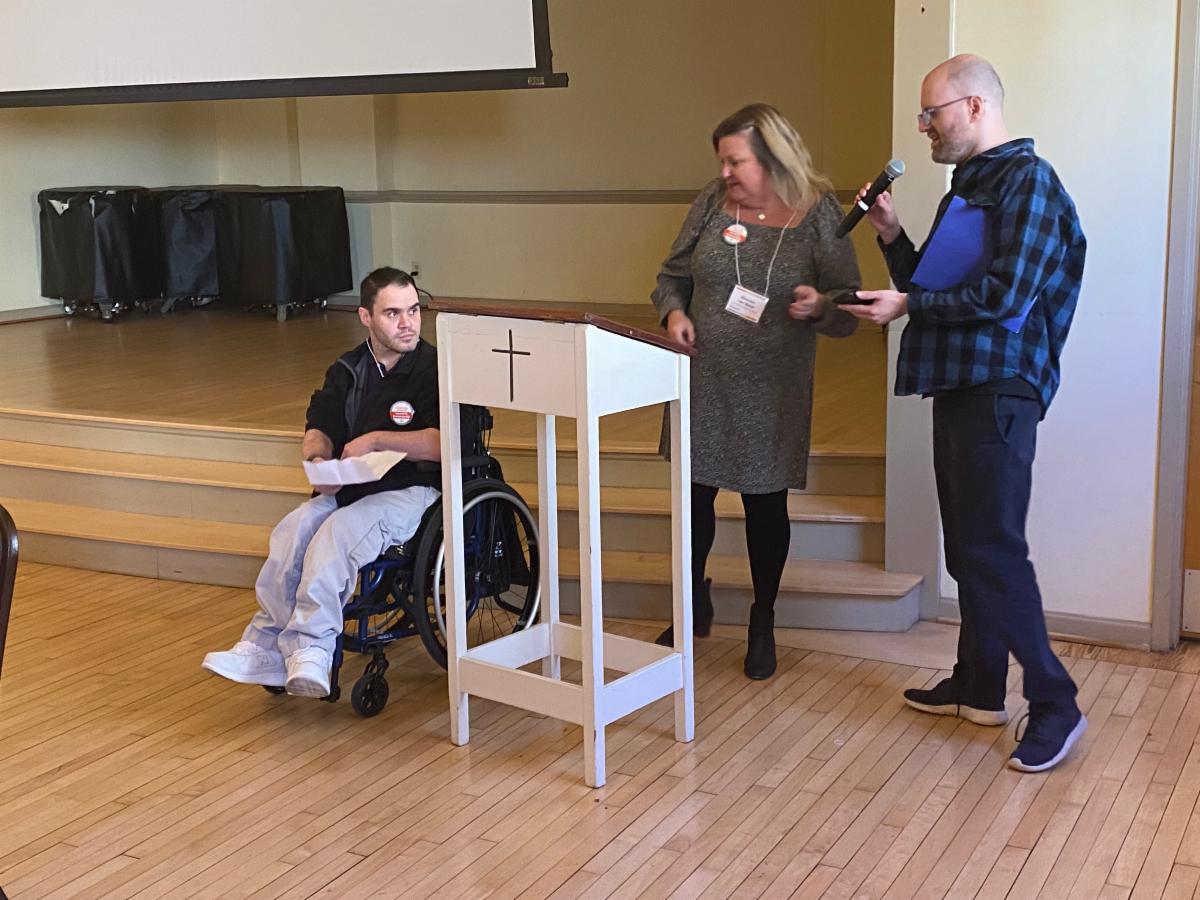
| Toastmasters club the night before!). This was followed by a Lunch & Learn at a nearby church, where our own Cody Drinkwater and Josh Delclos spoke about advocacy and self-advocacy in the policy realm.
Perhaps the most encouraging part of the day was getting to hear Governor Wes Moore speak. His warmth shone through as he told the story of the opening of a Baltimore playground with an innovative inclusive design. |
|
| “This needs to be a State that leads with love.” “Maryland is the only State that has a cabinet-level department that is focused on disability policy.” “We have hired a new statewide coordinator for autism strategy and helping young people with disabilities.” “Inclusivity is not just a talking point, it is a governing philosophy.” I’d almost forgotten what a real orator sounds like, someone who inspires voters with what is possible.
Hear for yourself, HERE. |
|
Victory for the EID Bill ! |
|
| Report by Mat Rice
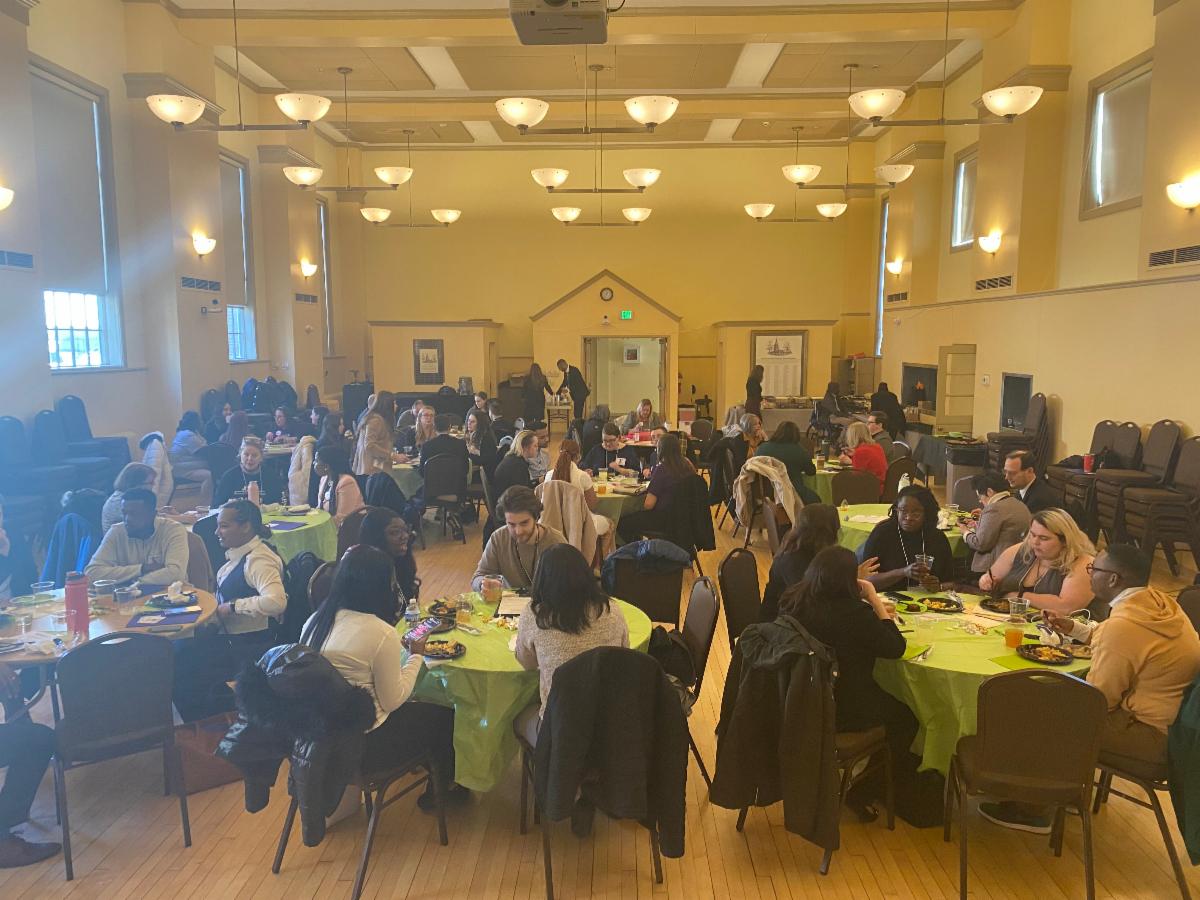
On March 12, 2024, advocates gathered in Annapolis to voice their support for House Bill 822, the Employed Individuals with Disabilities program (EID), which allows for individuals, who would not otherwise qualify for Medicaid, to continue to be employed after age 65 and still maintain their services, without being forced into hospice care.
This is important because Medicaid is not only health insurance. It is how we get the support we need to live in the community. Individuals with disabilities told their stories about what EID means to them, supported by advocates from the Maryland Centers for Independent Living and the National Federation for the Blind.
They also testified against the “marriage penalty:” a disabled person who wanted to get married, would |
|
| suddenly find themselves ineligible for Medicaid at all, or their premiums would increase, due to their non-disabled spouse’s income.
The legislation did pass, and now other issues related to it, are being worked on. The legislation requires a report to the General Assembly. This report will contain a comparison that shows the impact of contribution premiums for disabled individuals who are married. Also, according to Medicaid rules, a separate program needs to be established, for people who are 65 and older, to enable them to continue to participate in Medicaid.
The voice of advocates was powerful in helping this legislation get passed — quite possibly our biggest victory in the 2024 session. This shows why people with disabilities need to continue to be involved in public policy. Our voice matters! |
|
|
Cody Drinkwater interviewed Mat Rice, our Executive Director, about POG’s achievements during Maryland’s 2024 legislative session, what are POG’s goals for advocacy action in the future, and what YOU can do to help yourself and others. (Edited for clarity.)
Cody: Matt, what got you interested in policy work? Mat: The thing that got me interested in policy work, is after I left school in 2007, I really got into the adult world. I started to see how policy was being made for people with disabilities. I worked for Gail Godwin for a couple of years before I started working with POG as the legislative intern. That really helped further my interest in policy, because I saw some of the changes that were being made through some of the people that were doing the work at the time. And I thought policy should be made as much as possible by the people that it's going to directly affect — otherwise, it's not meaningful.
Cody: I completely agree. What are some bills you're looking forward to advocating for, next year? Mat: It's always about anything we can do to expand access to services that people need, such as legislation to help control the prices of prescription drugs, which is very important for all people, including people with disabilities. We're also hoping that bills about accessible voting machines will come back, and make the voting process more accessible, for people, because voting is our most fundamental right. And the more people that have access to that, the more they’ll choose to vote.
Cody: And what are some bills you're concerned about, coming back in the future? Mat: Anything that limits a person's right to vote, like we've seen in the last few years: Signature requirements for mail-in ballots. Not everybody has a “functional or traditional” signature. Voter ID is also a concern. Even if you made the ID itself free, the documents and other things people need to obtain identification, cost money. And it puts people with disabilities at a disadvantage. I don't think voter ID is a good thing. I also I'm not particularly fond of designations for disability on individual identification cards. I know some people want that, and they think it will help prevent negative interactions with law enforcement. But the reality that I see, is that you could have a system where people that don't choose to have these designations on their license or ID card, are treated differently. It's also not clear how much that would affect somebody's insurance premium, if they are a driver — or even potentially, somebody's ability to access employment. Because you must submit your identification with your I-9 and other forms, and you have a hidden disability
(continued) |
|
| (continued from previous column)
that you don't feel comfortable disclosing. I know people say it's voluntary, but how long before voluntary becomes expected, and how long before an expectation becomes a requirement?
Cody: Yes, I think that's something POG absolutely needs to be about, moving forward. So how can someone get involved with policy? Mat: Well, I'm a little bit biased, but I would say: Come to a POG public policy meeting! We need as much input as we can get. Also, look around at your local community. Are there commissions about disabilities, are there transportation committees, that you could sit on? Whatever you think you might be able to do to make a difference in policy, I always say “find one issue and make it yours.”
Cody: How did the past legislative session go? I know that’s a very broad kind of question. But what were the highlights of that session, in your eyes? Mat: I think one of the highlights is always Developmental disabilities Day — how approximately 800 or 900 people are willing to engage with their legislators. Governor Wes Moore was there and he's a tremendous speaker. And we appreciate his advocacy for our community. I also want to give a shout-out to People like Janice Jackson, who advocated for the EID (Employed Individuals with Disabilities) bill. And Joshua Basil as well, because the EID bill will help expand access to employment and allow people to keep their jobs and their medical insurance. I think that’s really key for a lot of people, because people are afraid of entering the workforce. So anything we can do to make that more accessible to them, is great. And the Attendant Care Program legislation, that the Maryland Department of Disabilities and others champion, will serve as a model for other state-run programs. What that bill does, is it allows for reimbursement for things like Doordash and other things that can be done electronically — versus having a person go and do them. It gives people more independence. We know the world is changing, in terms of access and technology. So anything we can do around that.
Cody: So this past legislative session, what bills did POG support? Mat: We supported the housing innovation pilot program. We've also supported the Developmental Disabilities Administration budget which we support and monitor that every year. We supported several voting bills, including plain-language voting bills and access to curbside voting.
Cody: And what bills the POG oppose? Mat: We opposed any proposed changes that would make voting more inaccessible, like the signature requirements and verifications. We also raised significant concerns around disability designations on individual IDs. But in terms of our advocacy, we try to focus more on what will help further the rights of people with disabilities, versus what can we oppose.
Cody: And which legislation do you think will appear again next year? Mat: My hope is that things like the housing innovation pilot program will come back; more legislation designed to increase voting access. I'm hoping that we’ll also take a more serious look around what does it take, to have more people with disabilities employed? What supports can we provide to them? The EID bill did pass, but I'm hoping that we’ll be able to take a closer look at more ways to improve that program for people who are about to turn 65.
Cody: Okay. How can people get involved in the legislative process? Mat: So again, I would say attend to POG Public Policy meetings. I would also go to Developmental Disabilities Day at the Legislature, every February. Figure out who are your state legislators, where are their offices? Because our state legislature is a part-time legislature. During the “off season,” legislators try to meet with their constituents. So get to know them. Let them know what your issues are. I would also get involved with your local self-advocacy groups and encourage them to get involved with policy. Because all politics is local.
Cody: Awesome. Well, thank you so much for being here and letting me interview you. And thank you for all that you do. Mat: Thank you.
|
|
|
|
| Meet our New Project STIR Trainers!
On June 12, James Orman interviewed our new STIR Trainers, Lianna Brown and Rosanna Tufts, about how they’ve benefited from becoming part of the training team. (If you’re reading this newsletter for the first time, Project STIR stands for “Steps Toward Independence and Responsibility” — highly recommended for any person with a disability, to gain more confidence in advocating for oneself.)
James: Lianna, what made you decide to get involved with People On the Go, and become a trainer? Lianna: Well, after working for CDRC, which means Cross-Disability Rights Coalition, as a leadership assistant, this group showed me how. I can have a normal life like anyone else, without being discriminated against because of my disability, how to self-advocate for myself and others. And my confidence with my disability changed, once I have seen that I am not fighting alone, and how supportive we are with one another, I chose to become a trainer. Because I knew that my dedication means a lot to my group. And this position was made because of the training that I am learning and presenting to others, can change and make a difference in their lives, and to also make others feel confident about themselves.
James: Very beautifully said. Thank you for that. Rosanna, I want to ask you the same question, which is what made you decide to get involved with People On the Go and become a trainer? Rosanna: You did! Because I'd initially joined the Autism Society of Baltimore Chesapeake in the Fall of 2023, and I got to know you, and of course you were leading the Zoom Meetings for the adult autists on Thursday nights. And you'd seen the educational videos that I had already produced, and you realized “You know what? I belong to this other group that I think you would also be a really good fit for.” And introduced me to People On the Go. So that’s how you invited me.
James: Thank you, Rosanna. Lianna, What is your favorite part about being a Project STIR trainer? Lianna: I like being able to learn about the different modules. And how to respond and use them.
James: And Rosanna? Same question. Rosanna: I would say it's about being able to use some of my own past history, to illustrate the concept of a sub-topic within a module.
James: That is very true, kind of breaking it down and putting it into plain language. Also Rosanna, how do you effectively plan a training session? What is your process or steps that you go through? Rosanna: I don't think it's my process, it's more like our process because it's a collaborative process in conjunction with other team leaders.We decide which people are best able to address the sub-topics within a module, based on their personal experience, and assign those topics to them. So when we get to an actual training, we already know what we're doing. We know who's going to talk about what. We're speaking by turns, round-robin style.
James: That is so true. Lianna, I want to ask you next: How do you think Project STIR helps people with disabilities? Lianna: I think it helps people with disabilities by building their confidence within themselves, anti help get an understanding on the topics we present to them.
James: Absolutely. Rosanna, next one: Do you feel like Project STIR speaks directly to people with disabilities, and if so, how? Rosanna: Yes, I think it does, because the the process of gaining independence and responsibility, when you're disabled, can be really intimidating. It’s a “big elephant to eat,” as it were. But this training starts at a very basic life-skills level, so it's not too intimidating. And it creates building blocks for a foundation of living independently.
James: It sure does. Those building blocks are really important for learning more advanced concepts. Lianna, want to ask you how has Project STIR helped you, personally? Lianna: Project STIR has helped me personally, by seeing inside and outside about myself, and how to speak up and be myself.
James: Are there are there particular life skills that Project STIR has taught you? Lianna: Yes, a lot, with the topics we have actually presented, like our responsibilities, our rights, how to problem-solve, how to advocate for yourself.
James: Rosanna, same question: How has Project STIR helped you personally? Rosanna: Yes, I was already a strong public speaker anyway, because of my longtime experience as a Toastmaster. But doing this training has given me opportunities that I hadn't had before. And being able to speak to an entirely new audience.
James: That's really important, and the cool thing is, people with disabilities have different experiences, and they experience things in different ways. And having that type of audience, it's a new dynamic, which find to be really impactful and valuable. And how about any life skills that you think Project STIR has taught you in particular? Rosanna: Well, one thing that you might not have noticed, in terms of what I'm doing during a training — when I'm not talking, I’m watching the participants. I'm sort of scanning them, and
(continued) |
|
| (continued from previous column)
looking to see what hidden talents they might have, behind whatever their disability is. I'm watching to see the “lights come on,” behind their eyes.
James: Yeah, observing, right? That's really important, in order to understand and know your audience, so that you can best train them. Leanna, where do you see Project STIR going in the future? Lianna: I see Project STIR going worldwide with the information that is being presented and provided at each session, and how it will make a difference in other people's lives.
James: I want to see it going worldwide too! Rosanna, how about you, where do you see it going? Rosanna: Yes, I see it expanding into other states, in cities and areas where it's not already being conducted, and partnering with whatever disability rights organizations already exist in those areas.
James: That would be great, right? I like I like how you both have different ideas for how to do that, but a similar idea is to get it out there in front of more people. Rosanna, is there anything else that you would like the readers to know about Project STIR, or your involvement? Rosanna: I would recommend it to anybody, not just to people with disabilities, but for anybody who's involved in supporting them.
James: You're right, even though it's made for people with disabilities, it's really for everyone, right? Rosanna: Yeah, I mean, we could all learn something from this.
James: And Lianna, anything else that you would like the readers to know about Project STIR or your involvement? Lianna: Yes, the information I've learned, and the people I’ve met so far, have been very supportive and I would recommend anyone to come and join. And take advantage of what Project STIR has to offer.
Rosanna: Oh, there's something else I wanted to say about how I've observed people who are taking the training: How they've gone from being very shy at first, and not really willing to open up, to actually speaking up and advocating for themselves by the time we get to the third day. James: You can see that, right? You can see that progress. And that's how you know that you're really making a difference. Lianna: You'll see that they come back to another session, and that shows they’ve learned something and want to learn more.
James: Well, thank you so much, Lianna and Rosanna, for talking with us today about your experience being new Project STIR trainers. It’s been wonderful having you on board, and I can't wait to see what amazing wonderful things we do next!
|
|
| Gallagher Services Praises Project STIR
1. What made Gallagher interested in Project STIR? It was an agency strategic driver to create a self-advocacy group, so Gallagher created the self-advocacy committee after two of our people attended Project STIR in 2018. Now, word has spread amongst people who were interested in joining the committee. This led to 15 people completing STIR training. Five out of those 15 people are now part of our Round Table discussions, actively participating in the development of training opportunities about Rights & Responsibilities, and Abuse, Neglect & Exploitation.
2. What did you like about Project STIR? The Instructors from our initial STIR training took the time to meet people, where they encouraged continued participation. The attendees had a safe place to share their experiences. This training led into a partnership for the development of the training opportunity.
3. What would you like the readers to know about Project STIR? Even though Gallagher Leadership did not participate directly, we have seen positive results from the training. The individuals who participated, are now advocating not only for themselves, but for each other, and are holding each other accountable. |
|
 |
| SCI Lunch & Learn Presentations
POG is on the go again, with a Lunch & Learn series coordinated by Service Coordination, Inc. (SCI). Mat, Tracy, and James will be creating and giving presentations for coordinators of community service, on topics such as communication, supporting people in conversations with families, and connecting people to self-advocacy resources. We hope to provide useful information from the perspective of people with lived experiences to service providers, with the goal of providing supports and enhancing understanding.
If you are interested in partnering with People On the Go Maryland to provide training from the perspective of people with lived experiences, please reach out to us at info@pogmd.org |
|
|
Hear more from SCI about their partnership with POG
Tell us about your organization and what it does for people with disabilities. Service Coordination, Inc. (SCI) provides supports people of all ages across to adults and children in Maryland by connecting them with the resources and services they need in their communities. Our Coordinators of Community Services (CCS) work alongside people with disabilities to support them in living their best life. How did you get involved in disability advocacy? SCI has a long history of advocating alongside people with disabilities. We are committed to helping Maryland become a state where ALL people can lead their best life, and connect with people who are important to them. SCI’s partnership with People on the Go helps us be stronger advocates. Each year we look for ways to lift the voices of self-advocates, work with and public officials, and support legislation to improve the lives of people in Maryland with disabilities. What are some important moments or events you’d like to highlight about what your organization has done over the past year? This year, SCI has we have supported over 12,000 people with disabilities in their own communities across the state! Our team continues to grow year over year, and we look forward to being able to help more people and families. SCI is proud of the impact we have in all the communities we live and work in. We have an outstanding team of Service Coordinators who work in the community, and we are proud to have been awarded a Top Workplace Award for 2024 from both USA Today and The Washington Post. This year’s other highlights also include participating in the People on the Go Conference and Development Disabilities Day {DD Day) at the Legislature, where we advocated for and with Marylanders with disabilities. We left both events inspired and ready for action! What are some important things that your organization does for people with disabilities? At SCI, we put people first. We show honor and respect for all ALL people, and help them understand what their choices, and remove barriers to help people to achieve their hopes and dreams. We listen and then connect them to resources in the community in ways that respect their dignity and rights. We provide quality information and helpful options that can guide people to live the life that they choose. We also educate the community by raising awareness and highlighting the voices and experiences of self-advocates. What would you like to say about working with People On the Go? It is our honor to work alongside People on the Go, aligning our shared visions, and we are thrilled to partner officially. We have much to learn from POG of Maryland, as they set the example of how to impact change in our state for our citizens with disabilities. We are excited to learn and share resources as we strive toward positive change for people with disabilities. We look forward to partnering with them to train our staff on how to best support people with disabilities remove barriers. Our teams look forward to training with People On the Go on best practices when supporting people with disabilities and learning best practices related to communication, team dynamics, resource limitations, discrimination, and more. Where do you see our partnership going in the future? We look forward to a long and positive partnership in our future! In addition to trainings and helping us ensure make sure that our services and resources are accessible, and person centered, the possibilities for collaboration are endless. For example, many people we support want to learn how to become a better advocate, for themselves or for the disability community. Our Service Coordinators can benefit from training provided by POG, to empower more self advocates across the state. We are thrilled to have People on the Go as partners help us with this and we are excited about for the positive impact we will have together in Maryland. |
|
|
|
| Joana Weaver Talks Transportation
Cody Drinkwater interviewed Joana Weaver in July 2024. This interview has been edited for clarity.
Cody: How did you get involved in advocacy with People On the Go? Joana: Actually, years ago, I used to work for the ARC of Maryland, and they told me about People On the Go, and I went to a couple of meetings. And I can honestly say that it was a different experience. It was back when you didn't do as much stuff [by Zoom]. So when I was done with the ARC of Maryland, I was kind of accidentally done with POG. But thank you, pandemic: People on the Go started doing more virtual meetings. And there’s POG’s partnership with Liberty Health, where I work now. So, serendipity: I guess it all just came back in a circle.
Cody: Yes, I feel like the pandemic made a lot of things harder, but it also made certain things easier, Joana: I would never want to do a virtual choir again in my life! Ever. That was one of the worst things I've ever done. But I absolutely love virtual meetings and stuff like that. You're talking to people from all over the world. And it can all be on Zoom, or Teams, or whatever.
Cody: What is your favorite part of being a self advocate? Joana: One of the things I like about being a self-advocate, is seeing people actually get what they want, and seeing how it affects them. They just seem so much happier. And the other thing, I think, I grew up at a time before the ADA passed. If you know the story of Crip Camp, I was actually a little kid when Crip Camp came out, when they started advocating for themselves. And I grew up during that whole time they were doing that whole fight.
Cody: Wow! Joana: So one of the things I like about being a self advocate, is that once you know what I’m about, people tend to listen to my opinion. It tends to matter now. And I grew up at a time where what I said didn't matter to anybody. And I love sitting around with other self advocates and just talking about stuff. Even if even if it's a disagreement. It's interesting to see other opinions and hear them, and people's different points of view. Cody: Yeah, it is the greatest thing. And what is something that you would like people with disabilities who are struggling, to know? Joana: The struggle is part of the process. Don’t let the struggle get you so frustrated that you stop. You're gonna be 10 times stronger because of that struggle. And you're going to be able to use that experience with something else, or someone else. And it’s going to make a difference, so don’t let the struggle stop you.
Cody: And what are some ideas for people, to become better advocates? (continued) |
|
| (continued from previous column)
Joana: Don't talk as much as you listen. And understand the other side, even if you vehemently disagree with them, that’s how you fight. You beat them at their own game.
Cody: That’s that's an interesting way of looking at it. It makes sense, though. if you can talk or argue intelligently with somebody. Even if it’s not always about winning. It can at least be something where you can help the other person understand that maybe there's another point of view, even if they don't agree with it. And what do you think is the the best thing about being a People On the Go member? Joana: The best thing about being a People On the Go member is that, what’s going on in Maryland, I don't have to hear it from my agency, who has a different point of view. I don’t have to wait and see what happens. I get to see the legislation as it’s coming through. And I get to see where people are trying to do with it. And that’s really important, because then I can decide what I want to back, and if it’s worth me writing to a Senator or Delegate.
Cody: Yeah, definitely. It creates inclusion. What makes you so passionate or interested in transportation? Joana: Because it sucks! It just sucks. I want to make it better. You can't live with the way it is here. And the only thing is to try to make it better. You shouldn’t just put up with this.
Cody: I completely agree. And then, connected to that. what is your hope that the Transportation Group that we’re creating, will achieve? Joana: Show the people with the power to make the decisions, on what to do with transportation. They’re missing a big piece of it. I think transportation has unfortunately gotten worse, not better. And I want to know where the gap is, and what I can do to fix it. And maybe we can work out one of those nice little compromises that I like so much. Well, we can at least get some kind of service that helps make our lives easier. They can argue “well, the agency will help you.” The bottom line is, those bus drivers — not all of them, but for the most part — they know how to deal with wheelchairs. I just feel safe riding that kind of transportation. As opposed to my agency pulling up in a 20-year-old van, and not really understanding how to lock down my chair appropriately. When I was taking transportation every day for work, because I taught for nine years as well, I got to know the drivers. They got to know me — the way they do things, the way I do things. So we ended up with a nice little symmetry, there. They became part of my resource list of people I could call. Like when something needed to be fixed on the house, one of the drivers would recommend somebody and give me a good deal. On the Eastern Shore. everybody knows everybody, anyway.
Cody: Yeah, completely. And I’m right there with you. That’s why we’re doing this. So thank you very much for talking with us today. Joana: Happy to. You’re welcome.
|
|
| New Disability Pride Flag
Have you seen the latest upgrade to the Progress Pride Flag, that now includes people with disabilities? It now looks like this: |
| A heart has been added to it, containing the colors of Disability Pride:
- Green for sensory disabilities;
- Blue for mental illness;
- White for hidden and undiagnosed disabilities;
- Gold for neurodiversity;
- and Red for physical disabilities.
Read more HERE. |
|
|
| The ARC Maryland’s Annual Convention Report by Mat Rice
The ARC Maryland held their annual state convention on May 30th. POG’s Executive Director Mat Rice, Deputy Director Tracy Wright, and Program Coordinator James Orman had a table at the event, and made several connections with many people with disabilities, their family members, and their supporters, from all across the state.
Mat Rice also had the privilege of presenting on a panel with the Developmental Disabilities Coalition for its legislative wrapup. Our partners discussed the DDA budget, legislation which affected educational issues, residential support, and voting. Mr. Rice discussed two bills related to voting which did not pass: HB 641, which would have created a requirement for curbside voting; and HB 1343, which would have required plain language for ballot initiatives and petitions.
This was a great session, and highlights the importance of POG’s partnership with the Developmental Disabilities Coalition. It was truly something to see over 250 people and businesses come together to support the developmental disability community. It shows our power, and we congratulate the ARC Maryland on its success.
Finally, it was truly a privilege to witness the Direct Support Professionals recognition event. We got to hear stories about the impact that Direct Support Professionals have on the lives of the people they are serving. We must not forget that DSPs make it possible for us to live in the community and do what we do. Through the work of POG and the ARC Maryland and our partners, we must continue to prioritize these people and those they support, our in policy conversations. |
|
|
| Member Story: Dianne Vander Weyden, a.k.a. "Little Pinky"
I was born 2 months premature on July 28, 1947, weighing all of 2 pounds. When I came home from the hospital at 5 months, I weighed 5 pounds. When I was 2 years old, I was diagnosed with Cerebral Palsy at the Alfred I. duPont Hospital, now called the Nemours Hospital for Children, in Delaware. Between ages 12 and 16, I had nine orthopedic surgeries.
My birth names was Pienkos, but my nickname was “Little Pinky.“ My father's parents were from Poland, so I grew up hearing Polish, even though I couldn't speak it. My Pop Pop Pienkos’ name is on the museum wall of Ellis Island. My son Robert and I have done a lot of family history. My parents were part of a group of other parents who started the first school for students with disabilities. The John G Leach School in New Castle, Delaware, is still operating after 73 years.
(continued) |
|
| (continued from previous column)
I was one of three students that had classes on an intercom system, with Colwick Junior High, which was across the street from our school. One day I had an accident at school that fractured my jaw. I had to live for three months with my jaw wired shut! Obviously I could not speak, but one of my teachers would not accept my written answers in class. I went from being an A+ student, to a F. My parents were told I had to quit school.
But at age 28, I went back to night school — and graduated with 23 credits and an Associate Degree in Accounting. I was a full-charge bookkeeper for United Cerebral Palsy of Delaware for 26 years. I Loved going to a summer camp, the Children’s Beach House, in Lewes Delaware. I spent 5 weeks there for 7 happy summers, where I met many friends. We saw each other each summer. I moved to Maryland with my son and his family, 23 years ago. I missed being employed, so I took part in Partners and Policy Making in 2004. There, I met Ken Capone, and joined People On The Go Maryland. |
|
| NEW: Autism On the Go! report by James Orman
Autism On the Go (AOG) is People On the Go’s newest programming, by Autistic adults, for Autistic adults. Offerings include the following:
- Weekly virtual meetups by and for Autistic adults;
- Twice monthly virtual meetups by Autistics but for everyone (Bad Anon);
- Monthly virtual Queer group meetups by Autistics and for Autistic adults;
- Monthly virtual neuroinclusive meetups by Autistics but for everyone, featuring Autistic stories and experiences;
- NEW! Monthly Cartoon club featuring playing and discussion of a selected cartoon.
AOG is also running an Autistic Leaders program, by and for Autistics, to share and develop talent within the Autistic community. All people who identify as Autistic or on the spectrum are encouraged to reach out with interest, as all Autists can be leaders and deserve leadership opportunities. Contact James Orman, Director of Autistic Adult Programming and Program Coordinator for People On the Go Maryland (james@pogmd.org), or sign up via the email lists below to be notified of upcoming groups and events. James is pleased to provide this programming alongside Co-Director of Autistic Adult Programming, Winter Plott.
Autistic Adult General Email Signup, HERE Queer Group Email Signup, HERE |
|
|
| Autism Acceptance Day at the Legislature
April was Autism Acceptance Month, and The ARC Maryland in conjunction with autism organizations across the state, organized Autism Acceptance Day at the Legislature on April 2nd. Elected officials from both chambers joined us for a day of advocacy. Self-advocates from POG — Board Chairman Matthew Plantz, and Program Coordinator James Orman — spoke to the audience about the importance of people with disabilities leading conversations. “Nothing about us without us.” We were joined by Deputy Secretary, Lisa Belcastro, a strong disability rights ally in our state government.
We hope you get a chance to join us next year! |
|
|
| Making Autism Work in the Community Day, April 28 Report by Rosanna Tufts
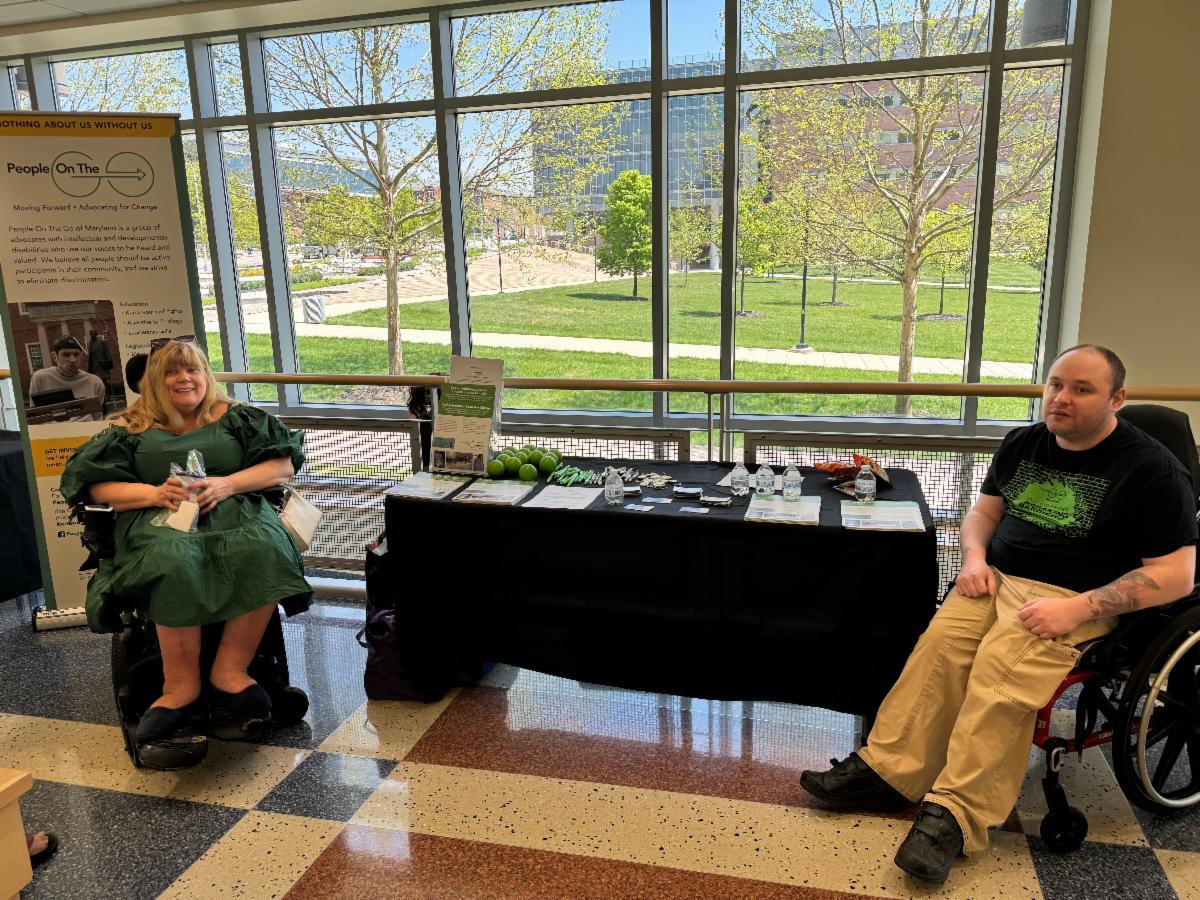
For this 2nd annual event at Coppin State University, Dr. Nicole Anthony and her team of volunteers bent over backwards to make sure all the vendors and exhibitors had everything they needed to make a great showing! Breakout rooms included interviews with local employers, assistance with online job applications, a massage therapist, and a quiet room in case a person needed a break.
Besides People on the Go (complete with our Braille business cards), exhibitors included R.I.S.E. Arts Center of Baltimore, Pathfinders for |
|
| Autism, the Organization for Autism Research, the Autism Society of Baltimore-Chesapeake, and Zoe’s Just Desserts (including Zoe herself!).
This being a relatively new (and not yet well-recognized) event, in future years, I would like to see greater outreach to the local/regional community, so that employers and neighbors can be made aware of the |
|
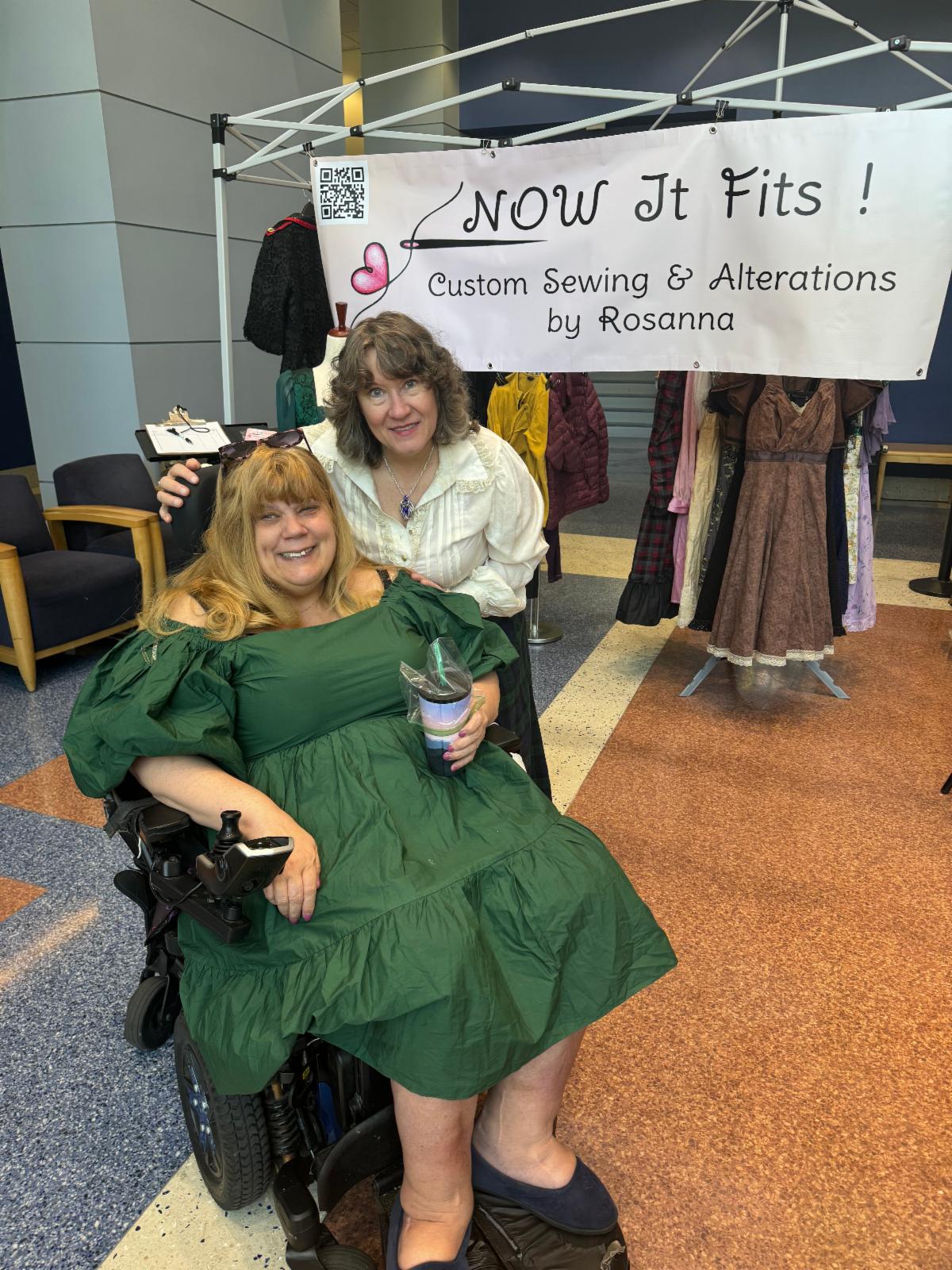
| Deputy Director Tracy Wright with Rosanna Tufts' "NOW It Fits! Custom Sewing & Alterations" booth
unique talents that neurodivergent people have to offer. |
|
| Presentation Calls for Transformative Changes in American Workplace Culture Exploring the Need for Neuro-Inclusion and Fair Employment Practices
Kennedy Krieger Institute’s annual Neurodiversity in the Workplace Conference will be held October 27-29, 2024, at the Westin Washington DC Downtown, 999 9th st. NW, 20001.
POG’s Mat Rice, Tracy Wright, and James Orman’s presentation calls for a fundamental shift in American workplace culture, advocating for neuro-inclusion and fair treatment of employees, to replace outdated practices that prioritize business goals over individual well-being.
Historical Context and Current Challenges: Our presentation highlights that American employment opportunities have long been shaped by a cultural understanding that emphasizes the sacrifice of individual needs for business aims. This is shown by programs like Section 14(c), which allows for sub-minimum wages for people with disabilities, and the post-pandemic push to bring employees back to the workplace for appearance rather than productivity. Such environments force employees to conform to rigid standards, treating them as mere cogs in the machine, which leads to exploitation and undermines their integrity.
Impact on All Employees: This systemic issue affects all employees, regardless of their neurobiology. Unrealistic expectations without adequate support create a disconnect between employer demands and employee capabilities, leading to frustration and misunderstanding. Employees seeking necessary accommodations are often stigmatized as "troublemakers" or "lazy," further exacerbating workplace stress.
The Case for Inclusive Workplaces: An inclusive and sensitive workplace focuses on enabling employees to achieve their best by providing the necessary resources and support. We argue that punitive approaches might yield short-term productivity gains, but they ultimately result in employees doing the bare minimum to avoid punishment. Conversely, supportive environments encourage employees to reach their full potential, fostering long-term success and satisfaction.
The Need for Cultural Change: POG’s presentation concludes that American workplace culture must shift to meet employee needs, rather than forcing employees to conform to business demands. A functional economy does not require employee exploitation; rather, it thrives when employees are supported and valued. The Americans with Disabilities Act mandates reasonable accommodations, and businesses must start adhering to it. (continued) |
|
| (continued from previous column)
Key Takeaways:
- Historical Exploitation: American employment has long sacrificed individual needs for business goals, as we have seen in the post-pandemic workplace push, and the continued use of the Section 14(c) exception.
- Universal Impact: Unrealistic expectations without support affect all employees, creating frustration and misunderstanding.
- Benefits of Inclusivity: Inclusive workplaces that do provide necessary resources, foster employee potential and long-term success.
- Call for Change: American workplace culture must shift to prioritize employee needs, aligning with legal requirements and promoting a thriving economy.
Conclusion: Our presentation underscores the urgent need for a cultural shift in American workplaces. By prioritizing neuro-inclusion and sensitivity, businesses can create equitable environments that enhance both employee satisfaction and productivity. Embracing these changes is not only legally mandated, but also essential for fostering a harmonious and dynamic workplace.
Registration is now OPEN for the Neurodiversity at Work Conference, October 27-29th, 2024. |
| Video Panels on Workplace Neurodiversity
James Orman and Rosanna Tufts participated in two educational Zoom panel discussions hosted by Career Image Solutions, Inc. One session focused on the issues autistic employees face and how they can better advocate for themselves; the other session was about how employers can make their workplaces more accommodating for the neurodivergent, both in interviews and on the job. See Part 1 HERE — and Part 2 HERE. |
|
| Talk-Back Panel at the Theatre
The Colonial Players of Annapolis recently finished a run of the play, “The Curious Incident of the Dog in the Night-Time,” based upon Mark Haddon’s novel of the same name. Groundbreaking for its depiction of a teenage autistic narrator/hero, the entire cast excelled in demanding roles. Sarah Wade, Colonial Players’ Education Director, coordinated a Talk-Back panel after the May 12 performance. Rosanna Tufts and Jorge Tirigall added historical perspective and their insights on how accurately autism was depicted, including the challenges involved for parents and caregivers. |
|
|
| Grab Your Kleenex Before You Open This!
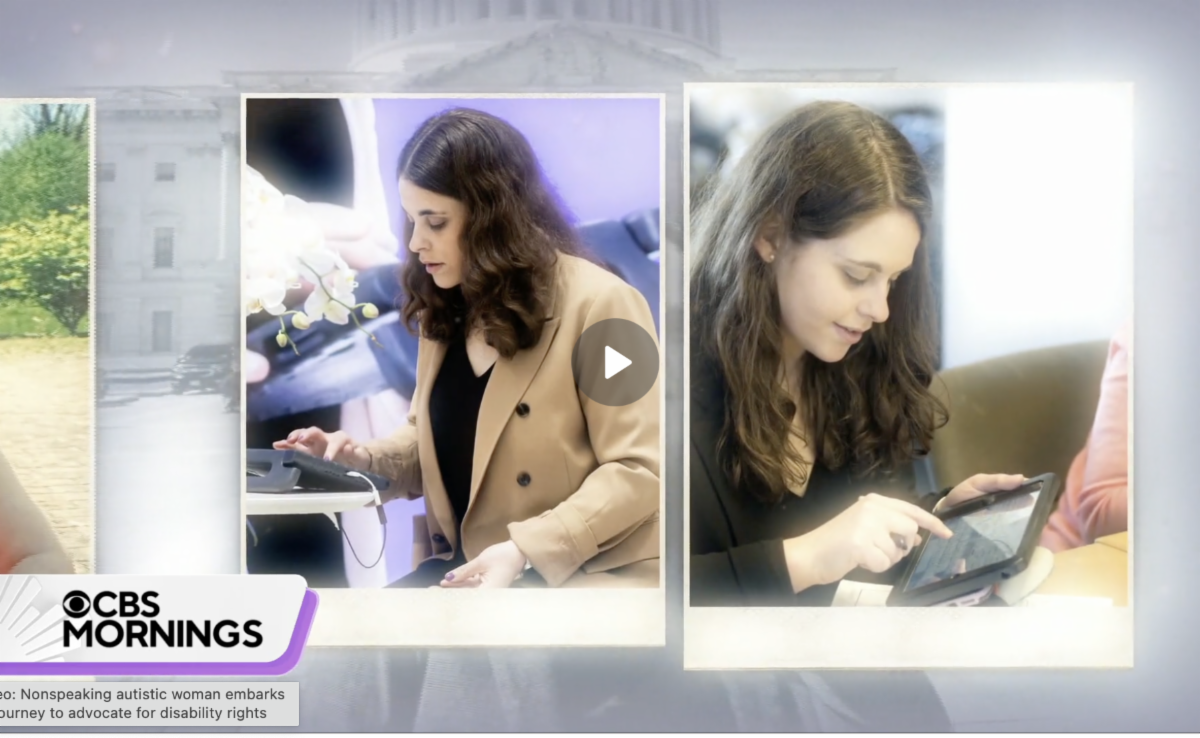
On May 8, CBS Mornings aired an interview with Jordyn Zimmerman, 29, a non-speaking autist. She told the story of the struggles she faced when growing up, how an iPad communication app changed her life, and went on to earn a Master’s degree. She now serves on President Biden’s Committee for People with Intellectual Disabilities, and presents at schools all over the country, working to improve education for children with disabilities. See it HERE! |
|
|
|
|
|