You don't want to miss this.
[[trackingImage]]


Urban Farming with Soil Life Short Course: Southeast Region - Atlanta, GA

Join us to learn about beneficial soil organisms! This course, hosted by West Atlanta Watershed Alliance (WAWA) and Patchwork City Farms, in partnership with the Xerces Society for Invertebrate Conservation, will highlight the importance of beneficial soil-dwelling organisms that contribute to maintaining healthy and productive soils on urban working lands, the functions they perform, and guidelines for optimizing land management practices to support diverse soil fauna.

This course is free to attend, but registration is required.

Tuesday, October 20, 2026
09:00am - 04:00pm ET

Add to Google · Outlook Web · Outlook Mobile · Yahoo · iCal

West Atlanta Watershed Alliance Outdoor Activity Center
1442 Richland Rd SW, Atlanta, GA 30310
View on map


This short course training is funded by Southern SARE as a Professional Development Project and is designed for farmers, gardeners, Extension Specialists and Educators, NRCS staff, Soil and Water Conservation District staff, agronomists and other agricultural professionals and conservation practitioners in the Southeast SARE region (AL, AR, FL, GA, KY, LA, MS, NC, OK, SC, TN, TX, VA) interested in increasing their ability to interpret and manage land to support diverse aboveground and belowground ecosystems, while also increasing crop resilience and soil health.


When

Tuesday, October 20, 2026

9:00 AM – 4:00 PM ET


Where

West Atlanta Watershed Alliance Outdoor Activity Center

1442 Richland Rd SW, Atlanta, GA 30310


Event Contacts

Kelly Gill

515-708-6108

kelly.gill@xerces.org

For information about event accessibility, please contact outreach@xerces.org.


Agenda

8:30 – 9:00 AM: Arrival and check-in

9:00 – 9:10: Welcome, announcements, course overview

9:10 – 9:30: Basics of soil health & intro to soil fauna

  • Importance of soil life
  • Introduction to the diversity of soil fauna
  • Value of soil fauna and the essential ecological services they provide

9:30 – 10:15: Soil invertebrate profiles

  • Profiles of the major groups of beneficial soil invertebrates
  • Descriptions and identification tips
  • Ecological role
  • Where they are found
  • Lifecycle and habitat requirements

10:15 – 10:30: Coffee break

10:30 – 11:30: Guest speaker(s): Topics TBD

11:30 – 11:45: Introduction to scouting & monitoring

  • Soil invertebrates bioindicators
  • Scouting and monitoring methods
  • Resources and tools for field scouting/monitoring

11:45 – 12:15: Lunch break

12:20 – 1:45: Scouting activity and field demo

  • Overview of Patchwork City Farms
  • Practice scouting methods, recognizing soil invertebrates and their habitat
  • Observe soil invertebrates in different locations and make habitat associations
  • Examine the catch in pitfall traps deployed the day before and compare different samples
  • Assess habitat, identify features that are present and habitat deficiencies

1:45 – 2:15: Overview of management practices & NRCS conservation programs

  • Soil health and land management practices that protect and conserve soil invertebrates
  • NRCS programs for technical assistance and financial assistance to support planning and implementation of conservation practices, with a focus on practices for urban and small farms

2:15 – 2:30: Q&A / Open discussion

2:30 – 3:00: Conclusion and evaluations


Acknowledgements

Southern SARE, West Atlanta Watershed Alliance (WAWA), Patchwork City Farms


This project is supported by the National Institute of Food and Agriculture, U.S. Department of Agriculture, under agreement number 2024-38640-42988 through the Southern Region SARE program under project number SPDP25-034. USDA is an equal opportunity employer and service provider. Any opinions, findings, conclusions, or recommendations expressed in this publication are those of the author(s) and do not necessarily reflect the view of the U.S. Department of Agriculture.  


About the Xerces Society

The Xerces Society for Invertebrate Conservation is a donor-supported nonprofit organization that protects our world through the conservation of invertebrates and their habitats. Xerces works throughout North America to conserve pollinators and other invertebrates, protect endangered species, and reduce pesticide use and impacts. Our staff use applied research, policy advocacy, public education, and on-the-ground habitat improvement to advance meaningful, long-term conservation. Xerces is the largest invertebrate conservation organization in the world. For over 50 years, we have been champions of Earth’s most biodiverse and overlooked animals, protecting the life that sustains us. Learn more at xerces.org.


Photo Credit(s):

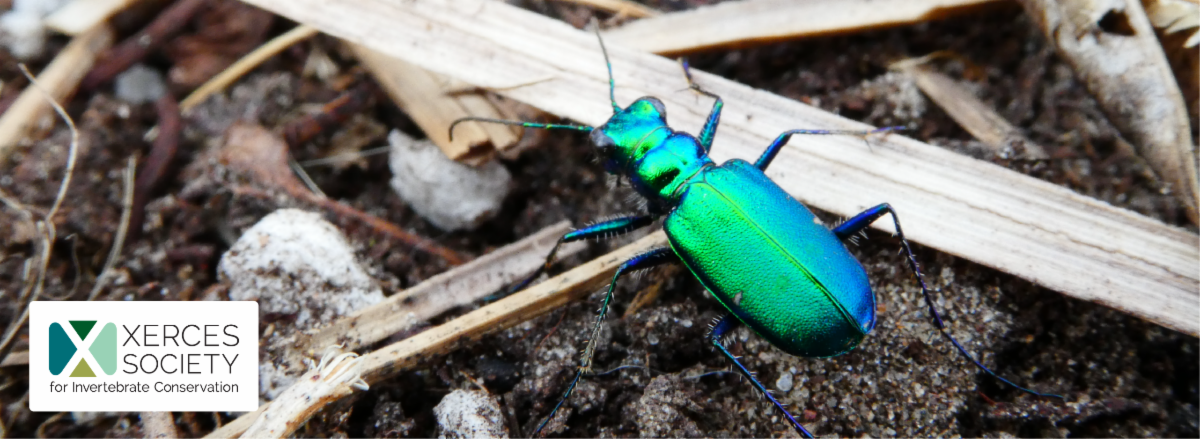
Sarah Foltz Jordan