[[trackingImage]]
 
Complex-trauma-inc-e1705244878681.png

Sign Up Now for 10-Month Webinars

Dear Colleague,

Many of you have taken the Weekend Webinar but know you need more.


What makes this EMDR seminar course so unique, effective, and powerful is the integration of multiple learning styles within the supportive container of a small group setting. The book chapters guide you through the depths of the work: what is happening in the brain and how to make targeted decisions in sessions. During the monthly class meetings, these concepts are expanded and vivified through lecture, group discussion, and practicum experiences. Group consultation allows for practical application to real-time clinical work over the course of the academic year.


One-time workshops can introduce essential concepts; this long-term, small-group seminar offers a “slow, delicious pace of learning” to help break through the barrier of working with complex trauma to truly synthesize learning into powerful clinical skills to help clients heal more effectively. 


A Special Note from Farnsworth Lobenstine, LICSW 

I created this ten-month class 19 years ago in my living room and taught it there for ten years. In 2019, my colleague, Kristen Wold, LICSW, enabled us to teach it together online, with one Introductory and 2 Advanced webinars. We served about 45 EMDR therapists each year. 


I have been thrilled to co-teach these webinars this past academic year with Christine Molina and Katy Gelinas, two of my closest colleagues on my Treating Complex Trauma team. 


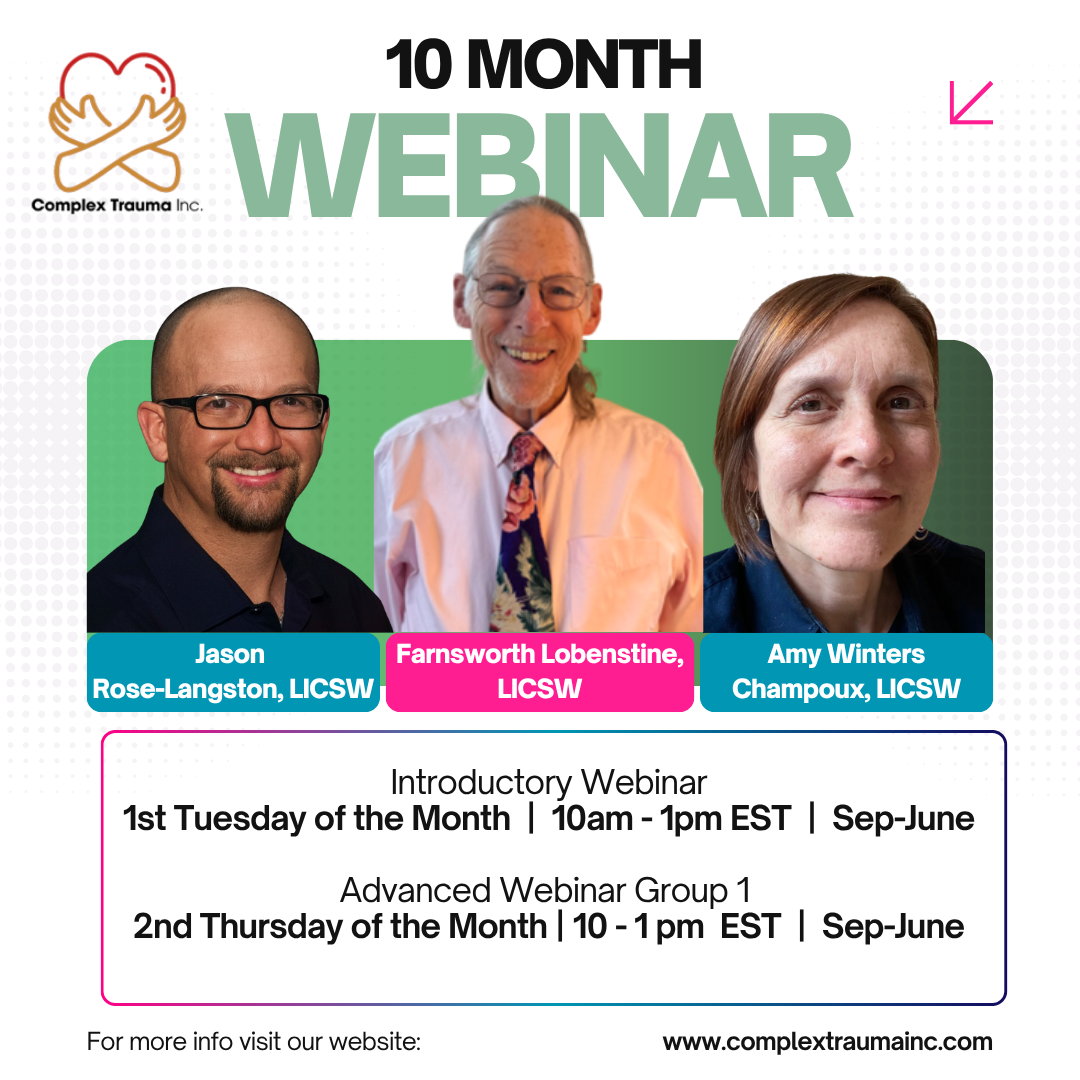
After 19 years, I need to retire. I am deeply delighted that two other colleagues, Jason Rose-Langston, LICSW and Amy Winters Champoux, LICSW have agreed to continue my work. I have known both of them from the Western Mass EMDRIA community for 15 or more years and deeply trust their clinical wisdom and teaching ability. I will always be available to them to share my nearly two decades of experience and wisdom. I will be joining them only as a second facilitator for the two practicums in the Intro class and the one practicum in the Advanced class. You will deeply appreciate each of them.


We hope you will join us!


Delightedly,

Farnsworth, Jason, and Amy

EMDR Therapy and Structural Dissociation: Deepening Your Skills A 10-Month Webinar

Beginning September 2026: A Game-Changer for Your Practice!

Below find more information and introduction videos!

Advanced Intro Video

Join Jason, and Amy for our 10 month, in-depth study of EMDR Therapy, the Theory of Structural Dissociation of the Personality, and the Meeting Place. 


Through this intensive, small group webinar, you will learn essential skills for complex clients while being connected to a supportive community of like-minded clinicians.


This year, we are offering one Introductory and one Advanced webinar options. Each class is limited to 15 participants. We expect both of them to fill completely. Please consider registering promptly.


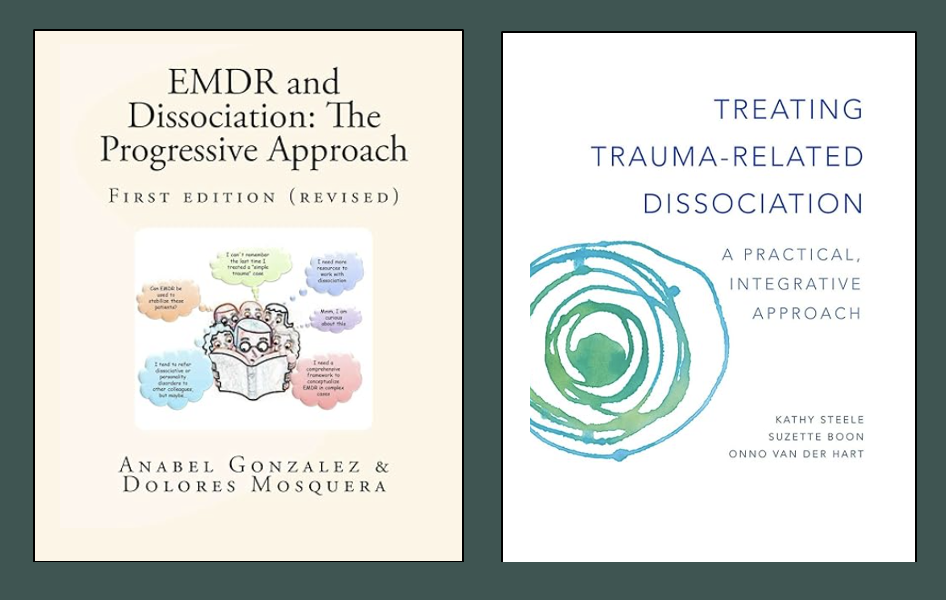
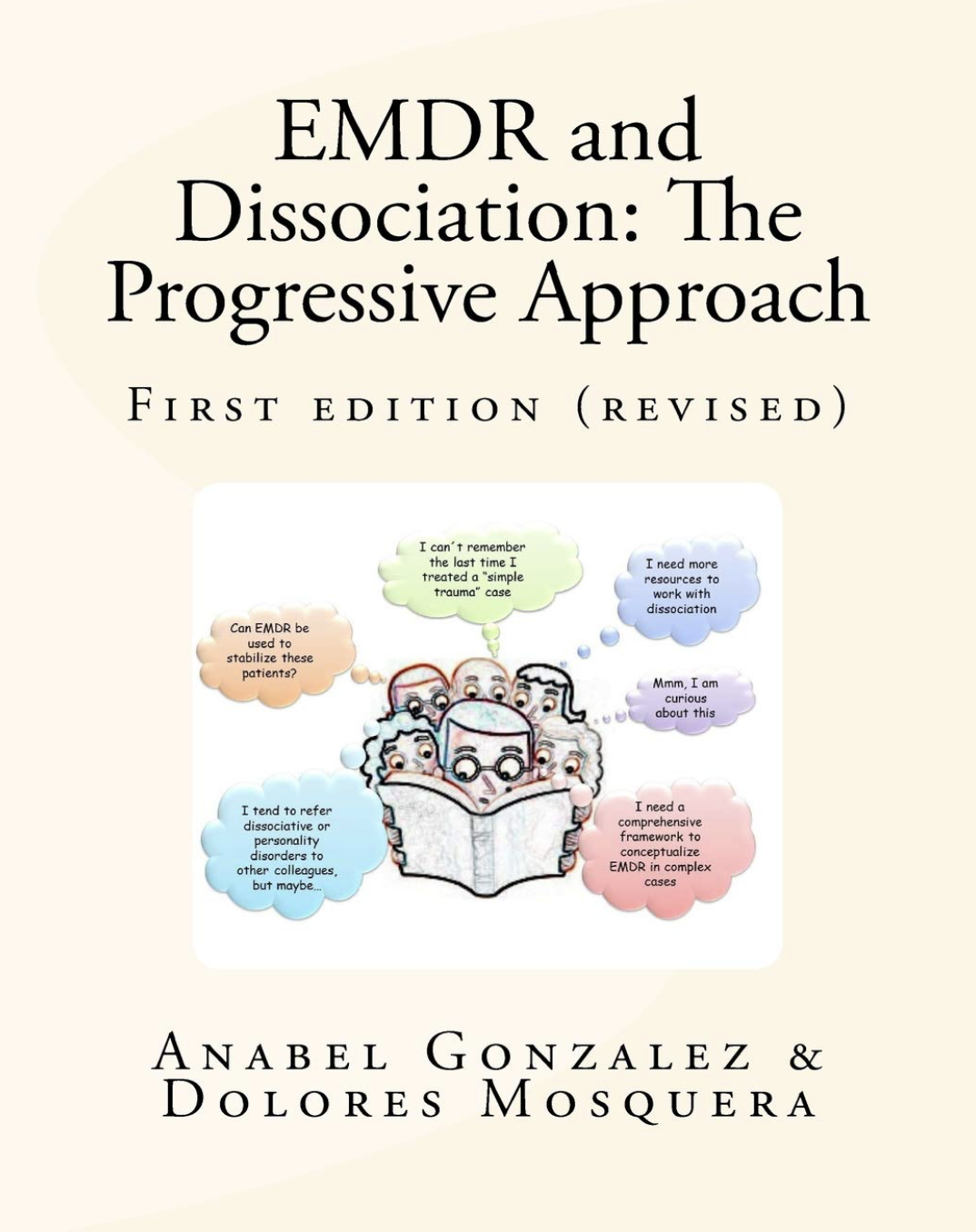
In each seminar, we will use EMDR and Dissociation: The Progressive Approach as our primary text, facilitating a deeper integration of the wonderful work of Anabel Gonzalez and Dolores Mosquera applying Structural Dissociation theory and practice to EMDR Therapy. For the Advanced webinar, we will also be studying six chapters from the brilliant book, Treating Trauma-Related Dissociation: A Practical, Integrative Approach by Kathy Steele, et al.


Participants must have completed an EMDRIA Approved Basic Training.

These webinars have been structured to provide clinicians with multiple ways of learning and integrating the concepts.


Before each meeting, you will read the assigned book chapters and any additional materials. During our monthly Zoom meetings, we will discuss and synthesize the material through lecture, group discussion and case consultation.


Previous participants have said ... 


“Through this course I began to integrate my understanding of the structural dissociation theory. I grew to admire the intricacy of the system of personality. More importantly, my understanding of my role, as a therapist and an external regulator, to the clients’ system and its parts has greatly increased.”


"My takeaway from this clinical seminar is increased confidence in my ability to assess and

begin to treat dissociation. I feel more prepared and confident to introduce parts of self to

clients, creating the Meeting Place with clients in session, and beginning to explore parts of

self with clients." 


“I truly appreciate the opportunity to participate in this workshop and I am humbled by the amazing work all of the clinicians are doing. Furthermore, I admire the participants’ willingness to share their work, revealing so courageously their places of ‘stuckness’.”


"I think the thing that has been the most helpful from this 10-month webinar is the structure and length of thre program. All the content was incredibly valuable, so the fact that it was spread out over the course of almost a year, and organized in a way that gave me a dedicated reason to learn, with set aside time to show up was all very helpful."


Introductory Webinar

The Introductory Webinar is suitable for EMDR clinicians who are building their understanding of complex trauma and dissociation. It is also valuable for clinicians who are experiential learners and learn best at a slower pace and with more experiential practice. 


This webinar will lead you though an in-depth study using Gonzalez and Mosquera's book, EMDR and Dissociation: The Progressive Approach as the primary text, and includes practice of interventions including Meeting Place, Loving Eyes, and Tip of the Finger. 


Learning Objectives:

●      Discuss a coherent theoretical framework of dissociative processes from a Structural Dissociation perspective.

●      Demonstrate ability to utilize Meeting Place intervention to facilitate work with parts of the personality through discussion and consultation of participant’s clinical work.

●      Discuss at least three types of internal phobias in Structural Dissociation (phobias of attachment, traumatic memories, and inner experience) and identify strategies for addressing these in clinical work. 

●      Demonstrate competence in accessing parts of self by working through the current adult self in the Meeting Place intervention through supervised practicum.

●      Demonstrate ability to utilize Tip of the Finger Strategy, Loving Eyes, and other EMDR interventions through supervised practicum and discussion of clinical work.


WHEN: TUESDAYS: 10 am - 1 pm EST

DATES: 1st Tuesday of the month 

Sep 1, Oct 6, Nov 3, Dec 1, Jan 5, Feb 2, Mar 2, Apr 6, May 4, Jun 1

Instructor: Amy Winters Champoux, LICSW


Continuing Education Credits: 

●      For those pursuing EMDRIA Certification: You will earn 1.5 hours of EMDRIA Continuing Education credits and 1 hour of group consultation for each session that you attend live for the full session.

●      You will earn 3 NBCC CE hours for each session you attend live for the full session. 

Classes will be recorded for review, however CE credit is not available for viewing recordings. The video of each session will remain online until July 1st 2027.

●     We are pending CE approval through NASW that would give credit to Social Workers in: AL, AK, AR, CA, FL, GA, HI, IL, IA, KY, MA, MI, MN, MS, MO, NV, NH, NJ, NM, OH, OR, RI, SC, SD, VA, WA, WV, and WI.


From 2025-26 graduates of the Introductory 10-Month Webinar:


"This webinar has revolutionized my work with my clients. I now have such a better understanding of complex trauma and dissociation, and I'm able to apply EMDR with more clarity and confidence. I've had many instances throughout the years where I've felt ill equipped to support my clients. It is my ethical responsibility as a clinician to continue expanding my knowledge with ongoing training and consultation, and this webinar has been an excellent way to do that." 


The willingness of fellow clinicians to share successes, challenges, questions, and clinical insights has created a rich learning environment that has expanded my knowledge and confidence. I leave this course feeling more equipped, more curious, and far less stuck when working with highly complex trauma presentations.


This course has not only transformed me but also transformed the way that I engage in therapy with my clients. It has given me the freedom to be the therapist I always wanted to be."


 "It is a wonderful gift to be able to say to someone 'I can help you' when perhaps they haven't heard that before in an authentic way."


Another invaluable tool I've gained is learning to introduce parts work to my clients. The concept of parts is universal -- we are all comprised of many states. Leaning in with an attitude of curiosity and respect while facilitating parts work with my clients has been such a gift....The script provided along with the practicum opportunities made it so easy to implement right away."


"This course has helped me feel more confident working with dissociative clients It took the mystery out of the work by giving me concrete skills that built off the knowledge that I have in my therapy practice."


Advanced Webinar

Appropriate for EMDR clinicians who have taken Farnsworth Lobenstine’s and Paula Merucci’s Weekend Webinar. It is also appropriate for clinicians who have a working knowledge of complex trauma and dissociation.


This webinar will lead you though an in-depth study using Gonzalez and Mosquera's book, EMDR and Dissociation: The Progressive Approach as the primary text. We will also be reading chapters of Steele et al's seminal 2017 book, Treating Trauma-Related Dissociation. Additional readings will be assigned throughout the course. The Advanced webinar includes practicum of the Meeting Place and emphasizes application to clinical practice through in-depth consultation of ongoing work.


Learning Objectives: 

●      Demonstrate proficiency in discussion of the Theory of Structural Dissociation of the Personality.

●      Discuss ways in which EMDR therapy practice with clients with complex trauma histories has become more effective by applying principles and strategies from the Theory of Structural Dissociation. 

●      Demonstrate increasing confidence in ability to develop case conceptualizations and treatment plans for complex presentations.  

●      Demonstrate ability to utilize Meeting Place intervention and other interventions with clients with complex trauma and dissociative symptoms through discussion and consultation of participant’s clinical work.

●      Identify ways to utilize EMDR protocols and other interventions in the Meeting Place and how to address stuck points.

●      Discuss at least three types of internal phobias in Structural Dissociation (phobias of attachment, traumatic memories, and inner experience) and identify strategies for addressing these in clinical work. 

●      Identify and discuss transference and countertransference dynamics in the therapeutic relationship to facilitate resolution and healing of relational wounds in clients with complex trauma histories.


WHEN: THURSDAYS 10 am to 1 pm EST

Dates: 2nd Thursday of the month

Sep 10, Oct 8, Nov 12, Dec 10, Jan 14, Feb 11, Mar 11, Apr 8, May 13, Jun 10

Instructor: Jason Rose-Langston, LICSW


Continuing Education Credits: 

●      For those pursuing EMDRIA Certification: You will earn 1.5 hours of EMDRIA Continuing Education credits and 1 hour of group consultation for each session that you attend live for the full session.

●      You will earn 3 NBCC CE hours for each session you attend live for the full session. 

Classes will be recorded for review, however CE credit is not available for viewing recordings. The video of each session will remain online until July 1st 2027.

"Before the webinar, I felt lost and alone at times when working with my complex clients; fortunately for me this webinar has been a vital turning point for me professionally. I now have the roadmap and foundation I was searching for as well as a community to learn from and be supported by. I am now walking my path as a trauma therapist with more sure-footedness, curiosity, compassion and effectiveness."


“The learning in this course has further allowed me to access clients that are traditionally referred out by other therapists or tossed around the system for many years, if not their whole lives thus far. I am forever grateful for this learning and for the two of you to place so much energy, attention, and love

into this process. Thank you!”


“One of the things that has shifted as a result of this course is my increased ability to be present, to feel confidence in responding authentically to clients in real time, instead of scrambling in my head for the elements of the recipe that I “should” be following.”

Fees:


Standard Rate: $1,250 if paid after August, 1 2025.

Standard Payment Plan: 5 payments of $275 per month. 


For Community Mental Health clinicians (30 hours or more per week). See below for required letter.

Standard Rate: $1000 if paid after August 1, 2025.

Standard Payment Plan: 5 payments of $220 per month. 


CMH clinicians: Within one week of registration, you must submit a letter on agency letterhead from your supervisor or director stating that you work 30 or more hours per week and that there are no reimbursement funds for training.


About your Co-Teachers

Farnsworth-updated-photo-for-bio-v02-219x300.png

Farnsworth Lobenstine, LICSW

Farnsworth was the recipient of the 2025 Distinguished Achievement Award from the International Society for the Study of Trauma and Dissociation in recognition of his years of teaching EMDR clinicians how to more effectively and safely work with complex trauma and dissociation. Farnsworth has been an EMDRIA Approved Consultant since 2003, and since 2007, has been teaching this academic year-long Advanced Seminar on the Integration of Structural Dissociation and Ego State Therapy with EMDR Therapy. In 2013, Farnsworth created his practicum-focused weekend workshop on using EMDR with clients with complex trauma and dissociation, which he has taught both in-person and virtually with his team. Farnsworth will co-present at the EMDR International Association conference in 2025.


Farnsworth is passionate about the extraordinary privilege of working as a psychotherapist, walking for a time with others on their journey towards health and a vibrant life. He is equally passionate about teaching EMDR trained clinicians advanced skills so they can succeed with their most complex clients. In cooperation with Kristen Wold, LMFT, he has offered this in-depth study to expand EMDR offerings nationally and internationally since 2019. This year he is delighted to work with Jason and Amy to continue the webinars while he transitions into retirement.

Jason Rose-Langston,

LICSW

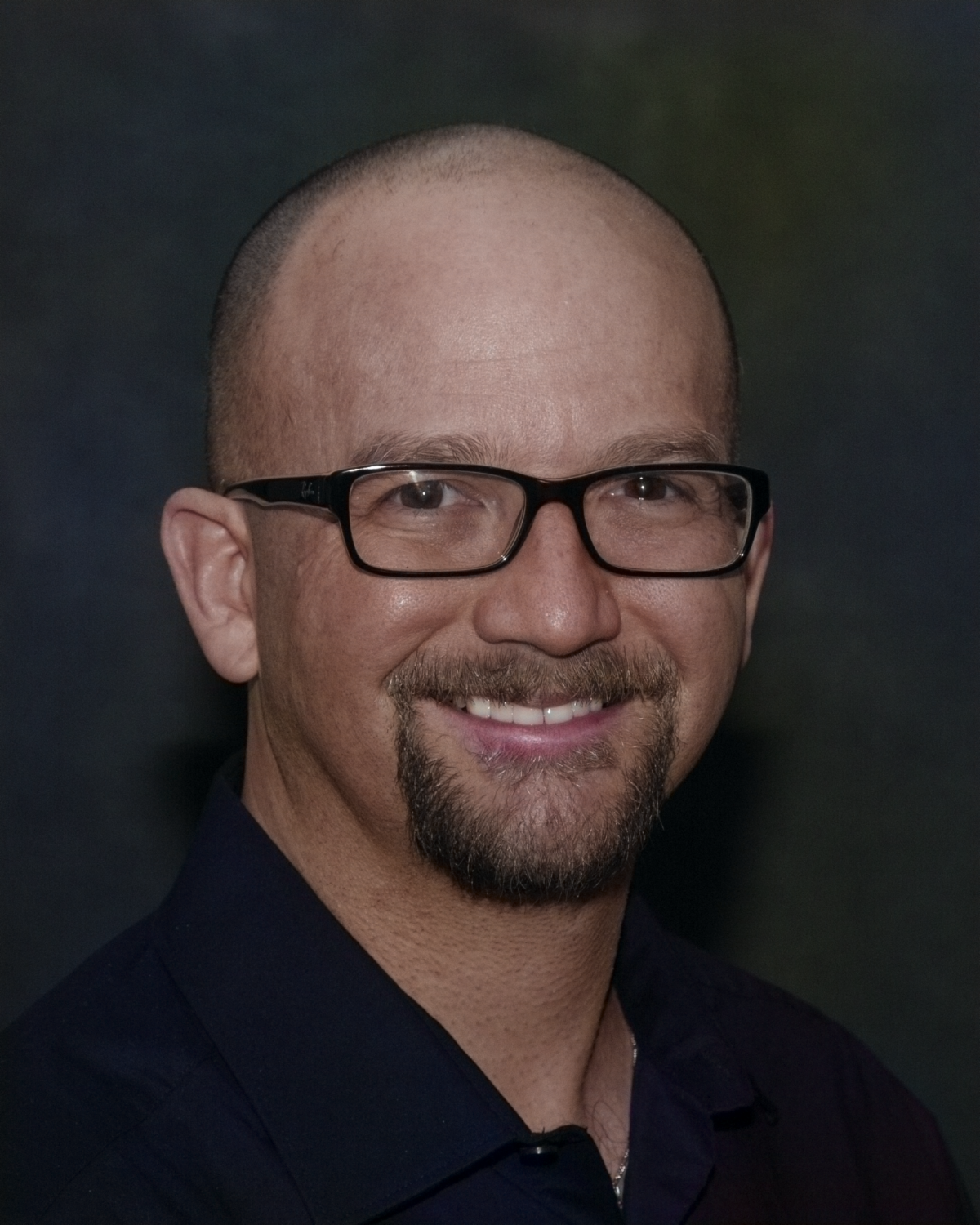
Jason Rose-Langston is an EMDR Certified Consultant and has been an EMDR therapist and educator for over 20 years. He has extensive experience and training with the dissociative population and has been part of an advanced studies group consultation on Structural Dissociation and EMDR therapy for over 12 years. His clinical practice, located in Easthampton, MA, focuses primarily on trauma and dissociative disorders, adolescents and adults, and the transgender population. 


Amy Winters Champoux,

LICSW

Amy Winters Champoux, is a certified EMDR therapist, an EMDRIA Approved Consultant, and a proud graduate of Farnworth Lobenstine’s advanced seminars in 2013 & 2014. (She still has the materials from those very seminars, and refers to them regularly!) She blends EMDR with Ego State therapy to support clients with complex PTSD to resolve and clear trauma. As an EMDR Consultant, she teaches other EMDR therapists how these tools and insights can promote state and trait shifts in their clients. She hosts a monthly consultation group, supporting EMDR therapists to gain confidence, clarity, and collegiality. For the past four years, Amy has been developing an approach to Brief, Adjunctive EMDR that is accessible for people with complex PTSD. If it hadn't been for this same seminar, Amy would have given up on EMDR in 2013. She is honored to play a role in teaching it to the next generation of EMDR therapists this year. 


Terms and conditions • Privacy policy

© 2026 Complex Trauma Inc